Conférence Pierre-Dansereau - Écosystèmes marins et exploitation minière - 4 novembre 2025
Keywords
Summary
197 words
Critical Evaluation
Value of the Information & Strength of the Argument
The value of the information is high, as it synthesizes current scientific knowledge on deep-sea ecosystems and mining, presented by an expert with direct research experience. The argumentation is solid, based on established scientific findings and personal observations from field campaigns. The speaker effectively explains complex concepts, such as chemosynthesis, and uses concrete examples to illustrate the diversity and importance of these ecosystems. She also addresses the potential impacts of mining, providing a balanced view that acknowledges both the economic interests and the ecological risks. The talk is well-structured, moving from definitions to exploration methods, then to the importance and threats, and finally to conservation efforts.
Scientific Rigor, Source Quality, Title Accuracy
The scientific rigor is high, as the speaker is a recognized expert and the content aligns with current scientific consensus. She references specific projects (e.g., Census of Marine Life, Seabed 2030) and her own research, but does not provide detailed citations during the talk. The title accurately reflects the content, focusing on marine ecosystems and mining. The description includes references to her book ‘Atlas des abysses’ and the Deep Rest project, which adds credibility. No comments were provided for analysis.
201 words
Title / Content Match
The title accurately reflects the content: a conference on marine ecosystems and mining, with a focus on deep-sea environments and the associated ecological challenges.
Quality & Reliability
8/10
The speaker is a recognized researcher in benthic ecology, with direct field experience and coordination of a European project on deep-sea restoration. The content is based on established scientific knowledge and recent research, but the format is a conference talk, so some details are simplified and not all claims are referenced in real-time.
Chapters
- Introduction - Catherine Jolin, Cœur des sciences
- Mot d'accueil - Claude Codjia, Directeur de l'Institut des sciences de l'environnement
- Début de la conférence de Jozée Sarrazin - Qu'est-ce que l'océan profond?
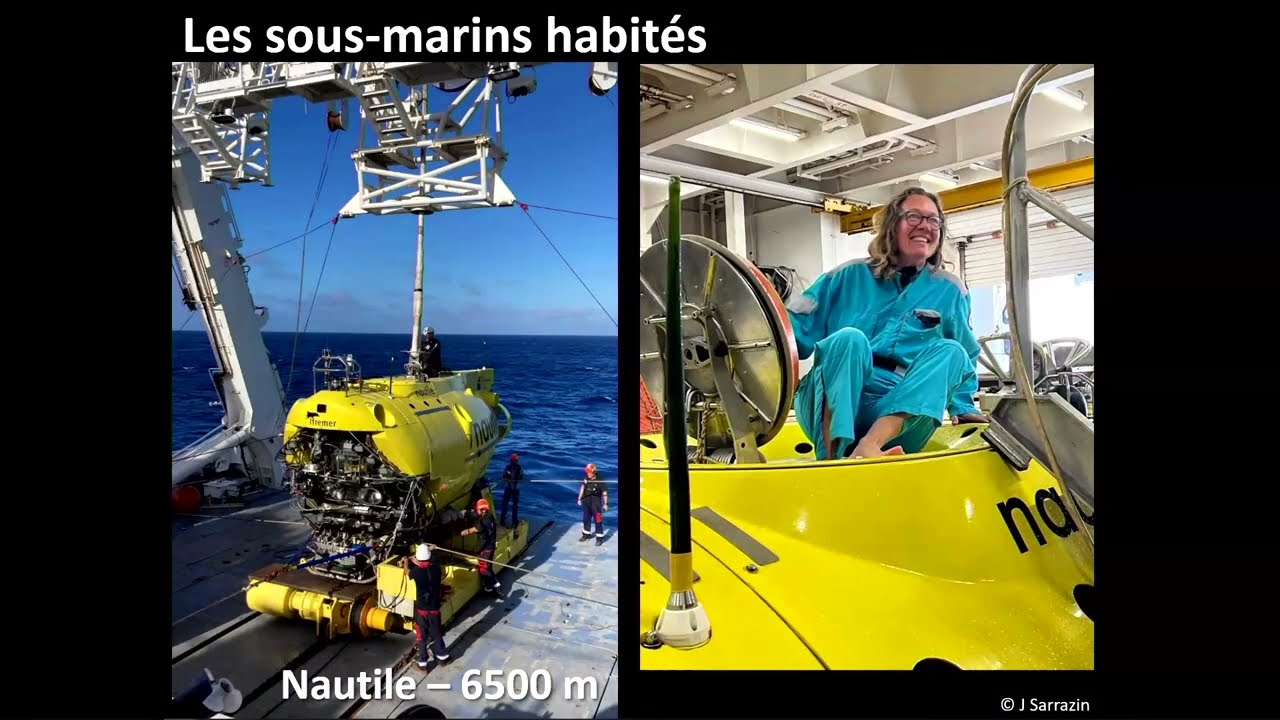
- Comment étudier les grands fonds? (plongée, navire océanographique, nouvelles espèces)
- Pour l'océan est important? Quelles sont les menaces? Comment les protéger?
- Conclusion : rencontre avec un poulpe
- Période de question
Cited Sources
- Atlas des abysses — Mentioned as a publication by the speaker and Stéphanie Brabant, illustrated by Julie Terrazzoni.
- Deep Rest project — European project coordinated by the speaker on conservation and restoration of deep-sea ecosystems.
Concurring Sources
- Deep-sea mining and the environment — Scientific article discussing the environmental impacts of deep-sea mining.
Contribution & Novelties
The talk provides a comprehensive overview of deep-sea ecosystems, highlighting their diversity and the potential threats from mining. It emphasizes the importance of chemosynthetic ecosystems and the need for further exploration and conservation. The speaker’s perspective as a researcher directly involved in deep-sea studies adds credibility and insight.
Pour aller plus loin :
- Hydrothermal vent — Overview of these unique ecosystems and their chemosynthetic communities.
- Deep sea mining — Discussion of the potential extraction of minerals from the seafloor and its environmental impacts.
- Polymetallic nodules — Information on these mineral concretions and their role as habitats.
- Seabed 2030 — Global initiative to map the ocean floor by 2030.
- Census of Marine Life — Historical project that assessed marine biodiversity.
119 words
Radar Profile
The radar profile shows high scores in information quantity, quality, and reliability, with a slightly lower technical level, indicating a well-balanced presentation suitable for a general audience while maintaining scientific depth.