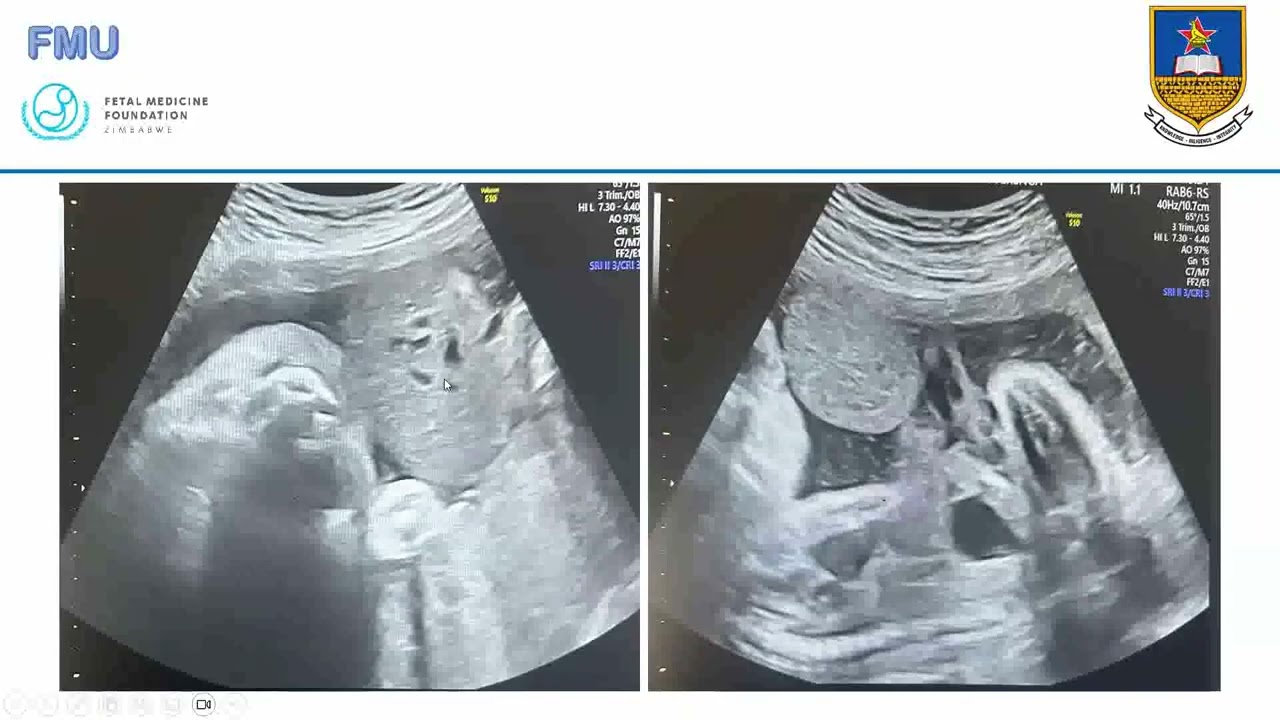
Complex Anterior Abdominal Wall Defects- Dr B Chidowore
Keywords
Summary
153 words
Critical Evaluation
Value of the Information & Strength of the Argument
The value of the information lies in its clinical relevance and practical insights into the diagnosis and management of complex abdominal wall defects. The presenter provides a detailed case presentation with ultrasound findings, differential diagnosis, and management plan. The argumentation is based on clinical experience and a review of case reports, but it lacks rigorous statistical evidence or systematic review. The discussion with peers adds value by addressing real-world challenges and outcomes in low-resource settings, offering a balanced perspective on prognosis and counseling.
Scientific Rigor, Source Quality, Title Accuracy
The scientific rigor is moderate. The presentation is based on a clinical case and references a few case reports and series, but it does not provide a systematic literature review or detailed citations. The sources mentioned are not formally cited with URLs or full references. The title accurately reflects the content, which is a case-based discussion on complex anterior abdominal wall defects. The discussion includes peer input, which enhances the credibility but also reveals variability in outcomes and counseling approaches.
178 words
Title / Content Match
The title accurately reflects the content, which focuses on complex anterior abdominal wall defects.
Quality & Reliability
7/10
Presentation by a medical professional with clinical case details, differential diagnosis, and discussion with peers. However, it is a case-based discussion without peer-reviewed citations or detailed methodology, and the audio transcription contains errors.
Key Moments
Markers derived by PSI from the transcript: the creator did not define chapters.
- Introduction to abdominal wall defects, definition, and common types.
- Epidemiology and risk factors for gastroschisis and omphalocele.
- Embryological basis of abdominal wall defects.
- Case presentation: 19-year-old primigravida with complex defect.
- Ultrasound findings: exteriorization of liver, bowel, bladder, and stomach.
- Differential diagnosis discussion: gastroschisis vs omphalocele vs pentalogy of Cantrell.
- Associated chromosomal and structural anomalies.
- Prenatal management plan: multidisciplinary team, counseling, delivery planning.
- Postnatal management: protection of exposed organs, staged repair, surgical options.
- Discussion on prognosis and outcomes in low-resource settings.
Cited Sources
- Case report on giant omphalocele by Ber (2024) — Mentioned in the presentation as a case report on giant omphalocele managed with staged reduction and primary closure.
- Case series by Meta (2024) on isolated vs non-isolated cases — Cited to highlight survival rates and prognostic factors.
- Case report on body stalk anomaly (2015) — Cited to emphasize early diagnosis and counseling.
Concurring Sources
- Gastroschisis - Wikipedia — Provides general information on gastroschisis, consistent with the presentation's description.
- Omphalocele - Wikipedia — Provides general information on omphalocele, consistent with the presentation's description.
Contribution & Novelties
The presentation provides a practical, case-based approach to complex abdominal wall defects, emphasizing the importance of detailed prenatal ultrasound and multidisciplinary management. It highlights the challenges in low-resource settings and the need for realistic counseling. The discussion adds value by addressing the gap between ideal outcomes and local realities.
Pour aller plus loin :
- Gastroschisis - Wikipedia — Overview of gastroschisis, including epidemiology and management.
- Omphalocele - Wikipedia — Overview of omphalocele, including diagnosis and treatment.
- Pentalogy of Cantrell - Wikipedia — Description of this rare syndrome.
- Body stalk anomaly - Wikipedia — Information on this severe defect.
- Fetal Medicine Foundation — Official website with resources on prenatal diagnosis.
109 words
Radar Profile
The radar profile shows balanced scores across information quantity, quality, technical level, and reliability, with a slight emphasis on technical level due to the specialized clinical content. This indicates a well-rounded presentation suitable for medical professionals.