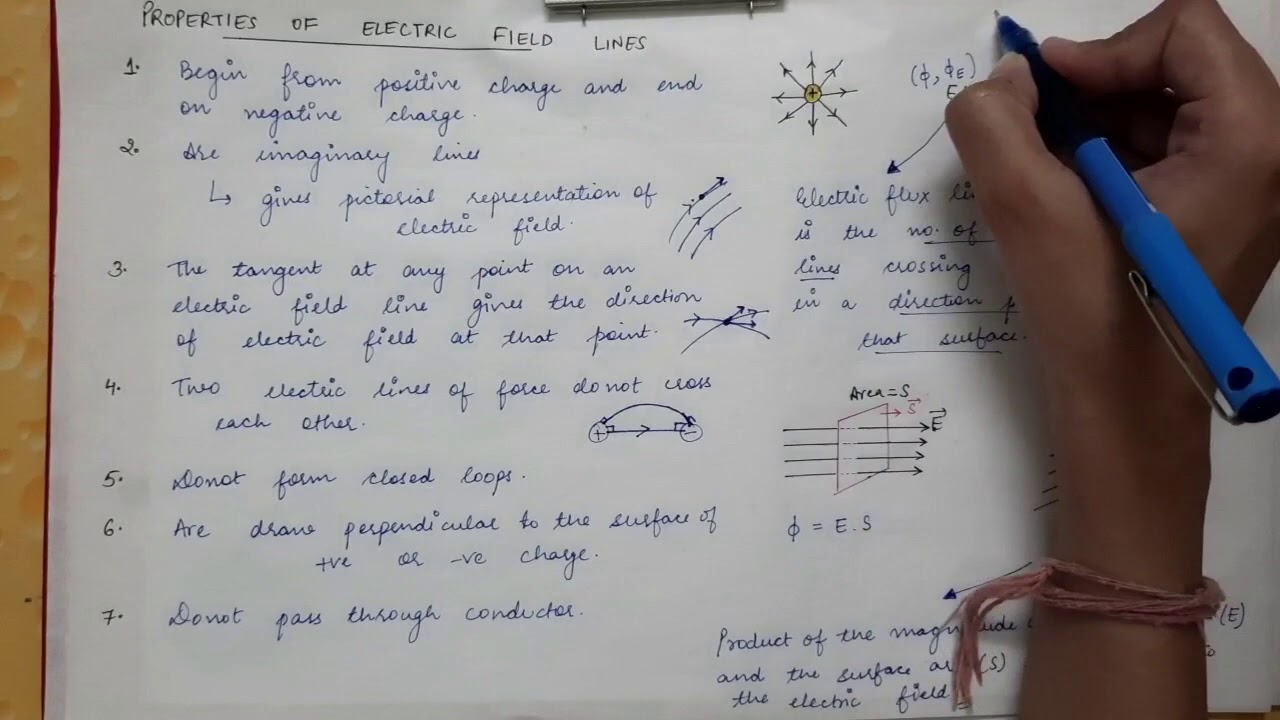
Lecture 19 | 1st Semester | Properties of Electric field lines & Gauss' law
Keywords
Summary
167 words
Critical Evaluation
Value of the Information & Strength of the Argument
The lecture covers fundamental concepts in electrostatics, which are essential for understanding electric fields and Gauss’s law. The argumentation follows a logical progression from properties of field lines to the definition of flux and then to Gauss’s law. However, the presentation is severely compromised by the poor audio quality and the instructor’s frequent interruptions to ask for subscriptions, which disrupts the flow and makes it hard to follow the reasoning. The mathematical derivations are presented but not clearly explained, and the lack of visual aids or clear diagrams further reduces the value. Overall, the content is correct but the delivery is ineffective, limiting its usefulness for learning.
Scientific Rigor, Source Quality, Title Accuracy
The lecture does not cite any external sources, and the description contains no links. The content is standard textbook material, but the lack of references reduces its scientific rigor. The title accurately reflects the content, which is a lecture on properties of electric field lines and Gauss’s law. However, the presentation quality is poor, with frequent subscription prompts and unclear audio, which detracts from the overall reliability. No comments were provided for analysis.
195 words
Title / Content Match
The title accurately reflects the content, which covers properties of electric field lines and Gauss's law.
Quality & Reliability
4/10
The lecture covers standard physics topics (electric field lines, Gauss's law) but the presentation is marred by poor audio quality, frequent requests to subscribe, and a transcription that is largely unintelligible. The content appears correct but is not clearly explained, and no sources are cited.
Key Moments
Markers derived by PSI from the transcript: the creator did not define chapters.
- Introduction to electric field lines and their properties
- Discussion of properties of electric field lines
- Introduction to electric flux and its definition
- Derivation of electric flux formula for a plane surface
- Handling curved surfaces and integration for flux
- Statement of Gauss's law and its application
Contribution & Novelties
The lecture provides a basic introduction to electric field lines and Gauss’s law, but it does not offer any novel insights or unique perspectives. The content is standard and can be found in any introductory physics textbook. The presentation is hindered by poor audio and frequent subscription requests, which detracts from the learning experience.
Pour aller plus loin :
- Electric field lines — Overview of field lines and their properties.
- Gauss’s law — Detailed explanation of Gauss’s law and its applications.
- Electric flux — Definition and mathematical formulation of electric flux.
91 words
Radar Profile
The radar profile shows moderate scores across all dimensions, with slightly higher scores for quantity of information and technical level, but lower for quality and reliability. This indicates a lecture that covers the necessary topics but lacks clarity and polish.