Leçon 5: Les importations de combustibles
Keywords
Summary
147 words
Critical Evaluation
Value of the Information & Strength of the Argument
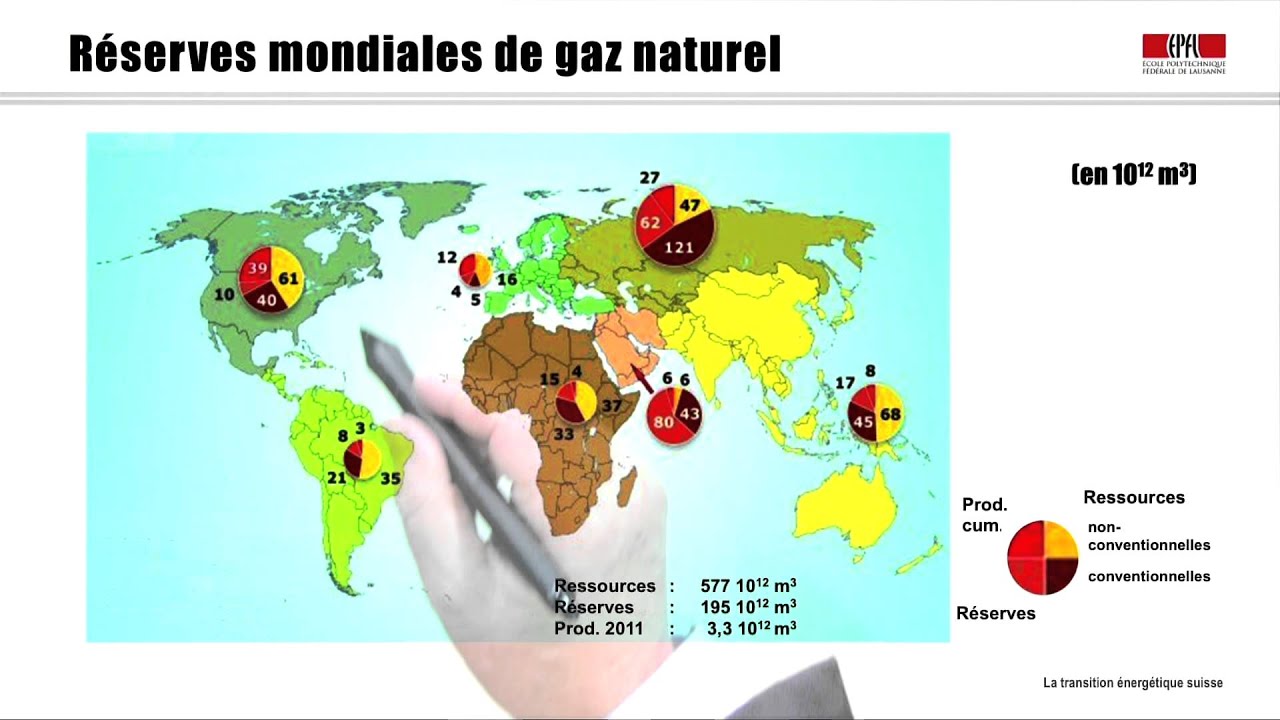
The video provides valuable educational content, clearly explaining complex topics such as hydrocarbon formation, reserve distribution, and supply chains. It uses visual aids (maps, diagrams) effectively to enhance understanding. The argumentation is generally solid, presenting facts about reserves and consumption, but it occasionally simplifies controversial issues (e.g., shale gas) without fully exploring the debates. The video’s strength lies in its clear structure and accessible explanations, making it a useful introductory resource.
Scientific Rigor, Source Quality, Title Accuracy
The video does not cite specific sources, but it references general data (e.g., 2012 reserve maps) and mentions a roundtable discussion at EPFL for further information. The title accurately reflects the content. The scientific rigor is moderate: while the information is mostly accurate, some statements lack nuance and could benefit from citations. The video is part of a university-based project, lending some credibility, but the lack of explicit references limits its scholarly value.
159 words
Title / Content Match
The title accurately reflects the content, which focuses on Switzerland's imports of fuels (fossil and nuclear).
Quality & Reliability
7/10
The video provides a clear, educational overview of Switzerland's fuel imports, covering fossil fuels, natural gas, and nuclear fuel. It uses maps and diagrams to illustrate reserves and supply routes. However, it lacks citations to specific sources, and some statements (e.g., about shale gas) are presented without nuance. The content is generally accurate but simplified for a general audience.
Key Moments
Markers derived by PSI from the transcript: the creator did not define chapters.
- Introduction to Switzerland's fuel imports and their importance.
- Explanation of hydrocarbon formation and conventional vs. unconventional resources.
- Global map of proven oil reserves, highlighting Europe's scarcity.
- Discussion of natural gas supply routes and LNG imports.
- Overview of Switzerland's natural gas distribution network.
- Exploration challenges in extreme environments (Arctic, deep sea).
- Introduction to shale gas and its controversies, with a focus on the US.
- Nuclear fuel cycle and the role of enrichment countries.
- Thorium as a potential future fuel and concluding remarks on dependency.
Cited Sources
- EPFL Energy Center — Mentioned as a resource for further information on the topic.
Concurring Sources
- Swiss Federal Office of Energy — Official Swiss energy statistics and policies align with the video's data on imports and consumption.
Contribution & Novelties
The video provides a concise and well-structured overview of Switzerland’s fuel imports, synthesizing information on fossil fuels, natural gas, and nuclear fuel. Its originality lies in its focus on the Swiss context, making it a valuable educational resource for understanding national energy dependency. It also touches on emerging topics like shale gas and thorium, offering a forward-looking perspective.
Pour aller plus loin :
- Swiss Energy Strategy 2050 — Official Swiss government page on the energy transition.
- International Energy Agency - Switzerland — IEA country profile with energy statistics and policies.
- World Energy Outlook — IEA’s flagship publication on global energy trends.
- Uranium Enrichment — Wikipedia article on uranium enrichment, relevant to the nuclear fuel cycle discussion.
- Thorium Fuel Cycle — Wikipedia article on thorium as a nuclear fuel.
128 words
Radar Profile
The radar profile shows moderate scores across all dimensions, with slightly higher scores in information quantity and quality, reflecting the video's educational value. The lower technical level score indicates it is accessible to a general audience, while the reliability score is moderate due to lack of explicit citations.