This Bee Is Worth Millions (And You've Never Heard Of It)
Keywords
Summary
151 words
Critical Evaluation
Value of the Information & Strength of the Argument
The video provides valuable insights into a little-known agricultural practice and the ecological importance of native pollinators. It effectively argues that alkali bees are superior to honey bees for alfalfa pollination, using concrete examples like the ‘pollen slap’ and the bees’ high foraging rates. The argumentation is solid, supported by interviews with experts and farmers, and it highlights a successful model of human-wildlife coexistence. The economic value is clearly illustrated with the million-dollar figure, though the video could have provided more data on the broader ecological context.
Scientific Rigor, Source Quality, Title Accuracy
The scientific rigor is good for a documentary: it features an entomologist and a farmer, and references a 2024 study on bee-vehicle collisions. The sources are credible, though the video does not provide direct citations or links to the study. The title accurately reflects the content, and the video stays on-topic. The description includes links to PBS and the show’s page, which are relevant for further information.
169 words
Title / Content Match
The title is catchy and accurate, highlighting the economic value and obscurity of the alkali bee, which is the central subject of the video.
Quality & Reliability
8/10
The video is a well-produced documentary featuring interviews with a third-generation farmer and a state entomologist, and it references a 2024 study on bee-vehicle collisions. The information is presented with scientific context and practical examples, though some claims (e.g., 'worth millions') are illustrative rather than rigorously quantified.
Key Moments
Markers derived by PSI from the transcript: the creator did not define chapters.
- Introduction to the Walla Walla Valley and the farmer's perspective on honey bees.
- Explanation of alfalfa flower 'tripping' mechanism and why honey bees avoid it.
- Introduction to alkali bees and their unique pollination efficiency.
- Description of bee beds and the efforts to create ideal nesting conditions.
- Discussion of the economic value of alkali bees and their limited geographic range.
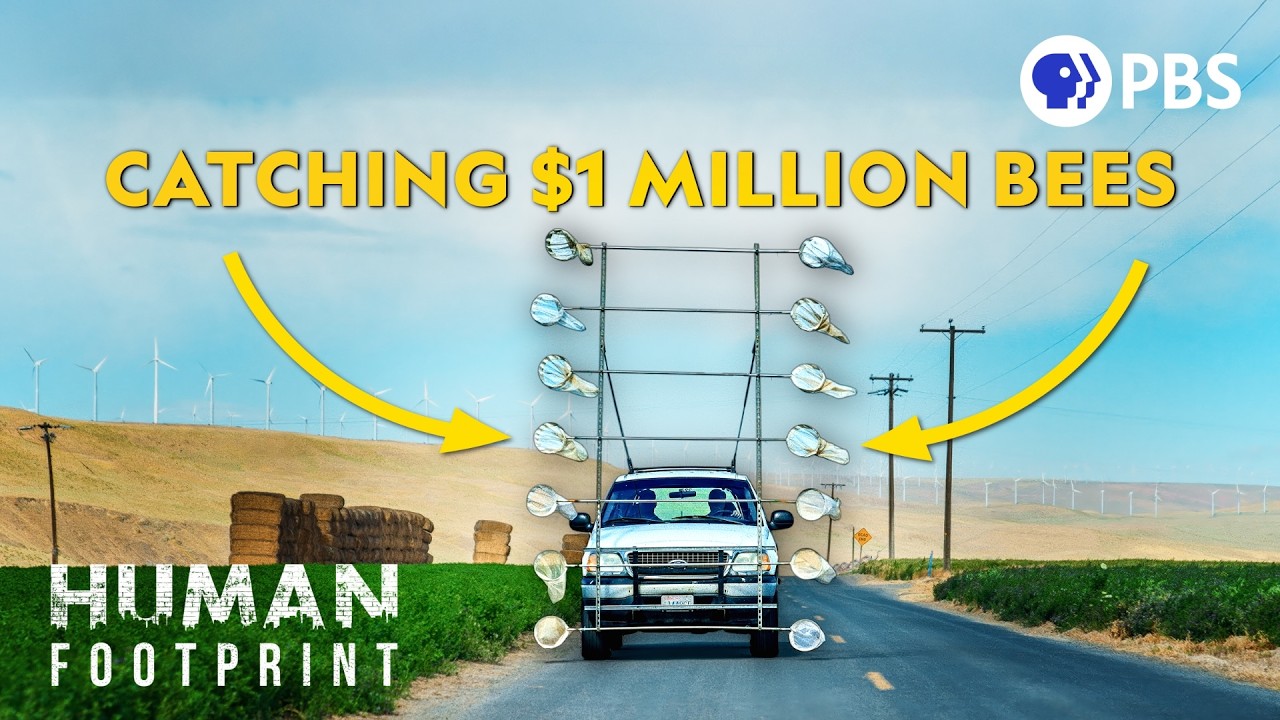
- The story of rerouting a highway to protect the bees, including the vehicular bee sweeper.
- Conclusion on the importance of native pollinators and the need for a diversified pollinator portfolio.
Cited Sources
- Human Footprint (PBS show) — The video is an episode of this series, and the link is provided in the description.
- PBS Donate — Link in the description to support PBS.
Concurring Sources
- Alkali bee (Nomia melanderi) — Provides background on the species, confirming its native status and nesting habits.
- Alfalfa seed production — Explains the role of pollinators in alfalfa seed production, supporting the video's claims.
Contribution & Novelties
The video sheds light on a unique agricultural system where native bees are managed for commercial pollination, a practice that is largely unknown outside the region. It provides a compelling case study for the economic and ecological value of native pollinators, challenging the dominance of honey bees in agricultural narratives.
Pour aller plus loin :
- Alkali bee (Nomia melanderi) — Wikipedia article on the species, providing background on its biology and distribution.
- Alfalfa seed production — Section on alfalfa seed production, explaining the crop’s importance and pollination requirements.
- Native bee conservation — U.S. Fish & Wildlife Service page on pollinator conservation, offering broader context on threats to native bees.
109 words
Radar Profile
The radar profile shows high scores in information quantity, quality, and reliability, with a slightly lower technical level, reflecting the documentary's accessible yet informative approach. The video excels in providing valuable content with credible sources, making it a strong educational resource.
💬 Positive, with a few critical notes. Sur les 30 commentaires analysés, la majorité exprime de l'appréciation pour le contenu éducatif, mais certains critiquent la caractérisation des abeilles domestiques comme 'nasty' et soulignent l'ironie de promouvoir une culture non native.