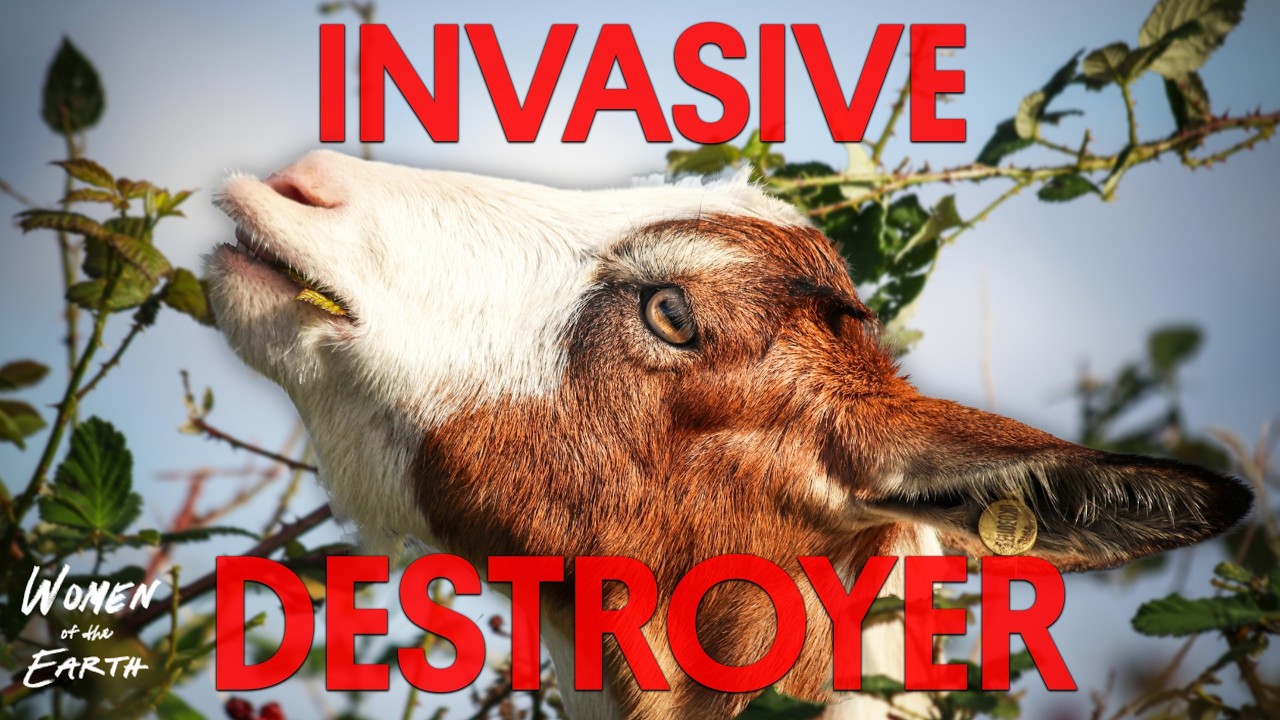
How Tiny Hooves Are Rewilding the Great Plains
Keywords
Summary
137 words
Critical Evaluation
Value of the Information & Strength of the Argument
The video provides valuable insights into an alternative land management practice, showcasing real-world application. It argues effectively against herbicide reliance by highlighting ecological consequences and presenting goat grazing as a viable, nature-based solution. The argument is supported by visual evidence of grazing effects and the rancher’s 15 years of experience. However, the presentation is largely anecdotal, lacking scientific data or comparative studies, which limits its strength as a rigorous scientific argument.
Scientific Rigor, Source Quality, Title Accuracy
The video maintains a good level of scientific rigor by referencing ecological principles and specific weed species. It mentions the presence of glyphosate in rainwater, a claim supported by scientific literature, though not cited directly. The sources are primarily the practitioner’s expertise and the PBS platform, which is reputable. The title accurately represents the content, focusing on the role of goats in ecological restoration. The video does not delve into peer-reviewed research, but it provides a credible, firsthand account of regenerative practices.
168 words
Title / Content Match
The title accurately reflects the content, focusing on the role of goats in ecological restoration of grasslands.
Quality & Reliability
8/10
The video presents a case study of regenerative grazing, featuring a practitioner's firsthand experience. It contrasts herbicide use with goat grazing, citing specific examples (e.g., glyphosate in rainwater) and ecological principles. While not a peer-reviewed study, the information is grounded in observable practices and aligns with established ecological concepts. The production by PBS adds credibility, though the content is largely anecdotal and lacks quantitative data.
Key Moments
Markers derived by PSI from the transcript: the creator did not define chapters.
- Introduction to the problem of noxious weeds in Montana and the use of goats as a solution.
- Chia Thrane explains her background and the decision to use goats for weed management.
- Discussion of specific noxious weeds and their characteristics, including leafy spurge.
- Comparison of herbicide use versus goat grazing, highlighting the ecological benefits of grazing.
- Demonstration of goats grazing a patch of leafy spurge, showing immediate effectiveness.
- Explanation of rotational grazing and its role in allowing land to rest and recover.
- Family life on the ranch, including milking goats and raising children in a nature-connected way.
- Chia's vision for the future of land management and the importance of educating others.
Cited Sources
- PBS Terra Donation Page — Support link for PBS Terra, mentioned in the video description.
Concurring Sources
- Rotational grazing — Supports the ecological benefits of rotational grazing as described in the video.
- Glyphosate in rainwater — Corroborates the claim that glyphosate is found in rainwater.
Dissenting Sources
- Herbicide effectiveness — Some agricultural sources argue that herbicides are more cost-effective and efficient for large-scale weed control, which contrasts with the video's advocacy for goat grazing.
Contribution & Novelties
The video contributes to the discourse on regenerative agriculture by presenting a compelling case study of goat grazing as a viable alternative to chemical herbicides. It emphasizes the holistic benefits, including soil health, biodiversity, and family well-being. The narrative is unique in its focus on a woman-led operation and the integration of livestock into a regenerative system.
Pour aller plus loin :
- Rotational grazing — Overview of the practice and its ecological benefits.
- Glyphosate in rainwater — Study on glyphosate presence in environmental samples.
- Regenerative agriculture — Principles and examples of regenerative farming practices.
94 words
Radar Profile
The radar profile shows high scores in information quality and reliability, with moderate technical depth. The video excels in presenting a compelling narrative and practical insights, but lacks quantitative data and scientific citations, which is reflected in the lower technical score.
💬 Très positif. Sur les 30 commentaires analysés, l'écrasante majorité exprime un soutien enthousiaste pour la pratique du pâturage caprin et une appréciation pour le travail de Chia, avec des anecdotes personnelles et des encouragements.