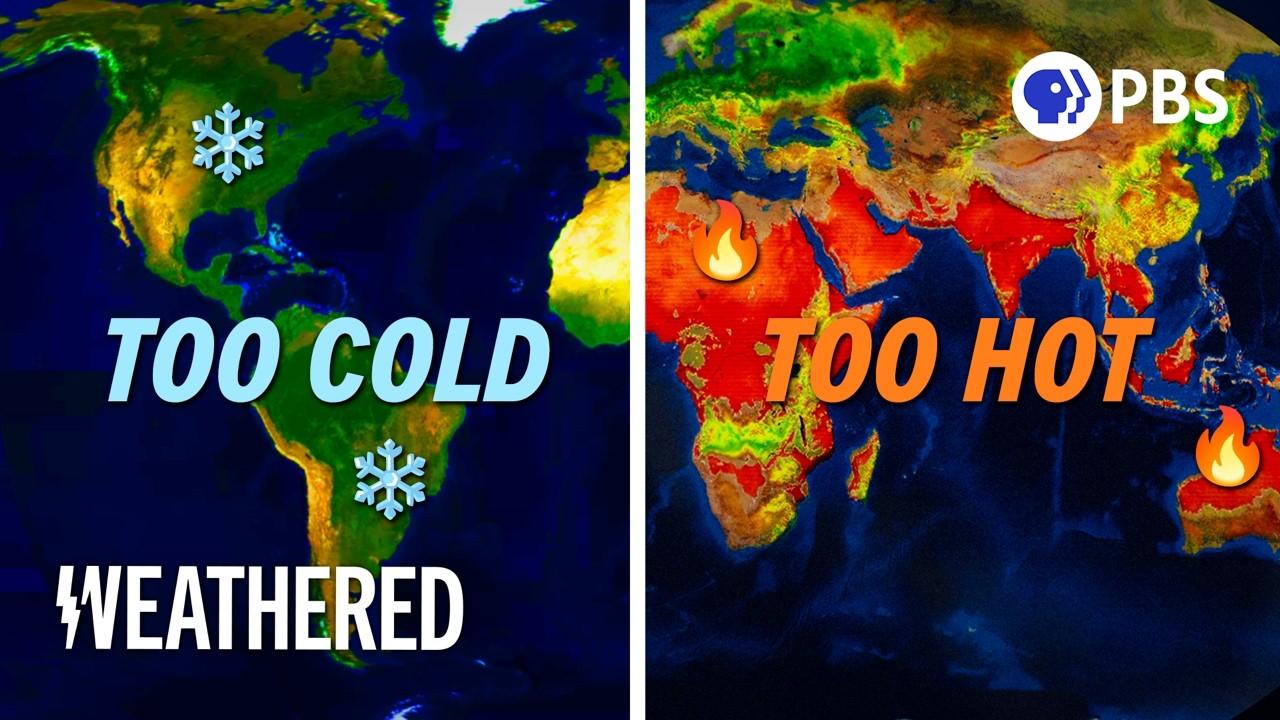
Is There a Goldilocks Zone of Global Warming?
Keywords
Summary
147 words
Critical Evaluation
Value of the Information & Strength of the Argument
The video provides valuable information by synthesizing complex economic and climate research into an accessible format. It effectively argues that previous economic models underestimated climate damages by isolating national impacts, and presents the new global-weather model as a more realistic approach. The argumentation is solid, supported by expert interviews and a specific peer-reviewed study. The video also offers a balanced perspective by acknowledging the risks of both rapid and slow decarbonization, and by presenting the ‘Goldilocks’ concept as a nuanced policy target.
Scientific Rigor, Source Quality, Title Accuracy
The video demonstrates scientific rigor by referencing a specific, recent study (Neal, 2025) published in Environmental Research Letters, and by featuring interviews with the study’s author and other experts (Zeke Hausfather, Catherine Wolfram). The sources are credible and directly relevant. The title accurately reflects the content, which explores the economic concept of an optimal warming level. The video also clearly distinguishes between scientific and economic perspectives, enhancing its credibility.
166 words
Title / Content Match
The title accurately reflects the central question of the episode, which explores the concept of an optimal level of global warming from an economic perspective.
Quality & Reliability
8/10
The video presents a balanced view of climate science and economics, citing a specific peer-reviewed study (Neal, 2025) and featuring expert interviews. It clearly distinguishes between scientific consensus and economic modeling limitations, and provides context for the uncertainties involved.
Key Moments
Markers derived by PSI from the transcript: the creator did not define chapters.
- Introduction to the debate between climate scientists and economists on climate change costs.
- Explanation of how economic models predict only a 10-12% GDP drop by 2100, contrasting with scientific warnings.
- Discussion of climate tipping points and their potential catastrophic impacts, including sea level rise and carbon release.
- Introduction of Dr. Timothy Neal's new study that incorporates global weather impacts, leading to a 40% GDP loss projection.
- Hypothetical scenario of an abrupt fossil fuel phase-out, illustrating the risks of a too-fast transition.
- Explanation of the Shared Socioeconomic Pathways (SSPs) and the possibility of a worse future under SSP3.
- Discussion of the 'Goldilocks' optimal warming target of 1.7°C and the need for rapid decarbonization.
- Analysis of carbon pricing, the US's lack of a federal carbon price, and global clean energy investment trends.
Cited Sources
- Dr. Timothy Neal's Study — The study is the central focus of the episode, providing new economic modeling that incorporates global weather impacts.
- PBS Donate Terra — Link to support PBS Terra, mentioned in the video description.
Concurring Sources
- Dr. Timothy Neal's Study — The study's findings are directly presented and discussed in the video.
Dissenting Sources
- Previous economic models — The video contrasts the new study with older economic models that predicted milder impacts, highlighting the discrepancy.
Contribution & Novelties
The video’s original contribution lies in its clear explanation of why economic models have historically underestimated climate damages, and its presentation of a new modeling approach that yields significantly higher cost projections. It effectively bridges the gap between climate science and economics for a general audience, making complex research accessible.
Pour aller plus loin :
- Climate change and economic growth — Provides background on the economic analysis of climate change.
- Shared Socioeconomic Pathways — Explains the SSP scenarios used in climate modeling.
- Carbon pricing — Overview of carbon pricing mechanisms and their role in climate policy.
96 words
Radar Profile
The radar profile shows high scores across all dimensions, indicating a well-rounded and informative video. The slightly lower 'niveau_technique' score reflects its accessible approach, while the high 'fiabilite_globale' underscores the credibility of the sources and experts featured.
💬 The comments are predominantly positive and engaged, with many viewers expressing agreement with the video's message and sharing personal experiences (e.g., farmers noting climate impacts). Some comments are critical of economists and the economic system, but overall the sentiment is supportive of the content. Sur les 30 commentaires analysés, la majorité exprime un accord avec le contenu et une préoccupation pour l'avenir climatique.