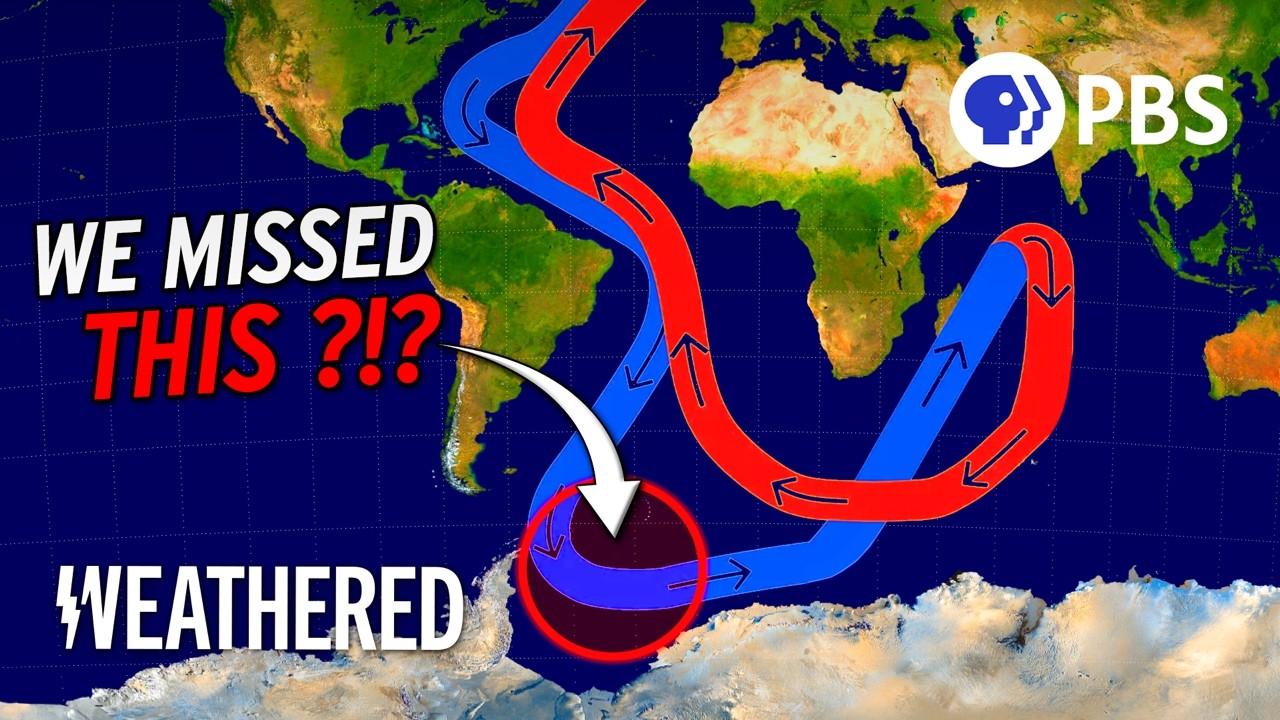
A Hidden Antarctic Tipping Point May Have Just Been Triggered
Keywords
Summary
156 words
Critical Evaluation
Value of the Information & Strength of the Argument
The video provides valuable information by synthesizing recent scientific findings on Antarctic sea ice loss, presenting a clear and compelling narrative. The argumentation is solid, relying on expert interviews and model outputs. The explanation of the feedback loop is particularly effective, making complex oceanographic concepts accessible. The video also addresses the broader implications for global climate and sea level rise, strengthening its value. However, it could have benefited from more explicit references to specific studies to enhance its scientific rigor.
Scientific Rigor, Source Quality, Title Accuracy
The video demonstrates scientific rigor through interviews with credible researchers and the use of model simulations. However, the description lacks direct links to the cited studies, which limits the ability to verify the sources. The title accurately reflects the content, focusing on the potential tipping point. The adéquation between title and content is strong, as the video indeed explores the possibility of a triggered tipping point in Antarctica. The absence of explicit citations in the description is a minor weakness.
175 words
Title / Content Match
The title accurately reflects the content, focusing on a newly identified Antarctic tipping point and its potential consequences.
Quality & Reliability
8/10
The video relies on interviews with climate scientists (e.g., Ariaan Purich, Ed Doddridge) and presents peer-reviewed findings, but lacks direct citations to specific studies in the description. The scientific content is accurate and well-explained, but the absence of explicit references slightly reduces the score.
Key Moments
Markers derived by PSI from the transcript: the creator did not define chapters.
- Introduction to the Antarctic sea ice mystery and its importance.
- Explanation of bottom water formation and its role in global ocean circulation.
- Discussion of the albedo effect and Arctic amplification.
- Description of the 2016 sea ice crash and the seven standard deviations event.
- Explanation of the two-layer ocean system and the feedback loop.
- Computer model results showing the persistence of low sea ice.
- Impacts on emperor penguins and the AMOC slowdown.
- Conclusion on the importance of slowing warming and adapting.
Cited Sources
- PBS Donate — Support link for PBS Terra.
- Weathered Merch — Merchandise link for the show.
Concurring Sources
- NASA Climate Change — General climate data and sea ice trends.
- NSIDC Sea Ice Index — Sea ice extent data and analysis.
Dissenting Sources
- Climate Feedback — Some climate skeptics may question the severity of the tipping point, but the scientific consensus supports the video's claims.
Contribution & Novelties
The video provides a clear and up-to-date synthesis of recent research on Antarctic sea ice decline, highlighting a potential tipping point that is not widely known. It explains the mechanisms behind the decline and its implications for global climate, offering a valuable resource for public understanding.
Pour aller plus loin :
- Antarctic sea ice — Overview of Antarctic sea ice and its variability.
- Atlantic meridional overturning circulation — Explanation of the AMOC and its role in climate.
- Emperor penguin — Information on the species and its vulnerability to sea ice loss.
91 words
Radar Profile
The radar profile shows high scores in information quantity and quality, with a slightly lower technical level, indicating that the video is informative and scientifically sound but accessible to a general audience. The reliability score is high, reflecting the use of expert interviews and model data.
💬 négatif — Sur les 30 commentaires analysés, la majorité exprime une inquiétude et une frustration face à l'inaction climatique, avec des références à des conditions météorologiques extrêmes et des critiques envers les industries polluantes.