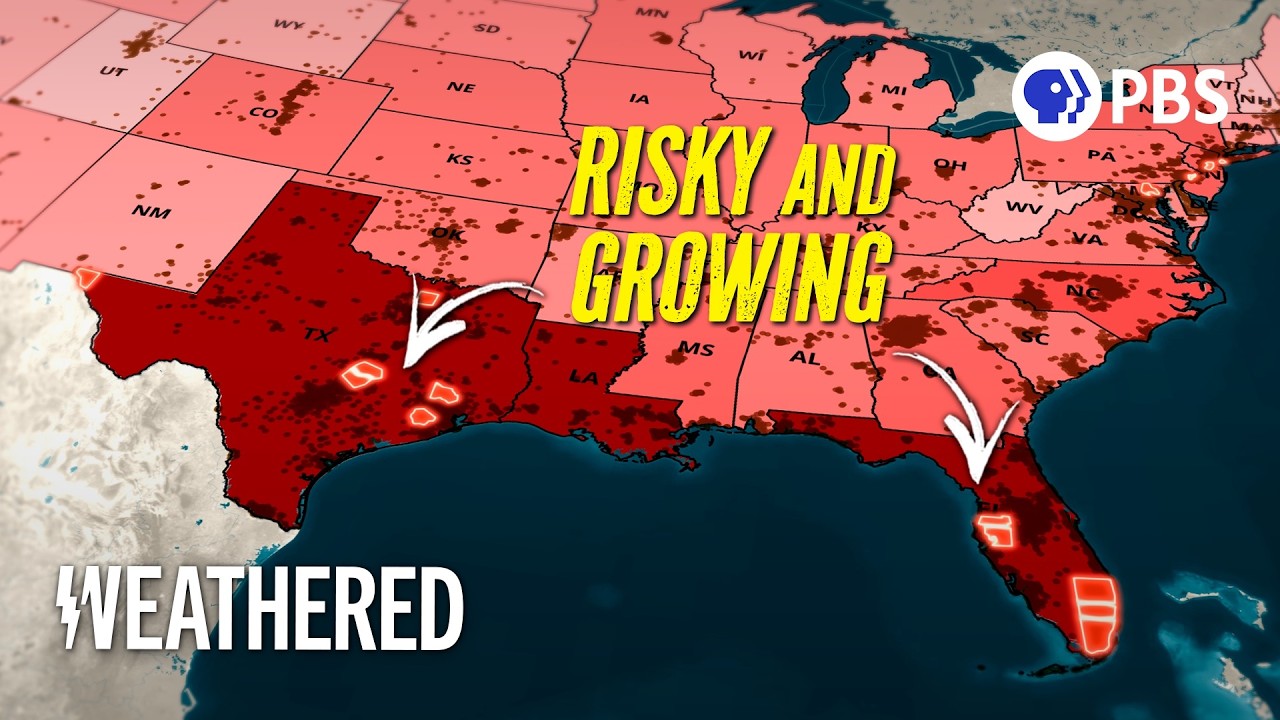
The Real Reason People Move Toward Risk
Keywords
Summary
163 words
Critical Evaluation
Value of the Information & Strength of the Argument
The video provides valuable insights into the complex interplay between housing policy, economic factors, and climate risk. It effectively uses data from First Street Foundation to illustrate future migration patterns, adding a quantitative layer to the discussion. The argumentation is solid, presenting a clear causal chain: restrictive zoning and high costs in blue cities push people to cheaper, riskier areas. The inclusion of expert commentary and specific examples (e.g., Portland’s Albina neighborhood) strengthens the narrative. However, the video simplifies some issues, such as attributing the housing crisis primarily to policy choices, while downplaying the role of corporate landlords and wage stagnation, as noted in the comments. The proposed solutions are reasonable but may be overly optimistic about the feasibility of policy changes.
Scientific Rigor, Source Quality, Title Accuracy
The video demonstrates scientific rigor by citing data from First Street Foundation and referencing academic research on migration and climate risk. It also includes expert interviews, adding credibility. However, it does not provide direct citations for all claims, and some statistics (e.g., cost comparisons between California and Texas) are presented without a clear source. The title accurately reflects the content, focusing on the paradox of moving toward risk. The video’s production quality is high, with clear visuals and graphics. The description provides links to PBS and Patreon, but no specific sources are listed, limiting the ability to verify claims independently.
237 words
Title / Content Match
The title accurately reflects the core theme of the video, which explores the paradox of population growth in high-risk climate areas.
Quality & Reliability
8/10
The video relies on expert interviews, data from First Street Foundation, and references to academic research. It presents a balanced view, acknowledging trade-offs and limitations. However, it simplifies complex socio-economic issues and does not provide direct citations for all claims.
Key Moments
Markers derived by PSI from the transcript: the creator did not define chapters.
- Introduction to the paradox of population growth in high-risk areas.
- Discussion on the housing crisis origins in the 2008 recession.
- Explanation of NIMBYism and community engagement issues in liberal cities.
- Analysis of Sunbelt growth and its correlation with climate risk.
- Introduction of First Street's migration projections and categories.
- Discussion on the insurance market crisis and its implications.
- Proposed solutions: building more housing in resilient areas and improving building codes.
Cited Sources
- PBS Donate — Link to support PBS, mentioned in the video description.
Concurring Sources
- First Street Foundation — The video's primary data source for climate risk and migration projections.
Dissenting Sources
- Commenter on corporate landlords — Several comments argue that the video overlooks the role of corporate landlords and hedge funds in driving up housing costs, which they see as a major factor.
Contribution & Novelties
The video synthesizes existing research on climate migration and housing policy, offering a compelling narrative that connects the dots between liberal urban policies and population shifts to risky areas. It introduces First Street Foundation’s detailed projections, which are relatively new and provide a granular view of future migration patterns. The emphasis on the insurance market as a tipping point adds a fresh perspective.
Pour aller plus loin :
- First Street Foundation — The organization behind the climate risk models and migration projections featured in the video.
- NIMBY - Wikipedia — Provides background on the ‘Not In My Backyard’ phenomenon and its impact on housing development.
- Great Recession - Wikipedia — Context on the economic downturn that exacerbated the housing shortage.
120 words
Radar Profile
The radar profile shows high scores in information quantity and quality, reflecting the video's data-driven approach. The technical level is moderate, making it accessible to a general audience. The overall reliability is strong, though the lack of direct citations for some claims slightly reduces the score.
💬 Positif, with a strong appreciation for the content and a call to support PBS. Many commenters share personal experiences of moving due to climate risks or housing costs, and some express concerns about corporate landlords and the need for policy changes. Overall, the sentiment is supportive and engaged.