Keynote Recherche - Giuseppina Caligiuri, Le paradoxe du dispositif endovasculaire
Keywords
Summary
155 words
Critical Evaluation
Value of the Information & Strength of the Argument
The presentation provides valuable insights into the limitations of current stent technologies and a promising novel approach. The argumentation is solid, based on the speaker’s own research and published studies. She clearly explains the biological rationale and presents experimental evidence, including animal studies. However, the talk is an expert opinion rather than a systematic review, and some claims lack specific citations.
Scientific Rigor, Source Quality, Title Accuracy
The scientific rigor is high, given the speaker’s expertise and the reference to her own peer-reviewed work. The sources mentioned are primarily her own publications and general knowledge, but specific citations are not provided in the talk. The title accurately reflects the content, which is a balanced discussion of the paradox and a potential solution.
131 words
Title / Content Match
The title accurately reflects the content, which discusses the paradox of stents being life-saving yet causing complications, and presents a novel approach to improve their biocompatibility.
Quality & Reliability
8/10
The speaker is a senior researcher and clinician with extensive expertise in cardiovascular immunology and stent technology. The presentation is based on her own research and published studies, but it is a conference talk without detailed citations or peer review.
Key Moments
Markers derived by PSI from the transcript: the creator did not define chapters.
- Introduction of the speaker and her background.
- Explanation of what stents are and their role in keeping arteries open.
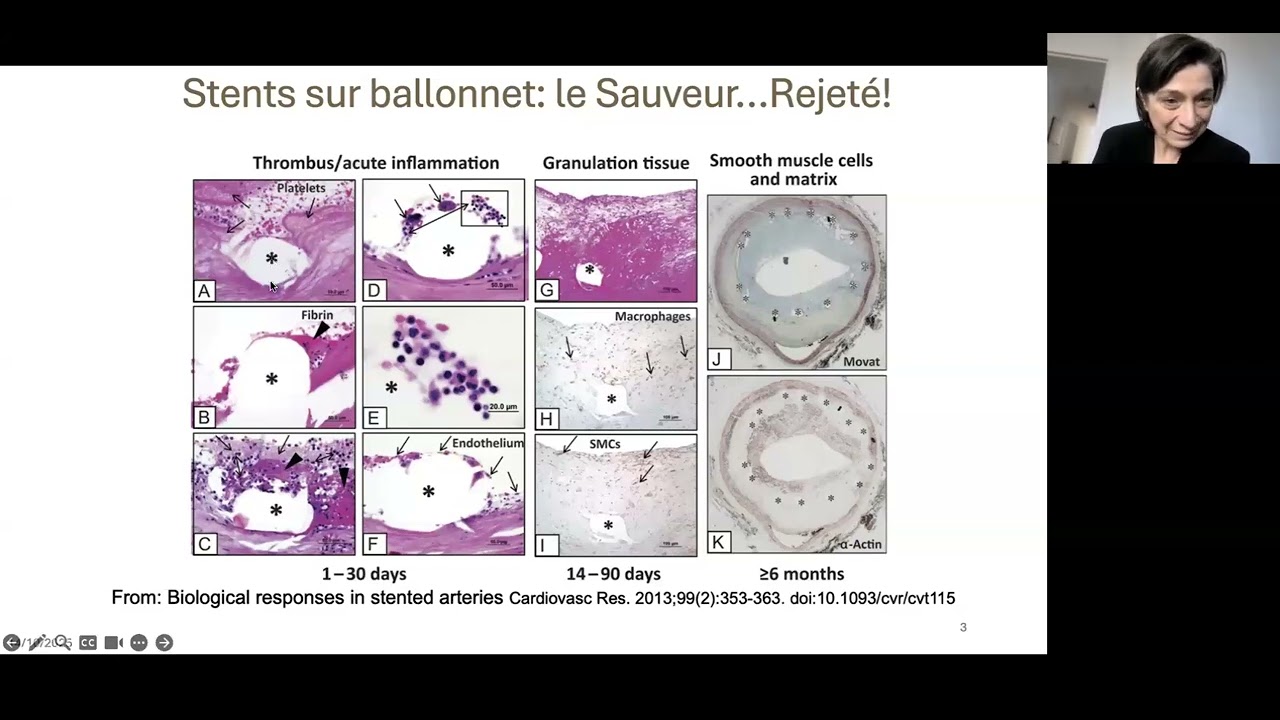
- Description of the inflammatory response to stents and the formation of neointima.
- Discussion of the role of the endothelium and its dysfunction after stenting.
- Introduction of the concept of CD31 and its role in modulating platelet and leukocyte activation.
- Presentation of experimental results with CD31-coated stents in animal models.
- Discussion of the importance of functional endothelium and ongoing research.
Cited Sources
- CD31 and its role in vascular biology — Referenced in the talk as the basis for the CD31-based stent coating.
Concurring Sources
- Stent thrombosis and restenosis — General literature supporting the complications of stents.
Dissenting Sources
- Potential alternative approaches — No discordant sources were mentioned in the talk.
Contribution & Novelties
The talk presents a novel approach to improve stent biocompatibility by coating them with a CD31-derived peptide, which mimics the natural inhibitory signals of the endothelium. This could potentially reduce both restenosis and thrombosis without the need for prolonged antiplatelet therapy. The speaker also highlights the importance of functional endothelialization rather than mere coverage.
Pour aller plus loin :
- CD31 (PECAM-1) — Overview of CD31 and its functions.
- Drug-eluting stent — Background on DES and their limitations.
- Bioresorbable stent — Information on bioresorbable stents and their challenges.
87 words
Radar Profile
The radar profile shows high scores in information quantity, quality, and reliability, with a slightly lower technical level, indicating a well-balanced presentation that is accessible yet scientifically rigorous.
💬 No comments were provided for analysis.