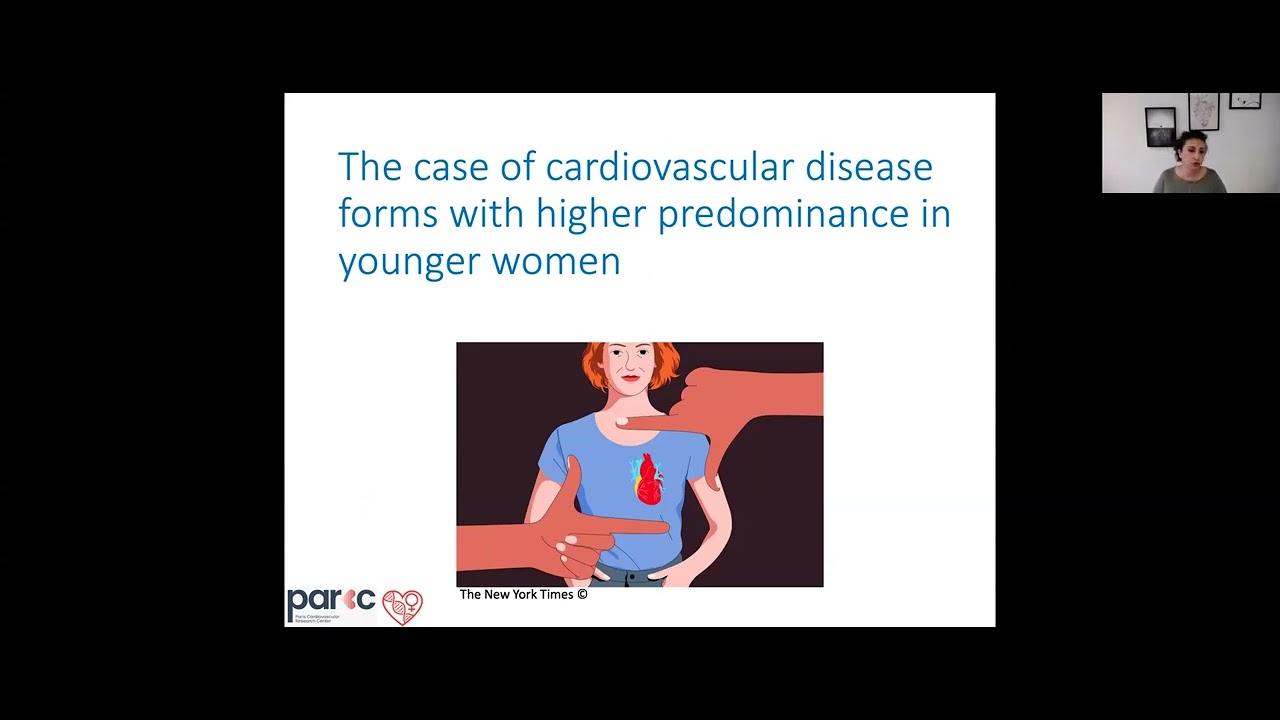
Et si la génétique aidait à comprendre la santé cardiovasculaire des femmes ?
Keywords
Summary
153 words
Critical Evaluation
Value of the Information & Strength of the Argument
The talk provides valuable insights into the genetic basis of understudied cardiovascular diseases affecting women. The speaker presents her own research findings, including GWAS results and the identification of shared genetic loci between SCAD and FMD. The argumentation is solid, grounded in published studies and large-scale data. She clearly explains the polygenic model and the challenges of studying rare diseases with limited cohorts. The presentation is persuasive, highlighting the importance of including sex-specific analyses in genetic research.
Scientific Rigor, Source Quality, Title Accuracy
The speaker is a leading expert, and the content is based on her own peer-reviewed research and established scientific literature. She references specific studies and consortia, though she does not provide detailed citations during the talk. The title accurately reflects the content, which focuses on the potential of genetics to understand cardiovascular health in women. The presentation is scientifically rigorous, but as a keynote, it lacks the depth of a formal review.
164 words
Title / Content Match
The title accurately reflects the content, which focuses on how genetics can improve understanding of cardiovascular diseases in women.
Quality & Reliability
8/10
The speaker is a recognized expert in cardiovascular genetics, with a strong publication record and prestigious awards. The presentation is based on her own research and established scientific knowledge, but it is a keynote talk rather than a peer-reviewed article, so some details are simplified.
Key Moments
Markers derived by PSI from the transcript: the creator did not define chapters.
- Introduction and speaker background
- Overview of genetics and its history
- Cardiovascular disease in women and the mystery of atypical cases
- Introduction to SCAD and FMD
- Challenges in studying these diseases genetically
- Exclusion of oligogenic model and evidence for polygenicity
- GWAS findings for FMD and identification of risk loci
- Shared genetic architecture between SCAD and FMD
- Implications for diagnosis and future research
Cited Sources
- Paris Centre de Recherche Cardiovasculaire (PARCC) — Mentioned as the research center where the speaker works.
- Inserm — Mentioned as the institution funding and supporting the research.
Concurring Sources
- Bouatia-Naji et al., 2021, Circulation Research — The speaker's own publication on the genetics of FMD, likely cited in the talk.
Contribution & Novelties
The talk presents original research on the genetic basis of SCAD and FMD, highlighting the polygenic nature of these diseases and the identification of shared risk loci. It emphasizes the importance of studying sex-specific cardiovascular conditions, which are often overlooked. The speaker’s work contributes to a better understanding of these diseases and opens avenues for improved diagnosis and targeted therapies.
Pour aller plus loin :
- Spontaneous coronary artery dissection (SCAD) - Wikipedia — Overview of SCAD, its clinical features, and epidemiology.
- Fibromuscular dysplasia - Wikipedia — Comprehensive article on FMD, including its types and genetic aspects.
- Genome-wide association study - Wikipedia — Explanation of GWAS methodology, crucial for understanding the genetic findings discussed.
113 words
Radar Profile
The radar profile shows high scores in information quantity, quality, and reliability, with a slightly lower technical level, indicating a presentation that is scientifically robust yet accessible to a broad audience.
💬 No comments were provided for analysis.