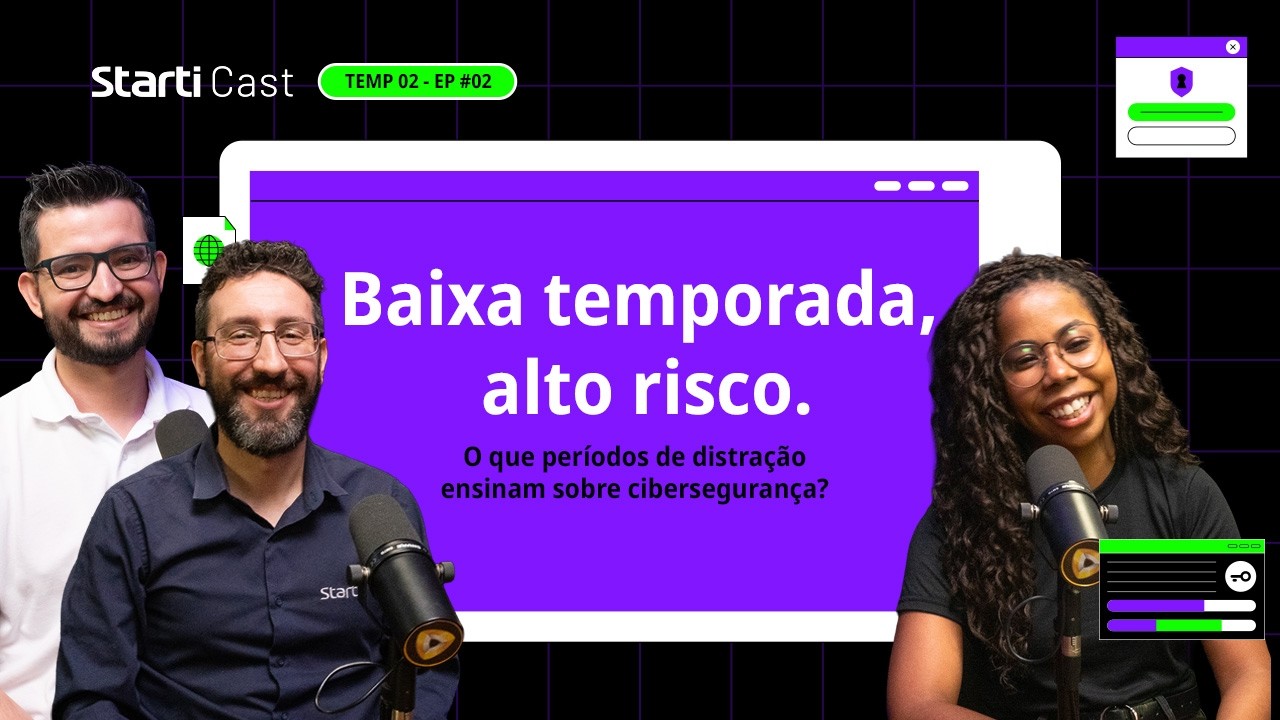
O que períodos de distração ensinam sobre cibersegurança?
Keywords
Summary
164 words
Critical Evaluation
Value of the Information & Strength of the Argument
The video provides valuable insights into the human factors of cybersecurity, emphasizing that curiosity and distraction are significant vulnerabilities. The argumentation is solid, based on practical examples and the speakers’ extensive experience in the field. They effectively argue that security is not just a technical issue but a cultural one, requiring processes and continuous education. The discussion is coherent and persuasive, though it relies more on anecdotal evidence than on empirical data.
Scientific Rigor, Source Quality, Title Accuracy
The scientific rigor is moderate; the speakers cite real-world incidents but do not provide formal references or studies. The sources mentioned are primarily anecdotal or from news reports, and the video’s description includes links to the company’s blog and website, which may contain relevant articles but are not directly cited. The title accurately reflects the content, and the discussion stays on topic. The video does not include a formal review of literature or data, but it offers practical advice grounded in professional experience.
170 words
Title / Content Match
The title accurately reflects the content, which discusses how periods of distraction (like holidays) can lead to security lapses and what lessons can be learned.
Quality & Reliability
6/10
The video is a conversational podcast with expert opinions and anecdotal evidence, but lacks rigorous scientific references or data. The discussion is practical and grounded in real-world examples, but the reliability is moderate due to the absence of cited studies or official statistics.
Key Moments
Markers derived by PSI from the transcript: the creator did not define chapters.
- Introduction of the topic and guests.
- Discussion of the FBI USB drive incident and the role of curiosity.
- Examples of distraction: safari lion attack and lost Bitcoin hard drive.
- Felipe explains how calm periods can lead to mistakes and the need for processes.
- Discussion on the misconception that small businesses are not targets.
- Examples of poor password practices and the importance of security culture.
- The need for continuous training and building a security mindset.
Cited Sources
- Starti Blog — Referenced as a resource for further information on cybersecurity topics.
- Starti Website — Company website mentioned as a source of information about their services.
- Edge Protect — Product mentioned as a solution for cybersecurity.
Concurring Sources
- FBI Internet Crime Complaint Center (IC3) — The FBI is mentioned in the video regarding USB drive attacks; this is the official source for such alerts.
External References
Contribution & Novelties
The video offers a practical perspective on cybersecurity, focusing on human behavior rather than purely technical aspects. It highlights the importance of understanding user psychology and building a security culture. The discussion provides actionable advice for businesses, especially SMBs, to improve their security posture.
Pour aller plus loin :
- Social engineering (security) — Relevant to the discussion on how attackers exploit human curiosity and trust.
- Security awareness — Directly related to the emphasis on training and culture.
- Human factors in cybersecurity — Provides a broader context on the role of human behavior in security.
94 words
Radar Profile
The radar profile shows balanced scores across all dimensions, with slightly higher scores in information quantity and reliability, indicating a well-rounded discussion. The lower technical level reflects the accessible, non-technical approach aimed at a broad audience.