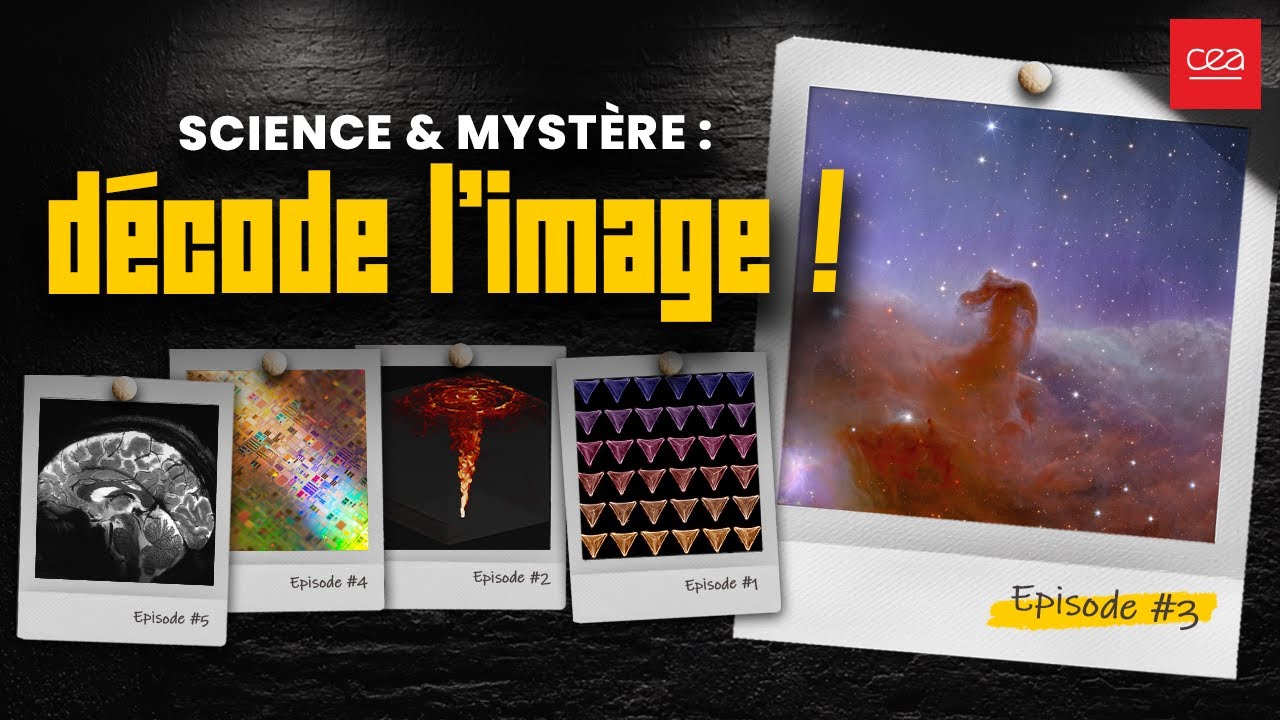
🌌 🚀 Vers l’infini et au-delà ! | Science & Mystère : Décode l'image ! Ep. 3
Keywords
Summary
139 words
Critical Evaluation
The video provides a solid introduction to the Euclid mission, effectively communicating the scientific objectives and the significance of the released images. The astronomer, Jean-Charles Cuillandre, is credible as a CEA researcher directly involved in the mission, lending authority to the content. The explanations are clear, using analogies like the swimming pool grid to illustrate weak lensing, which helps non-experts grasp the concepts. The scientific accuracy is high, with correct details about the mission’s duration, the number of galaxies to be surveyed, and the role of dark energy and dark matter. However, the video is primarily a science communication piece, so it lacks depth in the technical aspects of data processing and analysis. The argumentation is sound, but it does not present any new research findings; it is a review of the mission’s status and early results. The sources cited are the ESA and CEA, which are authoritative, but no specific papers or external references are provided. The title is somewhat sensationalist but does not mislead; the content matches the ‘Science & Mystère’ theme. The video includes a brief sponsorship segment, which is not disruptive. Overall, the video is a valuable educational resource, but it is not a rigorous scientific analysis. The public comments (not provided) would likely reflect appreciation for the visuals and clarity, but we cannot assume. The video’s strength lies in its ability to inspire interest in cosmology and the Euclid mission.
235 words
Title / Content Match
The title is catchy but somewhat vague; the content focuses on the Euclid telescope and its first images, which aligns with the 'Science & Mystère' theme.
Quality & Reliability
8/10
The video features a CEA astronomer explaining the Euclid mission with accurate scientific details, referencing ESA and specific mission parameters. The information is reliable, though presented in a popularized format.
Key Moments
Markers derived by PSI from the transcript: the creator did not define chapters.
- Introduction and first image of the Horsehead Nebula
- Explanation of the CEA's role in astronomy
- Details about the Euclid telescope and its launch
- Why Euclid studies dark energy and dark matter
- The 200-gigapixel mosaic and its significance
- How Euclid captures and processes images
- The goal of surveying two billion galaxies
- Explanation of weak lensing and cosmic web
- The importance of galaxy shapes and colors
- Conclusion and where to find the images
Cited Sources
- ESA Euclid mission — Mentioned as the space agency behind the mission and source of images.
- CEA official website — The CEA is the host institution and a major contributor to the mission.
Concurring Sources
- ESA Euclid mission — The mission's official page confirms the objectives and status.
Contribution & Novelties
The video provides an accessible overview of the Euclid mission and its early scientific images, emphasizing the CEA’s role. It explains complex concepts like weak lensing and dark energy in a clear manner. The main novelty is the presentation of the 200-gigapixel mosaic and the potential for future discoveries.
Pour aller plus loin :
- Euclid mission overview — Official ESA page with detailed mission information.
- Dark energy — Wikipedia article explaining the concept.
- Weak gravitational lensing — Wikipedia article on the technique used by Euclid.
85 words
Radar Profile
The radar profile shows high scores in information quantity and quality, with a moderate technical level, indicating a well-balanced educational video. The reliability is high, reflecting the authoritative source.