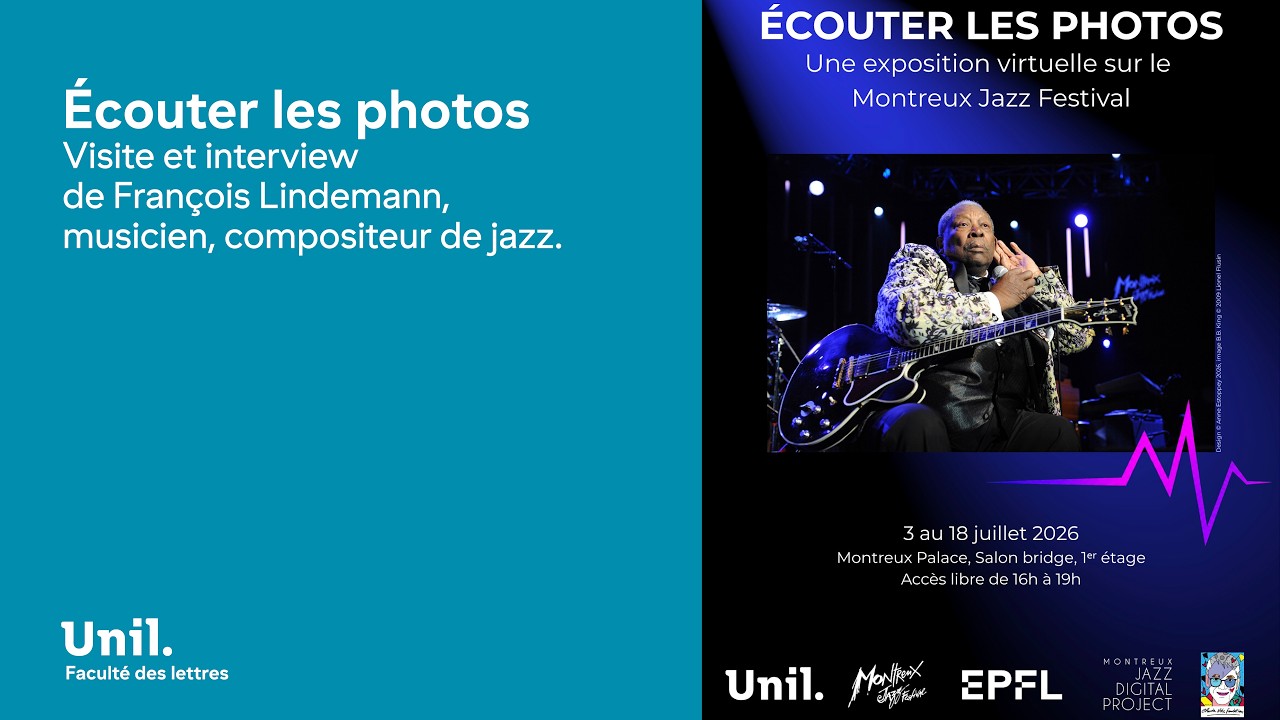
Exposition «Écouter les photos»: Visite et interview de François Lindemann au Montreux Jazz Festival
Keywords
Summary
177 words
Critical Evaluation
Value of the Information & Strength of the Argument
The video’s value lies in its firsthand account from a musician who has performed multiple times at the Montreux Jazz Festival, offering unique insights into the festival’s history and the relationship between music and visual arts. Lindemann’s anecdotes about McCoy Tyner and Bill Evans provide personal perspectives on influential jazz figures. His explanation of synesthesia and his method of working with modes, as learned from Bill Evans, adds a layer of artistic depth. However, the argumentation is largely anecdotal and lacks systematic analysis or broader context. The interview is conversational, and while it touches on interesting topics, it does not delve deeply into any single subject. The value is primarily cultural and historical rather than scientific.
Scientific Rigor, Source Quality, Title Accuracy
The video is produced by an academic institution, which lends credibility to the presentation. The interview is conducted by professors, and the exhibition is a student project supported by the university. The sources cited in the description include a link to the university’s news page about the exhibition and a YouTube link to a performance by Lindemann. These are relevant and provide additional context. The title accurately reflects the content, as the video is indeed a visit and interview. There is no evidence of misleading information, but the content is subjective and personal, so scientific rigor is not applicable. The video does not present any scientific claims or data, so the quality of sources is adequate for its purpose.
250 words
Title / Content Match
The title accurately reflects the content: a visit and interview with François Lindemann at the exhibition.
Quality & Reliability
7/10
The video is an institutional production by the University of Lausanne, featuring an interview with a recognized musician. The content is primarily anecdotal and personal, with no scientific claims or data. The information is reliable within its scope, but limited in depth and verifiability.
Key Moments
Markers derived by PSI from the transcript: the creator did not define chapters.
- Introduction to the exhibition and François Lindemann's arrival.
- Lindemann discusses the concept of 'listening to photos' and his childhood experience with Blue Note album covers.
- Lindemann explains his synesthetic association of musical keys with colors.
- Lindemann shares his preference for wide shots in photographs, as they evoke sound, unlike close-ups.
- Lindemann recalls seeing McCoy Tyner in 1973, an emotional memory.
- Lindemann recounts meeting Bill Evans and learning about modal playing.
- Lindemann talks about his first performance at Montreux and the feeling of being an adolescent.
- Discussion about piano preferences and the tactile qualities of different instruments.
- Lindemann explains his use of prepared pianos, inspired by John Cage.
- Lindemann describes his special project for the 700th anniversary of Switzerland, featuring alphorns and South African singers.
Cited Sources
- UNIL News - Exhibition page — Official university page providing details about the exhibition 'Écouter les photos'.
- François Lindemann - CM5: Suite for P.F. — Audio credit for the video, a performance by Lindemann.
Concurring Sources
- Montreux Jazz Festival official website — Official festival site, corroborating the festival's history and events.
Contribution & Novelties
The video offers a unique personal perspective on the Montreux Jazz Festival from a musician who performed there multiple times. It highlights the intersection of visual and auditory arts, and Lindemann’s synesthetic approach to music is a notable contribution. The exhibition itself is an innovative pedagogical project that combines photography and sound.
Pour aller plus loin :
- Synesthesia — Relevant to Lindemann’s color-key associations.
- Prepared piano — Lindemann discusses his use of prepared pianos, a technique associated with John Cage.
- Montreux Jazz Festival — Provides background on the festival’s history and significance.
92 words
Radar Profile
The radar profile shows moderate scores across all dimensions, with a slightly higher reliability score due to the institutional source. The low technical level and moderate information quantity reflect the video's focus on personal anecdotes rather than in-depth analysis.