How One Man Changed Radio Astronomy Forever - Allison Matthews - 01/12/26
Keywords
Summary
163 words
Critical Evaluation
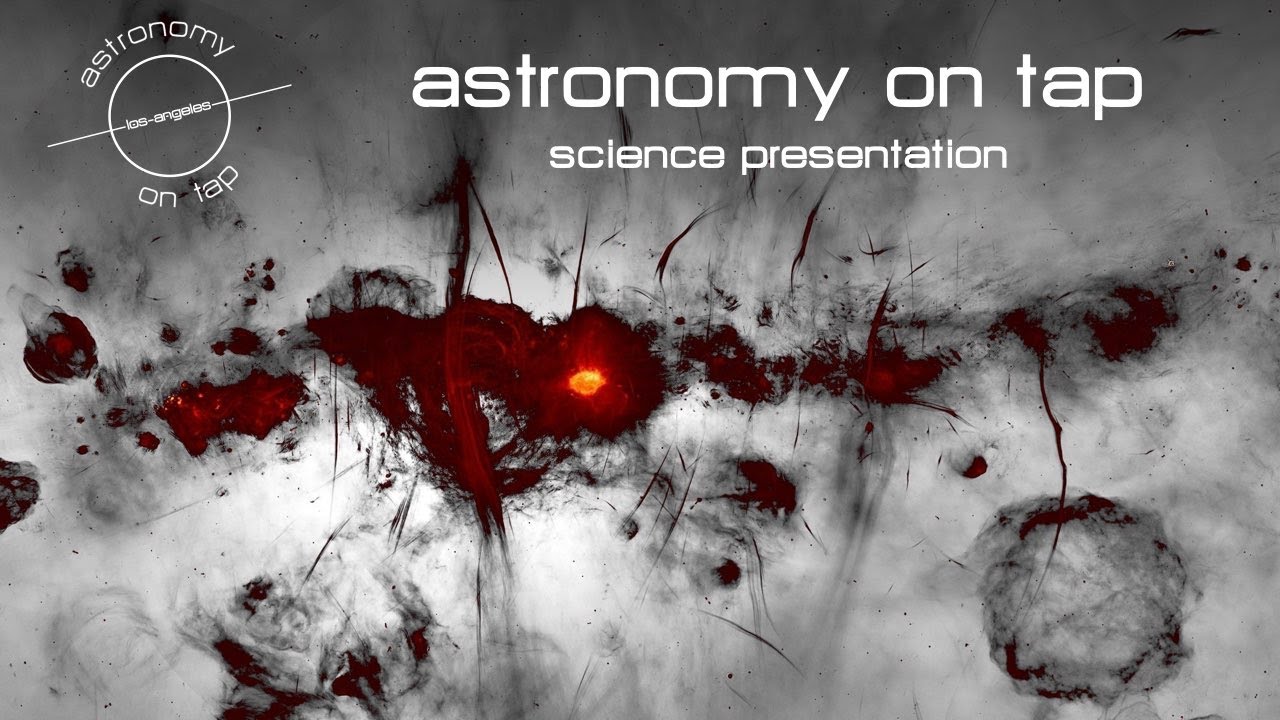
The talk provides a compelling and informative narrative of the early days of radio astronomy, centered on Grote Reber’s contributions. Dr. Matthews, as a practicing radio astronomer, brings credibility and enthusiasm to the subject. The scientific content is accurate, with clear explanations of concepts like blackbody radiation and the electromagnetic spectrum. The historical account is well-researched, including details about Reber’s background, his challenges, and his eventual success. The talk effectively conveys the significance of Reber’s work, which was initially dismissed by the professional community but ultimately revolutionized our understanding of the universe. The use of visual aids, such as radio images of the Milky Way, enhances the presentation. However, the talk is aimed at a general audience, so it simplifies some technical aspects and does not delve into the complexities of radio astronomy. The lack of specific citations or references to scientific papers is a minor weakness, but the speaker’s expertise and the inclusion of specific telescope names and frequencies lend credibility. The title accurately reflects the content, and the talk successfully achieves its goal of educating and engaging the public. Overall, it is a high-quality science communication piece that balances historical context with scientific explanation.
196 words
Title / Content Match
The title accurately reflects the content, focusing on Grote Reber's pivotal role in radio astronomy.
Quality & Reliability
8/10
The talk is given by a postdoctoral researcher in radio astronomy, providing accurate historical and scientific context. The content is well-structured, with clear explanations of radio astronomy principles and the historical significance of Grote Reber. The speaker's expertise and the inclusion of specific technical details (e.g., frequencies, telescope names) enhance reliability. However, as a popular science talk, it lacks detailed citations and peer-reviewed references, and some simplifications are made for a general audience.
Key Moments
Markers derived by PSI from the transcript: the creator did not define chapters.
- Introduction to radio astronomy and the electromagnetic spectrum.
- Examples of radio images of galaxies and supernova remnants.
- Karl Jansky's discovery of cosmic radio emission in 1933.
- Grote Reber's background and decision to build a radio telescope.
- Reber's initial attempts and eventual detection of galactic radio emission.
- Reber's first publication and confirmation of Jansky's results.
- Reber's radio map of the Milky Way and the galactic center.
- Comparison of Reber's map with modern high-resolution images.
- Legacy of Grote Reber and the advancement of radio astronomy.
Cited Sources
- Allison Matthews - Personal Website — Speaker's professional background and research interests.
- Caltech Astronomy Outreach - Astronomy on Tap — Information about the Astronomy on Tap event series.
Concurring Sources
- Grote Reber - Wikipedia — Confirms biographical details and contributions of Grote Reber.
- Karl Jansky - Wikipedia — Confirms Jansky's discovery and its initial reception.
Contribution & Novelties
The talk provides a historical perspective on the birth of radio astronomy, highlighting the often-overlooked contributions of Grote Reber. It emphasizes the importance of perseverance and amateur scientists in advancing scientific knowledge. The speaker’s personal connection to the field adds authenticity.
Pour aller plus loin :
- Karl Jansky - Wikipedia — Background on the discoverer of cosmic radio emission.
- Radio astronomy - Wikipedia — Overview of the field and its development.
- Grote Reber - Wikipedia — Detailed biography of the pioneering radio astronomer.
83 words
Radar Profile
The radar profile shows high scores in information quantity, quality, and reliability, with a slightly lower technical level, reflecting the accessible nature of the talk. The overall balance indicates a well-rounded and trustworthy presentation.