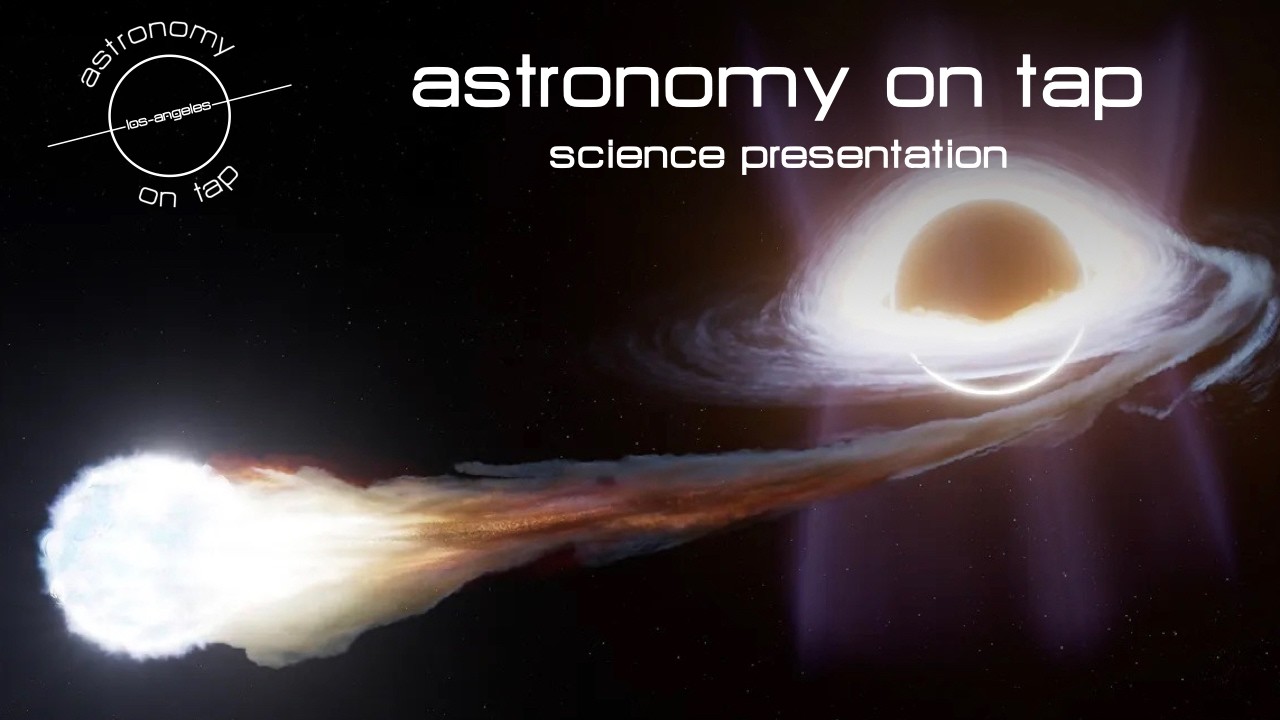
Black Holes Tearing Apart Stars
Keywords
Summary
156 words
Critical Evaluation
Value of the Information & Strength of the Argument
The talk provides valuable insights into the current state of TDE research, highlighting the use of large-scale simulations to understand these extreme events. The argumentation is solid, built on established astrophysical principles (tidal forces, accretion physics) and supported by the speaker’s own research. The step-by-step explanation from indirect observation to simulation and comparison with observations is logical and compelling. The speaker effectively communicates complex ideas with clear analogies, making the content both informative and engaging for a general audience.
Scientific Rigor, Source Quality, Title Accuracy
The scientific rigor is high, as the speaker is an expert in the field and presents content consistent with current astrophysical understanding. While no specific papers are cited, the talk references the speaker’s own simulations and the general methodology of the field. The title accurately reflects the content, which is a focused presentation on TDEs. The description provides links to the speaker’s profile and the Astronomy on Tap program, which adds credibility. The talk is a popular science presentation, so it does not delve into detailed citations, but the information is reliable and up-to-date.
188 words
Title / Content Match
The title accurately reflects the content, which focuses on tidal disruption events and how black holes tear apart stars.
Quality & Reliability
8/10
The talk is given by a Caltech postdoctoral researcher specializing in tidal disruption events, providing expert-level content. The presentation is clear, well-structured, and grounded in current research, though it is a popular science talk and does not include detailed citations.
Chapters
Cited Sources
- Xiaoshan Huang - Caltech Burke Institute — Speaker's profile page, providing her credentials and research focus.
- Astronomy on Tap - Caltech — Information about the Astronomy on Tap series, where this talk was given.
Concurring Sources
- Tidal disruption events - Wikipedia — General reference on TDEs, consistent with the talk's content.
Contribution & Novelties
The talk offers a unique perspective by showcasing the speaker’s own simulations of tidal disruption events, providing a behind-the-scenes look at how such research is conducted. It bridges the gap between theoretical concepts and computational practice, emphasizing the importance of comparing simulations with observations. The Q&A section adds practical insights into the limitations and open questions in the field.
Pour aller plus loin :
- Tidal disruption event - Wikipedia — Overview of TDEs, their characteristics, and significance.
- Supermassive black hole - Wikipedia — Background on the black holes involved in TDEs.
- Radiation hydrodynamics - Wikipedia — The simulation technique used by the speaker.
103 words
Radar Profile
The radar profile shows high scores in information quality and reliability, reflecting the expert presentation and solid scientific grounding. The quantity of information is moderate, typical for a short talk, while the technical level is accessible yet substantive, balancing depth with clarity.