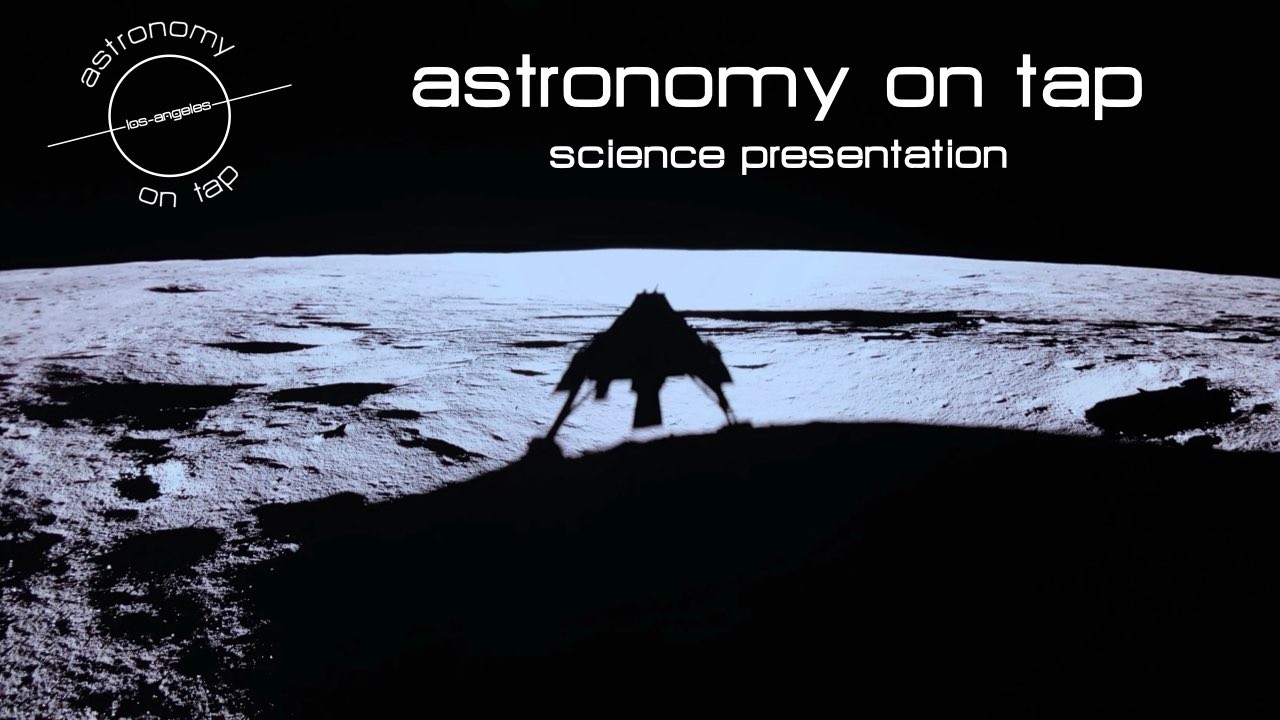
LISTER: Why a Lunar Lander Payload Put a Hole in the Moon
Keywords
Summary
174 words
Critical Evaluation
The talk provides a valuable first-hand account of a recent lunar science mission, delivered by an engineer directly involved in the instrument’s development. The speaker effectively communicates the scientific goals and technical challenges of measuring lunar heat flow, making complex concepts accessible without oversimplifying. The explanation of Fourier’s law and the measurement technique is clear and accurate. The historical context of Apollo heat flow experiments is appropriately referenced. The speaker is honest about his role as an engineer rather than a scientist, which adds credibility. The description of the CLPS program and the commercial partnership with Firefly Aerospace is informative. The talk includes a video demonstration of the pneumatic drilling process, which enhances understanding. The main limitation is the informal setting, which leads to some digressions and humor that may distract from the core content. However, the technical information is solid and aligns with the peer-reviewed publication referenced. The speaker does not delve deeply into the scientific results, but that is not the focus of the talk. Overall, this is a reliable and engaging presentation that offers unique insights into the engineering behind lunar exploration.
185 words
Title / Content Match
The title accurately reflects the content, which explains the purpose and operation of the LISTER payload that drilled into the Moon.
Quality & Reliability
8/10
The speaker is the lead mechanical engineer for the LISTER instrument, providing first-hand technical details. The talk is informal but grounded in engineering practice, and references a peer-reviewed publication. Some simplifications are made for a general audience, but the core information is accurate.
Key Moments
Markers derived by PSI from the transcript: the creator did not define chapters.
- Introduction and question: why put a hole in the Moon?
- Explanation of the Moon's origin and the goal to measure endogenic heat flow.
- Introduction to Fourier's law and the need to measure thermal conductivity and gradient.
- Comparison with Apollo 15 and 17 heat flow experiments.
- Description of LISTER as a pneumatic drill and heat flow probe.
- Explanation of the measurement process: drilling, temperature measurement, and heating needle.
- Video of excavation test and discussion of dust deflector.
- How LISTER got to the Moon via NASA's CLPS program and Blue Ghost lander.
- Mention of three manifested flights for LISTER.
Cited Sources
- The Lunar Instrumentation for Subsurface Thermal Exploration with Rapidity (LISTER) on Blue Ghost Mission 1 to Mare Crisium. I. Pneumatic Excavation of Regolith — Peer-reviewed publication about the LISTER instrument, referenced by the speaker.
- Astronomy on Tap Los Angeles — Event series where this talk was given.
- Roshan Misra LinkedIn — Speaker's professional profile.
Concurring Sources
- NASA CLPS Program — Official program page confirming the CLPS initiative.
Contribution & Novelties
The talk provides an insider’s perspective on the engineering and deployment of a lunar heat flow probe, highlighting the innovative pneumatic drilling technique and the challenges of robotic operation. It underscores the importance of measuring lunar heat flow for understanding planetary evolution.
Pour aller plus loin :
- Lunar heat flow — Overview of the concept and past measurements.
- Commercial Lunar Payload Services — NASA program that enabled the mission.
- Firefly Aerospace Blue Ghost — Mission page for the lander that carried LISTER.
82 words
Radar Profile
The radar profile shows high scores in quality and reliability, with moderate scores in quantity and technical level. This reflects a focused, expert-led talk with solid information but limited breadth and depth.