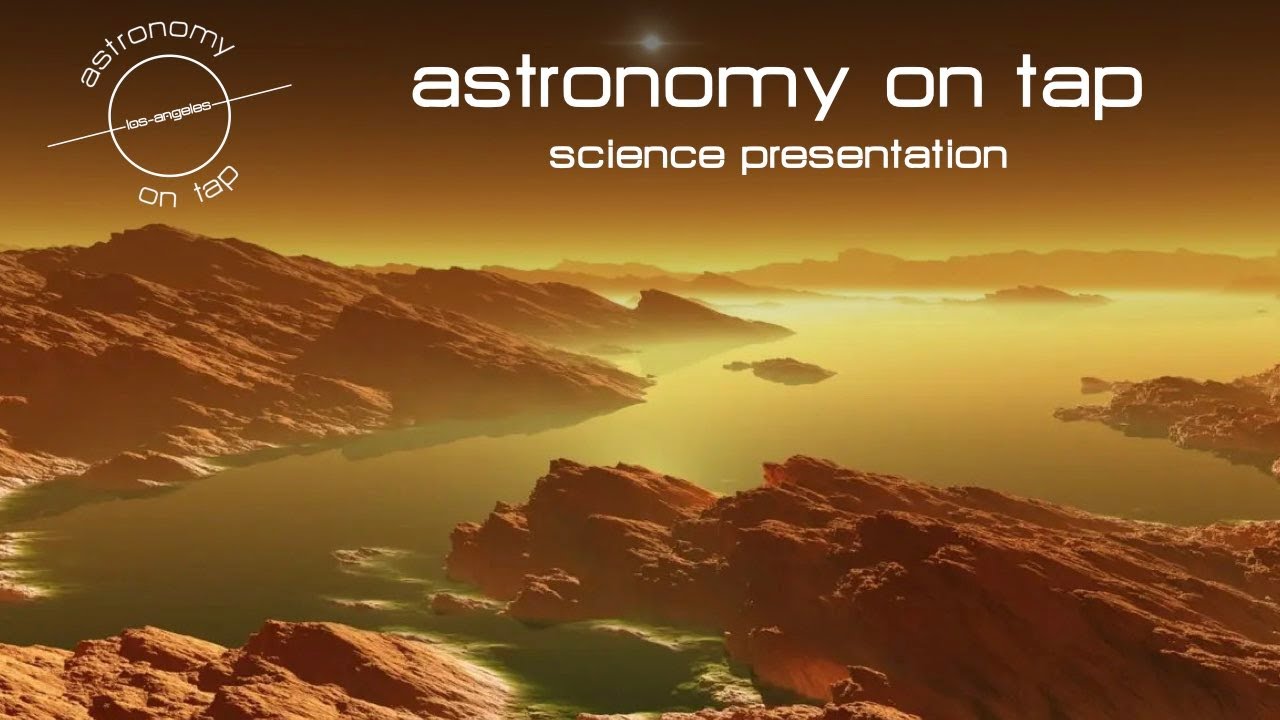
Exploring Saturn’s Moon Titan with the Dragonfly Mission - Morgan Cable - 08/04/2025
Keywords
Summary
147 words
Critical Evaluation
The presentation by Morgan Cable is an excellent example of science communication, effectively conveying complex scientific concepts to a general audience. As a research scientist directly involved in the Dragonfly mission, Cable brings a high level of expertise and credibility. The information presented is accurate and up-to-date, reflecting the current state of knowledge about Titan and the mission’s plans. The talk covers a wide range of topics, from the basic characteristics of Titan to the detailed instrumentation of Dragonfly, providing a comprehensive overview. The argumentation is solid, with clear explanations of why Titan is an interesting target for astrobiology and how the mission will address key scientific questions. The sources cited are primarily the speaker’s own expertise and the mission’s official information, which is appropriate for this type of talk. The adéquation between the title and content is excellent, as the talk focuses exactly on Titan and the Dragonfly mission. One minor weakness is that the talk is informal and may lack depth for a specialized audience, but this is appropriate for the intended setting (Astronomy on Tap). Overall, the presentation is highly informative and reliable, making it a valuable resource for anyone interested in planetary science and astrobiology.
199 words
Title / Content Match
The title accurately reflects the content, which focuses on Titan and the Dragonfly mission.
Quality & Reliability
8/10
Presentation by a NASA JPL research scientist with direct involvement in the Dragonfly mission, providing accurate and up-to-date information. The talk is informal but scientifically sound, with clear explanations of mission goals and instruments.
Key Moments
Markers derived by PSI from the transcript: the creator did not define chapters.
- Introduction by Morgan Cable, research scientist at NASA JPL, and overview of the talk.
- Discussion of Saturn's distance from the Sun and its implications for energy availability.
- Description of Titan's thick atmosphere and its composition, including methane and ethane clouds.
- Explanation of Titan's hydrocarbon lakes and the concept of nonpolar solvents for potential life.
- Overview of Cassini's findings and the mysteries that remain about Titan.
- Introduction to the Dragonfly mission, including launch and arrival dates, and the concept of a relocatable lander.
- Description of Dragonfly's scientific instruments, including mass spectrometer, seismometer, and cameras.
- Explanation of the landing site selection at Selk Crater and the mission's exploration strategy.
- Details on the Draco drill and sample analysis techniques, including UV laser and pyrolysis.
- Discussion of laboratory experiments simulating Titan's conditions and the search for biosignatures.
Cited Sources
- Astronomy on Tap Los Angeles — The talk was part of an Astronomy on Tap event, and this link provides information about the series.
- Morgan Cable's JPL profile — The speaker's official profile at NASA JPL, providing her background and roles.
Concurring Sources
- NASA Dragonfly Mission — Official NASA page for the Dragonfly mission, confirming the details presented in the talk.
- Titan (moon) on Wikipedia — General information about Titan, consistent with the talk's descriptions.
Contribution & Novelties
The talk provides an accessible yet detailed overview of the Dragonfly mission, highlighting its unique approach to exploring Titan. It emphasizes the importance of studying nonpolar solvents for potential life and the mission’s strategy to investigate prebiotic chemistry. The speaker’s personal involvement adds authenticity and depth.
Pour aller plus loin :
- NASA Dragonfly Mission — Official mission page with detailed information.
- Titan (moon) on Wikipedia — Comprehensive overview of Titan’s characteristics.
- Cassini-Huygens mission — Background on the previous mission that studied Titan.
82 words
Radar Profile
The radar profile shows high scores in information quantity, quality, and reliability, with a slightly lower technical level, reflecting the accessible nature of the talk. The overall shape indicates a well-balanced and informative presentation.