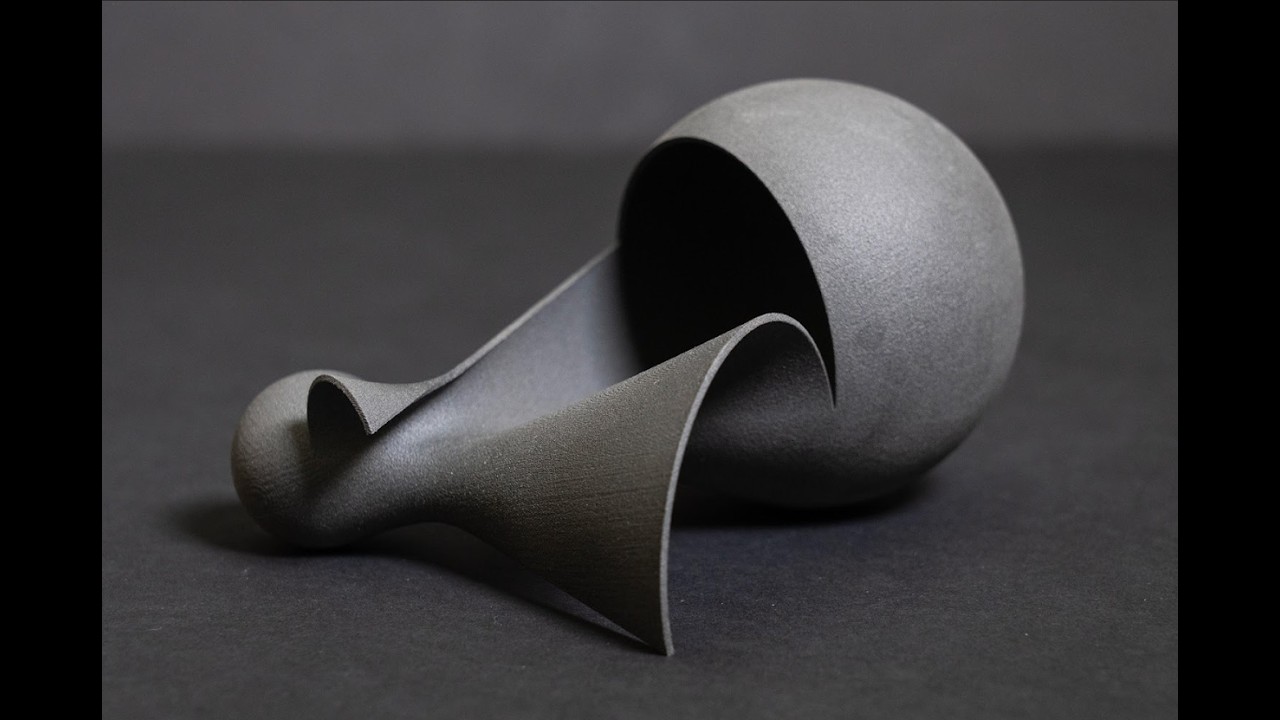
Spring 2026 Lecture Series | Iman Fayyad: Transient Form
Keywords
Summary
223 words
Critical Evaluation
Value of the Information & Strength of the Argument
The lecture offers valuable insights into the theoretical and practical implications of projection in architecture. Fayyad’s argument is well-structured, moving from abstract concepts to concrete examples, and he effectively demonstrates how a specific mathematical technique (stereographic projection) can be applied to design. He provides a compelling case for rethinking the relationship between drawing, perception, and built form. The argumentation is solid, though it relies heavily on the speaker’s authority and personal projects rather than external evidence. The speculative nature of some proposals is acknowledged, but the reasoning is clear and thought-provoking.
Scientific Rigor, Source Quality, Title Accuracy
The lecture demonstrates a strong command of architectural history and theory, referencing figures like Nelson Goodman, Darcy Thompson, and historical practices such as stereotomy. However, formal citations are sparse, and the sources mentioned are not systematically documented. The title accurately reflects the content, focusing on ’transient form’ as a central theme. The lecture is well-organized and the content aligns with the title. No comments were provided for analysis.
174 words
Title / Content Match
The title accurately reflects the content, focusing on the concept of 'transient form' as explored through projection and perception in architecture.
Quality & Reliability
7/10
The lecture presents a coherent theoretical framework grounded in established concepts (stereographic projection, notation in architecture, historical precedents) and demonstrates original research. However, it lacks formal citations and peer-reviewed sources, relying on the speaker's expertise and anecdotal references.
Key Moments
Markers derived by PSI from the transcript: the creator did not define chapters.
- Introduction to the lecture and the concept of 'transient form'.
- Discussion of Nelson Goodman's distinction between autographic and allographic arts.
- Introduction of the two modes of flatness: picture plane and material flatness.
- Historical examples: orthographic drawing, Renaissance perspective, and tall buildings.
- Discussion of stereotomy and thin-shell concrete structures.
- Introduction of stereographic projection and its properties.
- Application of stereographic projection to design a concert hall.
- Discussion of limitations and political implications of privileged viewpoints.
- Conclusion and Q&A session.
Cited Sources
- Nelson Goodman - Languages of Art — Referenced in discussion of autographic vs allographic arts.
- Darcy Thompson - On Growth and Form — Referenced in discussion of transformations and distortion.
- Stereographic projection — Mentioned as a technique used in the research.
Concurring Sources
- Stereographic projection — Provides mathematical background supporting the technique's properties.
- Conformal map — Explains the angle-preserving property used in the lecture.
Contribution & Novelties
The lecture offers a novel perspective on the use of stereographic projection in architectural design, proposing that it can create buildings that appear to transform based on viewer position, thereby challenging conventional perception and programmatic norms. The speculative projects, such as the concert hall, illustrate a radical inversion of audience and performer experiences. The lecture contributes to the discourse on the relationship between drawing techniques and architectural form, suggesting that projection can be a generative tool rather than a mere representation.
Pour aller plus loin :
- Stereographic projection — Provides a mathematical foundation for the technique discussed.
- Conformal map — Explains the property of angle preservation, central to stereographic projection.
- Notation in architecture — Discusses the role of drawing conventions in architectural practice.
- Perception in architecture — Explores how people perceive built environments, relevant to the lecture’s themes.
138 words
Radar Profile
The radar profile shows high scores in quantity and quality of information, with moderate technical level and reliability. This indicates a lecture rich in content and well-argued, but with limited formal citations and reliance on the speaker's expertise.