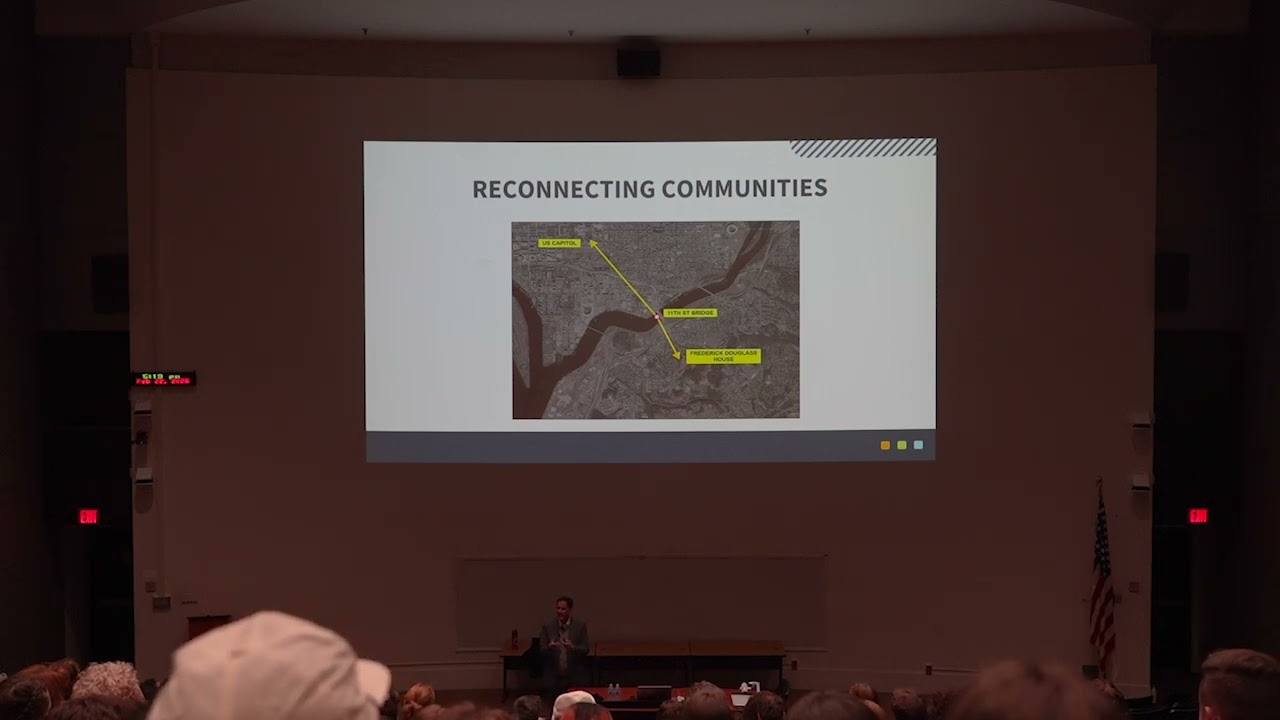
Spring 2026 Lecture Series | Scott Kratz: Building Bridges Across the River
Keywords
Summary
182 words
Critical Evaluation
Value of the Information & Strength of the Argument
The lecture provides valuable insights into the complexities of large-scale urban development projects, particularly the importance of community engagement and addressing unintended consequences. Kratz’s argumentation is strong, supported by specific examples and data, such as the 15-year life expectancy gap and the 500 residents trained in construction. He effectively argues for a model of inclusive growth, where the community is involved in decision-making and benefits from the project. The narrative is compelling and well-structured, though it is primarily a personal account rather than a systematic analysis.
Scientific Rigor, Source Quality, Title Accuracy
The lecture is a first-hand account by the project leader, providing a high level of authenticity. Kratz references specific partners and initiatives, such as the Anacostia Watershed Society and the Douglas Community Land Trust, which can be verified. However, he does not provide formal citations or external sources, relying on his personal experience and project data. The title accurately reflects the content, and the lecture is well-aligned with the stated topic. The presentation is rigorous in its transparency about the project’s challenges and strategies.
185 words
Title / Content Match
The title accurately reflects the content: a lecture by Scott Kratz on the 11th Street Bridge Park project, part of the Spring 2026 Lecture Series.
Quality & Reliability
8/10
The lecture is a first-hand account by the project leader, providing detailed, verifiable information about the 11th Street Bridge Park. It includes specific data (e.g., 15-year life expectancy gap, 500 residents trained, 260 affordable housing units) and references to partner organizations. While it is an expert opinion/personal narrative, it is grounded in extensive community engagement and documented processes.
Key Moments
Markers derived by PSI from the transcript: the creator did not define chapters.
- Introduction: Scott Kratz explains his background and how he got involved in the bridge project.
- Discussion of the three themes: don't shy away from hard things, think about consequences, and work with partners.
- Historical context: the freeway construction and its impact on the community, including displacement.
- The concept of the bridge park and the decision to reuse the old piers.
- Community engagement process: over 200 meetings, youth design workshops, and design oversight committee.
- Design competition and selection of OMA/OLIN design.
- Tour of the proposed park features: stormwater capture, Anacostia Plaza, hammock grove, and more.
- Economic impact analysis and efforts to prevent displacement, including homebuyers club and community land trust.
- Construction training program and plans for the park's opening in 2028.
- Conclusion: the park as a symbol of healing and reconnection.
Cited Sources
- 11th Street Bridge Park — Official project page mentioned by the speaker.
- Anacostia Watershed Society — Partner organization mentioned for river restoration efforts.
- Douglas Community Land Trust — Affordable housing initiative mentioned by the speaker.
Concurring Sources
- 11th Street Bridge Park — Official project page aligns with the speaker's description.
- Anacostia Watershed Society — Confirms the organization's role in river restoration.
Contribution & Novelties
The lecture provides a unique insider perspective on a major urban infrastructure project, highlighting the importance of community engagement and inclusive growth. It offers practical insights into how to build trust and ensure that development benefits existing residents. The project’s approach to addressing historical inequities through targeted programs is a valuable model for other cities.
Pour aller plus loin :
- Community Land Trusts — Relevant to the affordable housing strategy discussed.
- The High Line — Referenced as an inspiration for repurposing infrastructure.
- Anacostia River Restoration — More on the river restoration efforts mentioned.
93 words
Radar Profile
The radar profile shows high scores in information quantity, quality, and reliability, with a moderate technical level. This indicates a lecture that is rich in detailed, credible information but not highly technical, suitable for a general audience interested in urban planning and community development.
💬 No comments were provided for analysis.