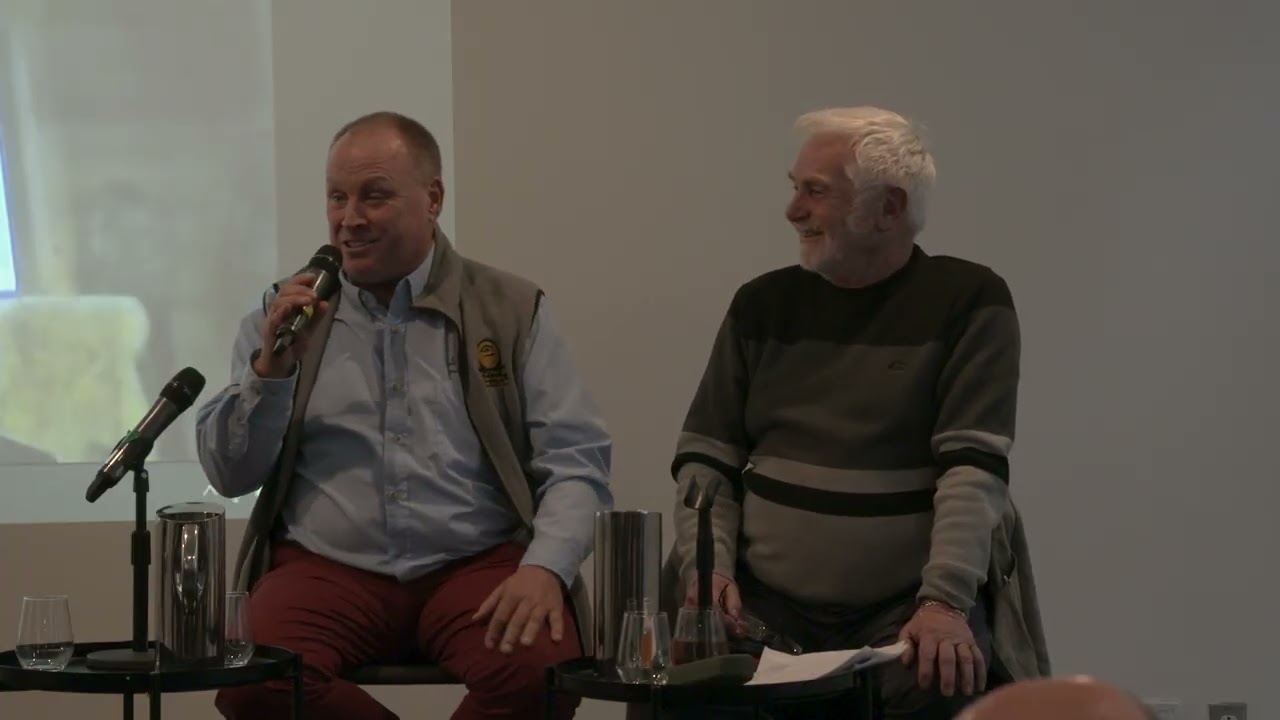
Roundtable 4: Governance, research, and Indigenous lifeways – JBNAQ: The First 50 Years
Keywords
Summary
202 words
Critical Evaluation
Value of the Information & Strength of the Argument
The value of the information is high, as it comes from individuals with direct, long-term involvement in treaty implementation. Nadia Saganash provides concrete examples of the difficulties in enforcing regulations and the importance of cultural values in wildlife management. Paul Wilkinson offers a historical perspective on the Naskapi’s unique situation and the role of research in their community development. Serge Larivière highlights the practical aspects of supporting traditional livelihoods. The argumentation is solid, grounded in personal experience and specific cases, though it lacks formal data or citations. The panelists make compelling points about the need for Indigenous-led research and governance, but the discussion is more anecdotal than systematic.
Scientific Rigor, Source Quality, Title Accuracy
The scientific rigor is moderate. The panelists are experts, but they do not cite specific studies or sources, relying instead on their professional experience. The title accurately reflects the content, as the roundtable directly addresses governance, research, and Indigenous lifeways. The discussion is well-structured, with clear questions posed by the moderator. However, the lack of formal references and the anecdotal nature of the contributions limit its scientific rigor. The panelists’ credibility is high due to their roles, but the absence of verifiable data is a weakness.
209 words
Title / Content Match
The title accurately reflects the content: a roundtable discussion on governance, research, and Indigenous lifeways in the context of the JBNAQ's 50th anniversary.
Quality & Reliability
7/10
The roundtable features three expert panelists with direct involvement in the implementation of the James Bay and Northern Quebec Agreement (JBNAQ) and the Northeastern Quebec Agreement (NEQA). Their insights are grounded in decades of professional experience, providing high practical reliability. However, the discussion is largely anecdotal and lacks formal citations or verifiable data, which limits its scientific rigor.
Key Moments
Markers derived by PSI from the transcript: the creator did not define chapters.
- Introduction by moderator Bobi Steel and panelists.
- Nadia Saganash discusses challenges in implementing Section 24, including caribou wastage.
- Nadia Saganash calls for research to support Indigenous governance and mentions the caribou understanding with the Innu.
- Paul Wilkinson recounts the Naskapi's history and the research that led to the creation of Kawawachikamach.
- Paul Wilkinson discusses the Naskapi's harvesting rights and their departure from the JBNAQ model.
- Serge Larivière introduces the Cree Hunters and Trappers Income Security Board and its role.
- Panelists discuss collaborative research and the role of Indigenous researchers.
- Discussion on the importance of research for treaty implementation and community development.
- Panelists answer questions from the audience and elaborate on governance and research needs.
- Concluding remarks and final recommendations from panelists.
Cited Sources
- James Bay and Northern Quebec Agreement (JBNAQ) — Mentioned as the central treaty being discussed.
- Northeastern Quebec Agreement (NEQA) — Mentioned by Paul Wilkinson as the agreement for the Naskapi.
- Cree Hunters and Trappers Income Security Board — Serge Larivière is the Director General of this board.
Concurring Sources
- James Bay and Northern Quebec Agreement (JBNAQ) — The central treaty discussed, with panelists providing insights on its implementation.
- Northeastern Quebec Agreement (NEQA) — Paul Wilkinson discusses the Naskapi's experience with this agreement.
Contribution & Novelties
The roundtable provides unique insights from practitioners directly involved in treaty implementation, offering practical perspectives on governance and research. It highlights the importance of Indigenous-led research and the challenges of collaborative projects. The discussion underscores the need for research to support Indigenous governance and lifeways, rather than purely academic interests.
Pour aller plus loin :
- United Nations Declaration on the Rights of Indigenous Peoples (UNDRIP) — Relevant for understanding Indigenous rights and self-determination.
- Indigenous research methodologies — Discusses approaches to research that center Indigenous knowledge and perspectives.
- Co-management of wildlife — Relevant to the discussion on wildlife governance and collaborative management.
101 words
Radar Profile
The radar profile shows balanced scores across information quantity, quality, technical level, and reliability, with a slight emphasis on quality and reliability. This indicates a well-rounded discussion with credible expert input, though the technical level is moderate, reflecting the non-technical nature of the topics.