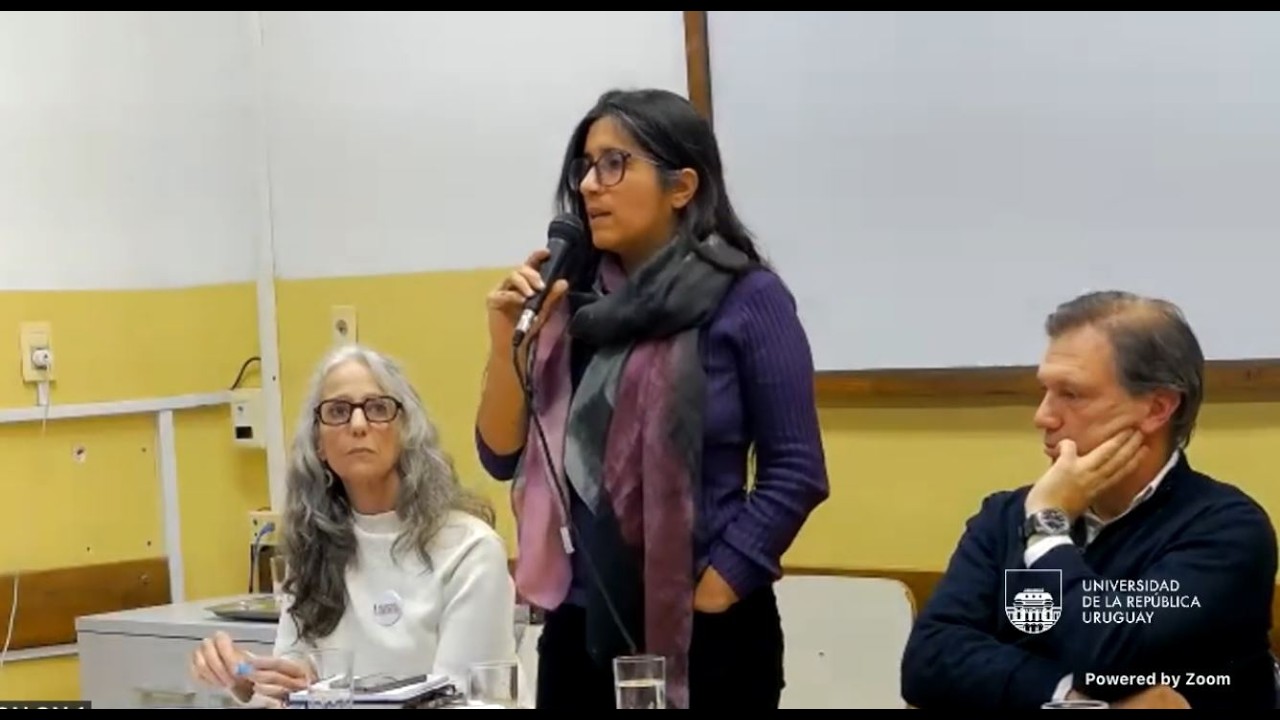
Infancias y adolescencias víctimas del terrorismo de estado
Keywords
Summary
140 words
Critical Evaluation
Value of the Information & Strength of the Argument
The value of the information is high, as it brings together diverse expert perspectives (psychology, law, anthropology) to analyze a complex and often overlooked issue. The argumentation is solid, grounded in historical facts, legal analysis, and psychological theory. The speakers provide concrete examples, such as the case of Gabriela Barreiro and the book by Gabriel Otero, to support their claims. They also critically examine the concept of ‘victim’ and the limitations of the reparation law. The discussion is well-structured, with each speaker contributing to a coherent narrative. However, as it is a debate, some arguments are more persuasive than others, and the lack of formal citations in the video itself is a minor weakness.
Scientific Rigor, Source Quality, Title Accuracy
The scientific rigor is high, with references to specific legal cases, academic works, and historical documents. The sources mentioned include the book ‘La fila de los inocentes’ by Gabriel Otero, ‘Cuando el pasado deja de ser reciente’ by Rubén Olivera, and the 2023 denunciation by Gabriela Barreiro. The panelists are experts in their fields, and their contributions are well-informed. The title accurately reflects the content, and the discussion stays on topic. The adequacy between title and content is excellent. The video does not include a formal list of sources, but the references are embedded in the discussion. Overall, the source quality is good, though not all claims are backed by explicit citations.
241 words
Title / Content Match
The title accurately reflects the content, which focuses on children and adolescents as victims of state terrorism and the need for comprehensive reparation.
Quality & Reliability
8/10
The video is a panel discussion with academics and experts from the University of the Republic, providing a multidisciplinary perspective on the topic. The content is well-structured, references specific cases and documents, and maintains a high level of academic rigor. However, it is a debate format, so some statements are opinion-based, and the lack of formal citations in the video itself slightly reduces the score.
Key Moments
Markers derived by PSI from the transcript: the creator did not define chapters.
- Introduction of the panel and the topic by the moderator.
- Dean Enrique Irraál discusses the origin of the panel and the need to address the issue.
- Discussion on the concept of 'victim' and its historical evolution.
- Analysis of the psychological impact on children and the transgenerational transmission of trauma.
- Presentation of the legal perspective and the limitations of the reparation law.
- Personal testimony of a panelist about receiving a gift after her parents' kidnapping.
- Discussion on the need for specialized psychological care and the creation of a specialization.
- Call for recognition and comprehensive reparation for child victims.
- Closing remarks emphasizing the importance of memory and justice.
Cited Sources
- La fila de los inocentes — Referenced by a panelist to highlight that over 80 children were held in captivity with their mothers.
- Cuando el pasado deja de ser reciente — Mentioned as a recent book by Rubén Olivera that documents the experiences of child victims.
- Denuncia de Gabriela Barreiro (2023) — Cited as a symbol of the ongoing search for truth and justice for child victims.
Concurring Sources
- Law of Reparation (Uruguay) — The legal framework discussed in the video, which is considered insufficient by the panelists.
Dissenting Sources
- Official state narratives — The panelists argue that the state has not fully recognized child victims, implying a divergence from official positions.
Contribution & Novelties
This video provides a unique multidisciplinary perspective on the often-overlooked issue of children and adolescents as direct victims of state terrorism in Uruguay. It brings together psychological, legal, and anthropological insights to argue for their recognition and comprehensive reparation. The discussion also critically examines the concept of ‘victim’ and the limitations of existing legal frameworks. The personal testimony adds a powerful human element to the academic analysis.
Pour aller plus loin :
- Plan Cóndor — International campaign of political repression in South America, relevant to the context of state terrorism.
- Transgenerational trauma — Concept discussed in the video regarding the transmission of trauma across generations.
- Reparations for victims of human rights violations — UN framework on reparations, relevant to the legal aspects discussed.
123 words
Radar Profile
The radar profile shows high scores in information quantity, quality, and reliability, with a slightly lower technical level. This indicates a well-rounded, informative discussion that is accessible to a general audience while maintaining academic depth.
💬 Sur les 0 commentaires analysés, aucune tendance n'a pu être dégagée.