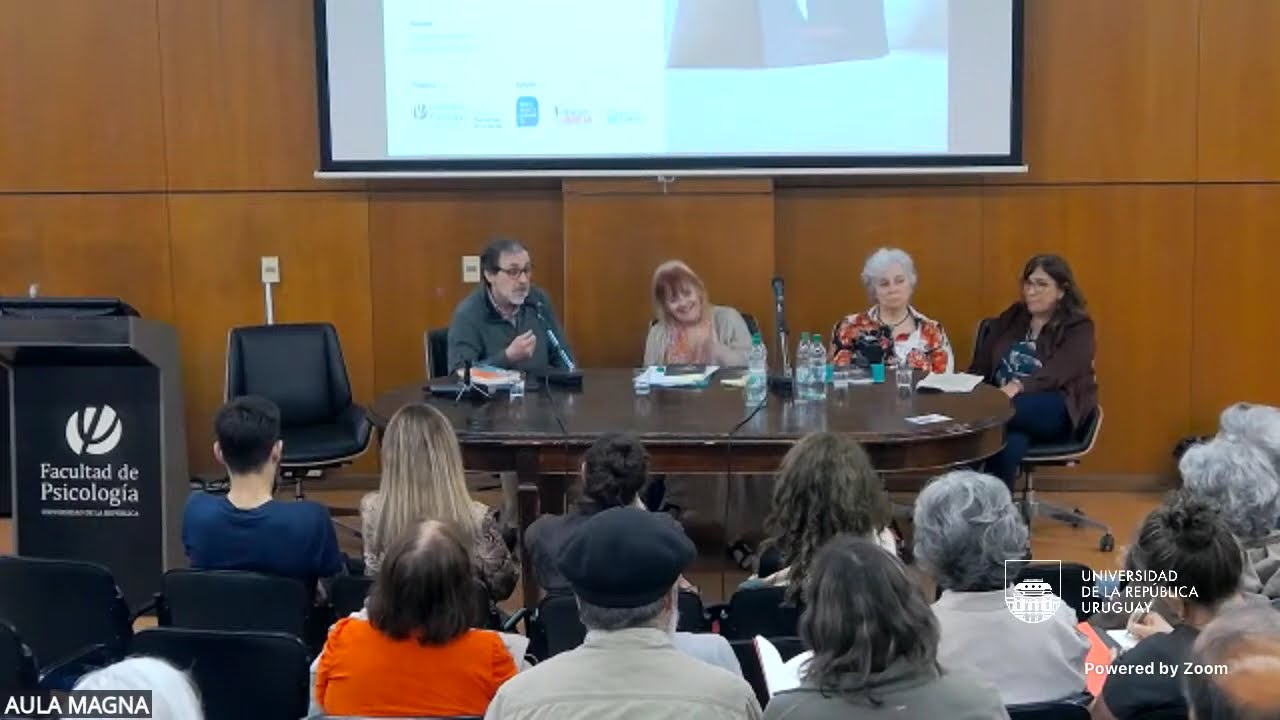
Presentación del libro: Cometas rojas
Keywords
Summary
191 words
Critical Evaluation
Value of the Information & Strength of the Argument
The video provides valuable insights into the psychological and social impacts of state terrorism, particularly through the lens of ‘incilio’—a concept that is often overlooked. The speakers, including the author, offer personal testimonies and professional perspectives that enrich the understanding of memory and trauma. The argumentation is solid, grounded in lived experiences and academic knowledge, though it is more testimonial than analytical. The discussion effectively highlights the importance of art and poetry in preserving memory and fostering healing.
Scientific Rigor, Source Quality, Title Accuracy
The video demonstrates scientific rigor through the involvement of psychologists and researchers who reference theoretical frameworks and historical context. The sources cited are primarily personal and literary, such as the works of Enrique Pichon-Rivière and Vincent Despre, which are relevant to the discussion. The title accurately reflects the content, as it is a book presentation. The discussion is well-structured and maintains a high level of academic integrity, though it lacks formal citations and empirical data.
168 words
Title / Content Match
The title accurately reflects the content, as the video is a presentation of the book 'Cometas rojas' by Mirta Toledo.
Quality & Reliability
7/10
The video is a book presentation and academic discussion featuring experts in psychology and human rights. It provides personal testimonies and scholarly reflections on memory, trauma, and the concept of 'incilio' in Uruguay's dictatorship. While not a formal study, it offers valuable insights from experienced professionals and the author herself, grounded in historical context.
Key Moments
Markers derived by PSI from the transcript: the creator did not define chapters.
- Fiorela Nesta introduces the event and the theme of memory.
- Fiorela discusses the concept of 'incilio' and its significance.
- Mirta Toledo reads from her book and explains the meaning of 'Cometas rojas'.
- Magela Fein shares her reflections on the book and the experience of exile.
- Maricel Robaina discusses the psychological impact on the second generation.
- Discussion on the role of mothers and 'white moons' in the dictatorship.
- Q&A session with the audience.
- Closing remarks and call for continued memory work.
Cited Sources
- Conversaciones con Enrique Pichon-Rivière — Mentioned by Mirta Toledo as a source of inspiration and guidance.
- Vincent Despre — Referenced by Fiorela Nesta in relation to how the dead live with us.
Concurring Sources
- Uruguay's National Human Rights Institution — Maricel Robaina works there, providing institutional support for human rights.
Contribution & Novelties
The video offers a unique perspective on the concept of ‘incilio’ and its psychological impact, which is not widely discussed in academic literature. It highlights the importance of poetry and art in processing collective trauma and preserving memory. The personal testimonies provide a nuanced understanding of the long-term effects of state terrorism on individuals and families.
Pour aller plus loin :
- Memory Studies — Provides a framework for understanding collective memory.
- Intergenerational Trauma — Relevant to the experiences of the second generation.
- Poetry Therapy — Explores the therapeutic use of poetry, as discussed in the video.
96 words
Radar Profile
The radar profile shows high scores in quality of information and reliability, reflecting the expertise of the speakers and the depth of discussion. The quantity of information is moderate, as the video is more of a testimonial and reflective nature rather than data-heavy. The technical level is moderate, suitable for a general audience interested in memory and human rights.
💬 No comments were provided for analysis.