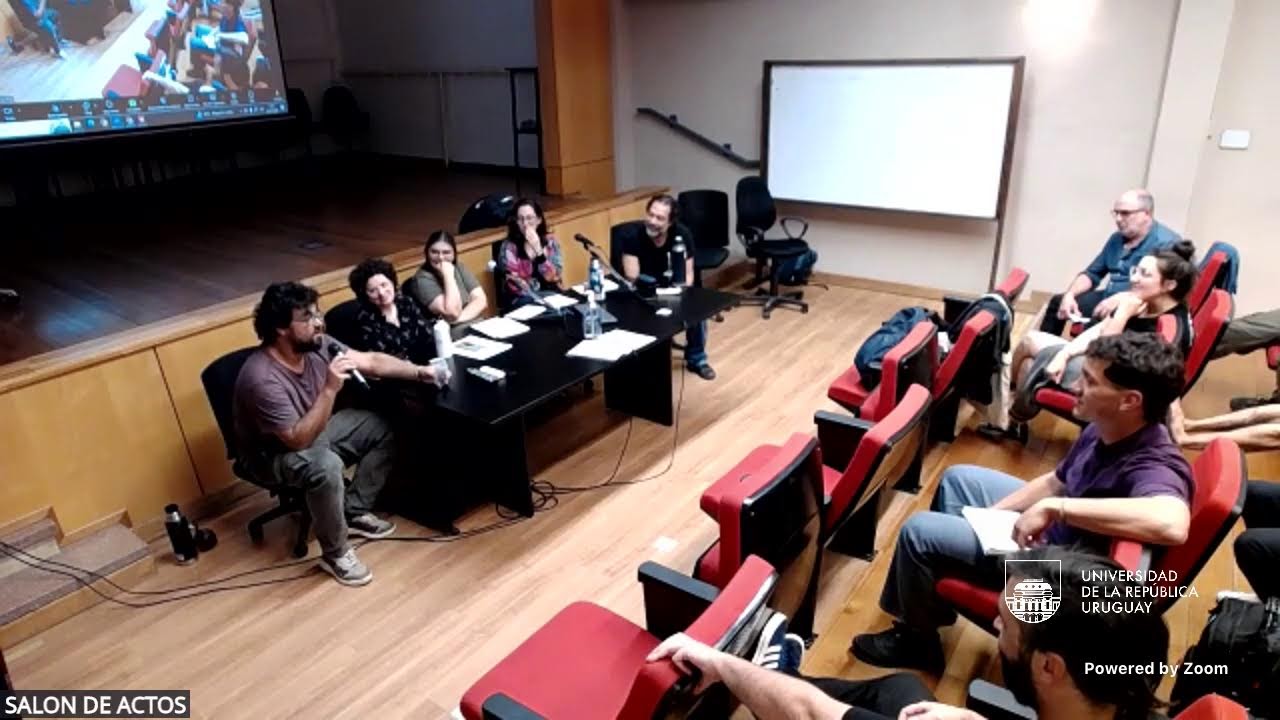
II Semana de la Extensión ¿Cómo producimos, difundimos y publicamos conocimiento en extensión?
Keywords
Summary
204 words
Critical Evaluation
Value of the Information & Strength of the Argument
The video provides valuable insights into the practical challenges of publishing academic work in the field of university extension. The panelists offer concrete examples from their own journals, such as the difficulties of maintaining editorial committees, meeting indexing requirements, and balancing the need for research articles with other formats. The argumentation is solid, as it is based on direct experience and reflects broader debates in the field. The discussion also highlights the importance of regional networks and cooperation, which adds depth to the analysis. However, the presentation is largely descriptive and lacks critical engagement with alternative perspectives or potential solutions.
Scientific Rigor, Source Quality, Title Accuracy
The scientific rigor is moderate: the panelists are experts in their field, and their statements are credible, but the discussion is informal and not backed by formal citations. The sources mentioned include the journals themselves and the AUGM network, but no specific academic references are provided. The title accurately reflects the content, which is a focused discussion on the production, dissemination, and publication of extension knowledge. The video does not include any advertising or sponsorship segments.
191 words
Title / Content Match
The title accurately reflects the content, which is a discussion on how knowledge in university extension is produced, disseminated, and published.
Quality & Reliability
7/10
The video is a panel discussion with experts from various university extension journals, providing firsthand insights into the challenges and practices of publishing extension knowledge. The information is credible as it comes from practitioners directly involved in the field. However, it is not a formal study and lacks external verification.
Key Moments
Markers derived by PSI from the transcript: the creator did not define chapters.
- Introduction by moderator, presenting the panelists and the topic.
- Eugenia Villarmzo discusses the AUGM network of extension journals, its objectives, and challenges.
- Eugenia presents the journal Integralidad sobre Ruedas, its history, and its focus on student publications.
- Barenca Parenteli talks about the Revista IT, the challenges of editorial committees, and the process of indexing.
- Discussion on the need to legitimize extension as a field of knowledge and the role of scientific journals.
- Panelists discuss the importance of open access, multilingualism, and regional cooperation.
- Jorge Chávez shares his perspective on the challenges of publishing extension knowledge.
- Dulcinea and María present the Revista Barullo and Bibliobarrio, focusing on mental health and community engagement.
- Q&A session with the audience, addressing questions about the future of extension journals.
- Closing remarks and summary of key points.
Cited Sources
- Revista IT — Mentioned as an example of an extension journal from Programa Apex.
- Integralidad sobre Ruedas — Presented by Eugenia Villarmzo as a journal from the Faculty of Humanities and Education Sciences.
- Red de Editores y Editoras de Revistas de Extensión (AUGM) — Discussed as a network of 32 journals from the region.
- Revista Psicología, Conocimiento y Sociedad — Mentioned by Jorge Chávez as a journal from the Faculty of Psychology.
- Revista Barullo — Presented by Dulcinea and María as a community-based publication.
Concurring Sources
- Declaración de la Conferencia Regional de Educación Superior (CRES) 2018 — Supports the importance of university extension and its recognition in higher education.
- Red de Revistas Científicas de América Latina y el Caribe, España y Portugal (Redalyc) — Provides a platform for open access journals in the region, aligning with the goals of extension journals.
Dissenting Sources
- Críticas a la ciencia abierta — Some scholars argue that open access can exacerbate inequalities, a perspective not addressed in the video.
Contribution & Novelties
The video offers a unique perspective on the challenges of publishing knowledge in university extension, a topic that is often underrepresented in academic discourse. It highlights the tension between traditional scientific standards and the need for diverse formats and approaches in extension work. The discussion also emphasizes the importance of regional cooperation and networks, such as the AUGM network, in supporting these journals. This is valuable for practitioners and scholars interested in the intersection of academia and community engagement.
Pour aller plus loin :
- Extensión universitaria en América Latina — Provides background on the concept and history of university extension in the region.
- Ciencia abierta — Discusses the principles of open science, relevant to the debate on open access in extension journals.
- Publicación académica — Explains the process and standards of academic publishing, useful for understanding the challenges mentioned.
139 words
Radar Profile
The radar profile shows high scores in quantity and quality of information, reflecting the rich content and expert contributions. The technical level is moderate, indicating that the discussion is accessible to a general academic audience. The overall reliability is good, but the lack of formal citations and the informal nature of the debate slightly reduce the score.
💬 No comments were provided for analysis.