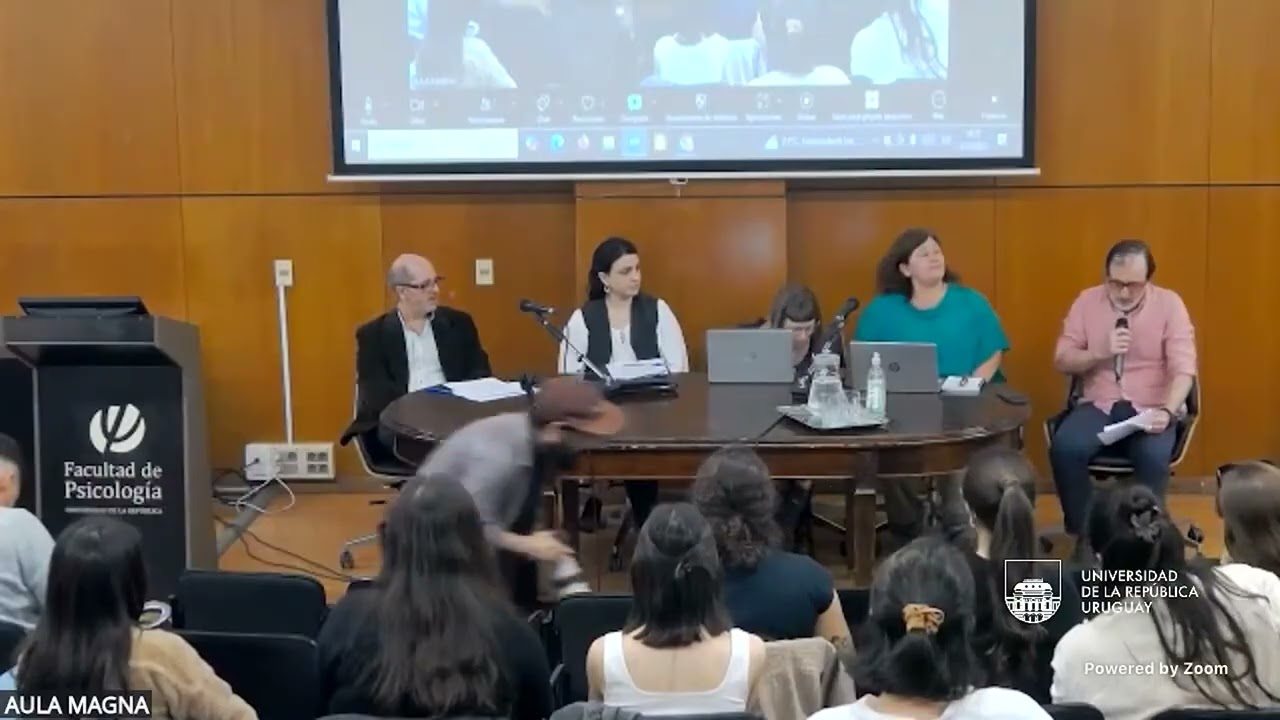
Conversatorio: Violencia vicaria y femicida: fracturas en la filiación e impactos en las infancias
Keywords
Summary
187 words
Critical Evaluation
Value of the Information & Strength of the Argument
The video provides valuable insights into vicarious violence, a critical social issue, with expert opinions from multiple disciplines. The argumentation is solid, grounded in professional experience and specific cases, such as the filicide of Alfonsina and Francisco. The panelists effectively challenge misconceptions and highlight institutional failures. However, the discussion is more advocacy-oriented than rigorously scientific, with limited empirical data or systematic analysis.
Scientific Rigor, Source Quality, Title Accuracy
The scientific rigor is moderate. The panelists reference legal cases, statistics (e.g., 80% of sexual violence reports involve children), and institutional statements, but they do not provide formal citations or peer-reviewed sources. The title accurately reflects the content, which is a panel discussion on vicarious and femicidal violence. The discussion is well-structured but relies heavily on anecdotal evidence and professional opinion. No comments were provided for analysis.
144 words
Title / Content Match
The title accurately reflects the content, which is a panel discussion on vicarious and femicidal violence, its effects on filiation and childhood.
Quality & Reliability
8/10
Panel of experts (psychology, law, social work) with institutional backing, citing specific legal cases and statistics, but lacks formal citations and peer-reviewed references.
Key Moments
Markers derived by PSI from the transcript: the creator did not define chapters.
- Introduction and reading of the Faculty Council statement on the filicide of Alfonsina and Francisco.
- Dean Enrico Irrazábal's opening remarks on the importance of addressing vicarious violence.
- Andrea Tuana defines vicarious violence and its origins, emphasizing it occurs in the context of gender-based violence.
- Tuana critiques institutional violence and the false parental alienation syndrome, citing its origins and misuse.
- Tuana presents a case of a child forcibly removed from his mother, illustrating judicial failures.
- Carolina Camilo provides a legal perspective, discussing normative advances and setbacks, including the shared responsibility law.
- Camilo analyzes the concept of vicarious violence in Uruguayan law and its recognition in judicial practice.
- Malena Delgado Gallo discusses psychological impacts on children and the need for specialized intervention.
- Michel Dibarboure presents research on violence in childhood and adolescence, emphasizing prevention strategies.
- Open discussion with the audience, addressing questions and sharing experiences.
Cited Sources
- El Paso NGO — Andrea Tuana is director of this organization, which works on gender-based violence.
- Código de la Niñez y la Adolescencia (Uruguay) — Mentioned as a normative advance in child protection.
- Ley de Violencia Basada en Género (Uruguay) — Referenced as a legal framework for addressing gender-based violence.
- Ley de Corresponsabilidad en la Crianza (Uruguay) — Criticized as a setback that may facilitate vicarious violence.
- Parental Alienation Syndrome (Gardner) — Discussed as a discredited concept used to undermine mothers' credibility.
Concurring Sources
- ONU Mujeres - Violencia contra las mujeres — Provides global context on gender-based violence, aligning with the panel's concerns.
Dissenting Sources
- Shared parenting research — Some studies suggest shared parenting can be beneficial, contrasting with the panel's criticism of the law.
Contribution & Novelties
The video contributes to raising awareness about vicarious violence in Uruguay, providing a multidisciplinary perspective that combines legal, psychological, and social work insights. It highlights institutional failures and the misuse of concepts like parental alienation, offering a critical view of recent legal changes. The discussion is valuable for professionals and the public, fostering dialogue on prevention and intervention.
Pour aller plus loin :
- Violencia vicaria - Wikipedia — Provides an overview of the concept and its evolution.
- Síndrome de alienación parental - Wikipedia — Explains the controversial syndrome and its scientific rejection.
- Ley de corresponsabilidad en la crianza (Uruguay) — Text of the law criticized in the video.
108 words
Radar Profile
The radar profile shows high scores in quantity and quality of information, reflecting the panel's depth and relevance. The technical level is moderate, as the discussion is accessible but includes legal and psychological terminology. Reliability is strong due to expert input, though formal citations are lacking.