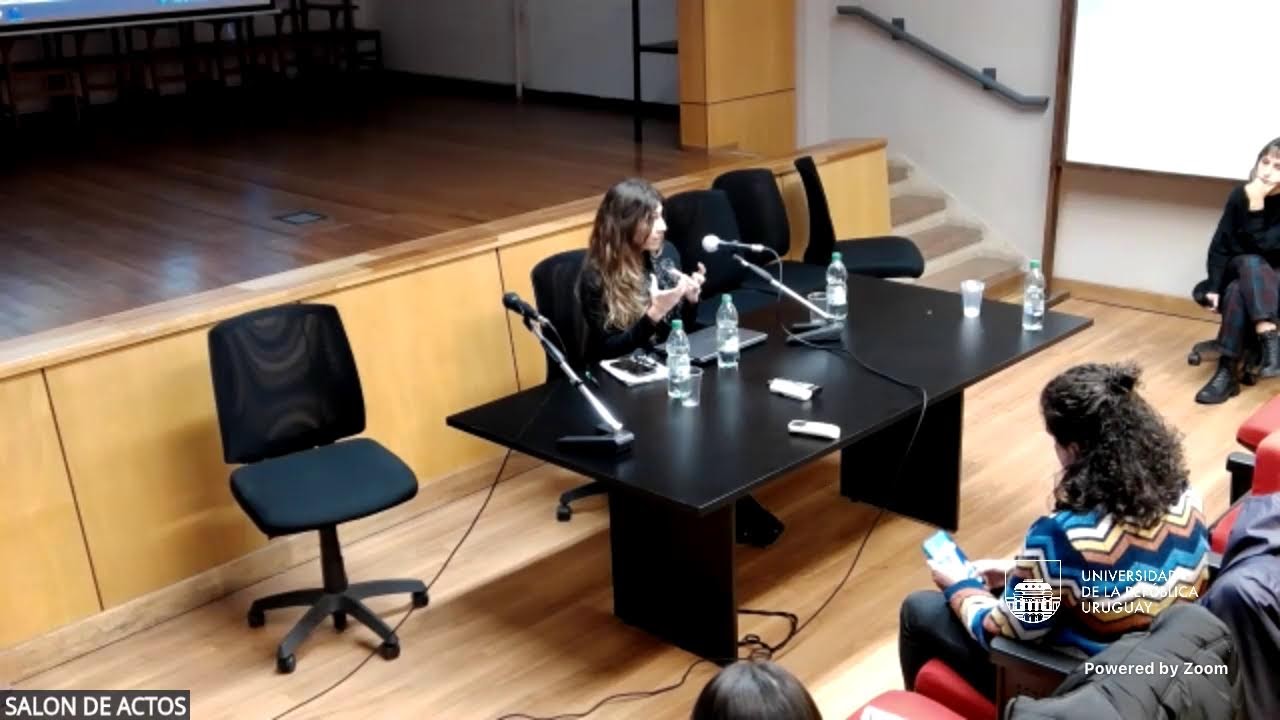
Jornadas AUGM-CAPES
Keywords
Summary
186 words
Critical Evaluation
Value of the Information & Strength of the Argument
The video provides valuable insights into the theoretical and methodological approaches of the research project, particularly the use of French discourse analysis to examine the discursive construction of authority and resistance. The speakers argue convincingly that authority is not a natural attribute but a discursive effect, and they highlight the role of feminist movements as sites of resistance. The argumentation is solid, grounded in established theoretical frameworks, and the speakers demonstrate a coherent understanding of the project’s goals. However, the discussion is largely introductory and theoretical, with limited empirical analysis, which may reduce its immediate applicability.
Scientific Rigor, Source Quality, Title Accuracy
The scientific rigor is high, as the speakers are established academics from reputable institutions, and the project is funded by CAPES, a major Brazilian funding agency. The sources cited are primarily theoretical (Pêcheux, Foucault) and institutional (CAPES, UGM), which are appropriate for the context. The title accurately reflects the content, as the video is indeed a recording of the ‘Jornadas AUGM-CAPES’. The video includes a brief mention of a coffee break, but no commercial advertising. No comments were provided for analysis.
192 words
Title / Content Match
The title 'Jornadas AUGM-CAPES' accurately reflects the content, which is a multi-day academic event organized under the AUGM-CAPES cooperation project.
Quality & Reliability
7/10
The video is an academic conference opening and panel discussion, featuring established researchers from multiple universities. The content is grounded in discourse analysis and psychoanalytic theory, with references to specific projects and researchers. While not a peer-reviewed publication, the academic context and expertise of speakers lend credibility. The recording quality is moderate, with some audio issues, but the content is substantive.
Key Moments
Markers derived by PSI from the transcript: the creator did not define chapters.
- Opening of the session, welcome remarks, and presentation of the project by Mariana.
- Mónica Fontana's speech on the history of the project and the importance of public universities.
- Marcelo Gambini's theoretical presentation on discourse analysis and authority.
- End of the opening panel and announcement of the first panel on feminisms.
- Start of the panel 'Feminisms and feminist resistances', with Luciana Viñas presenting on Marielle Franco.
Cited Sources
- CAPES — Funding agency for the project, mentioned as evaluator and financier.
- UGM (Asociación de Universidades Grupo Montevideo) — Association of universities, co-funding the project.
- Michel Pêcheux — Theoretical reference for discourse analysis.
- Michel Foucault — Theoretical reference for power and discourse.
Concurring Sources
- CAPES — Official funding agency, consistent with the project's claims.
- UGM — Official association, consistent with the project's claims.
Contribution & Novelties
The video contributes to the understanding of how academic cooperation projects can address contemporary political issues through interdisciplinary research. It highlights the importance of discourse analysis in studying the rise of new right movements and feminist resistance in Latin America. The project’s innovative aspect lies in its trilateral cooperation and its focus on the discursive construction of authority.
Pour aller plus loin :
- Discourse analysis — Provides foundational concepts for understanding the methodological approach.
- New Right — Contextualizes the political phenomenon discussed.
- Feminist movements in Latin America — Offers background on the resistance movements mentioned.
95 words
Radar Profile
The radar profile shows high scores in quantity and quality of information, reflecting the dense academic content. The technical level is moderate, indicating accessibility to a general academic audience. Reliability is high due to the institutional backing. Overall, the video is a solid academic resource.