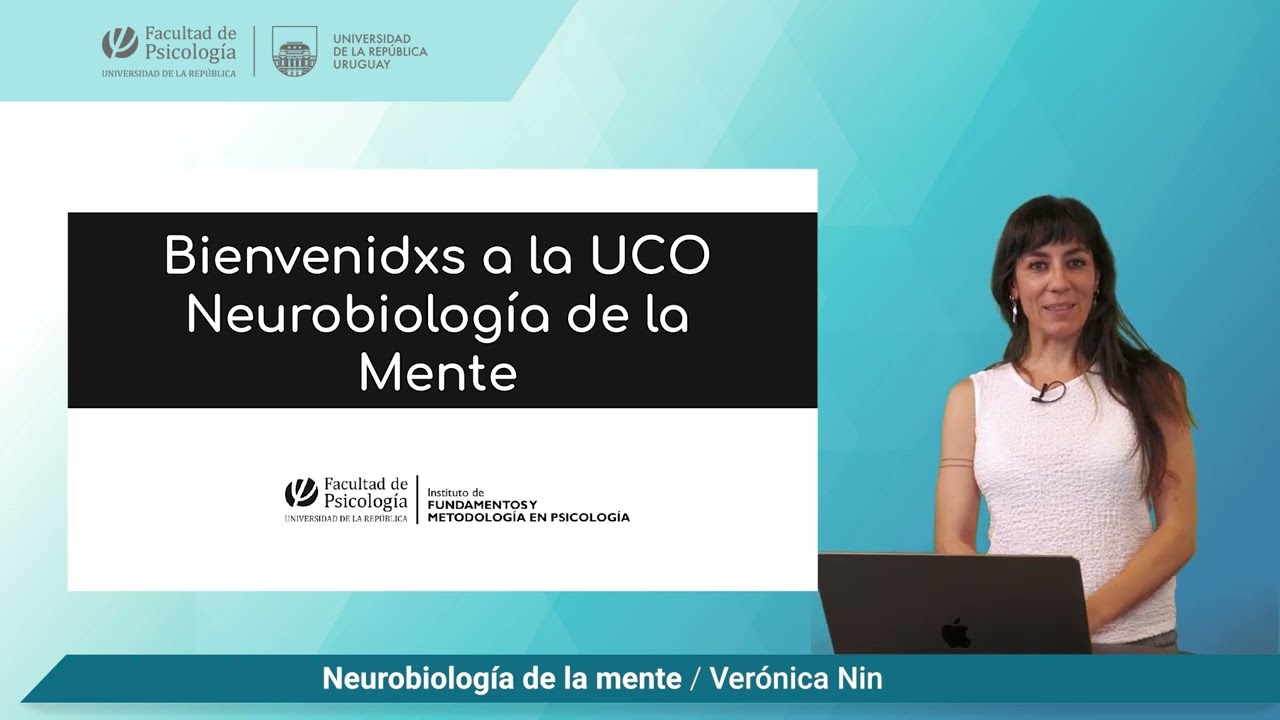
Neurobiología de la mente 2026
Keywords
Summary
157 words
Critical Evaluation
Value of the Information & Strength of the Argument
The video provides valuable information for prospective students about the course logistics and content. The argumentation is clear and well-structured, using examples like the mosaic to explain emergent properties. However, it is primarily administrative and introductory, with limited scientific depth. The presentation is persuasive in encouraging students to enroll, but it does not engage in critical analysis or present novel scientific arguments.
Scientific Rigor, Source Quality, Title Accuracy
The video is scientifically rigorous in its general claims, but it does not cite specific sources. The title accurately reflects the content. The presentation is consistent with standard neuroscience education, but the lack of references limits its scientific depth. The video is from a reputable academic institution, which enhances its credibility.
128 words
Title / Content Match
The title accurately reflects the content, which is an introduction to a course on the neurobiology of the mind.
Quality & Reliability
7/10
The video is an introductory course presentation by a university faculty, providing accurate but general information about the course structure and content. It is reliable for its purpose, but lacks depth and specific scientific references.
Key Moments
Markers derived by PSI from the transcript: the creator did not define chapters.
- Introduction by Verónica Nín, course coordinator, presenting the teaching team.
- Explanation of course modalities: seminars and plenary sessions.
- Description of the flipped classroom approach and use of the virtual learning environment (EVA).
- Details on mandatory weekly activities and the requirement to complete 80% for exam eligibility.
- Overview of the course content: neurons, glial cells, neural networks, and brain structures.
- Discussion on sensory and motor systems, including reflexes and complex movements.
- Topics on emotions, learning, memory, and sleep.
- Introduction to substances affecting the nervous system and their effects.
- Enrollment instructions and encouragement for students.
Contribution & Novelties
The video serves as an orientation for a university course, providing a clear overview of the curriculum and expectations. It does not present new research but synthesizes existing knowledge for educational purposes.
Pour aller plus loin :
- Emergence — Concept of emergent properties, central to the video’s explanation of the mind.
- Neuroscience — Overview of the field, relevant to the course content.
- Flipped classroom — Educational approach mentioned in the video.
71 words
Radar Profile
The radar profile shows moderate scores across all dimensions, indicating a balanced but not highly specialized content. The video is informative for its intended audience but lacks depth and technical complexity.