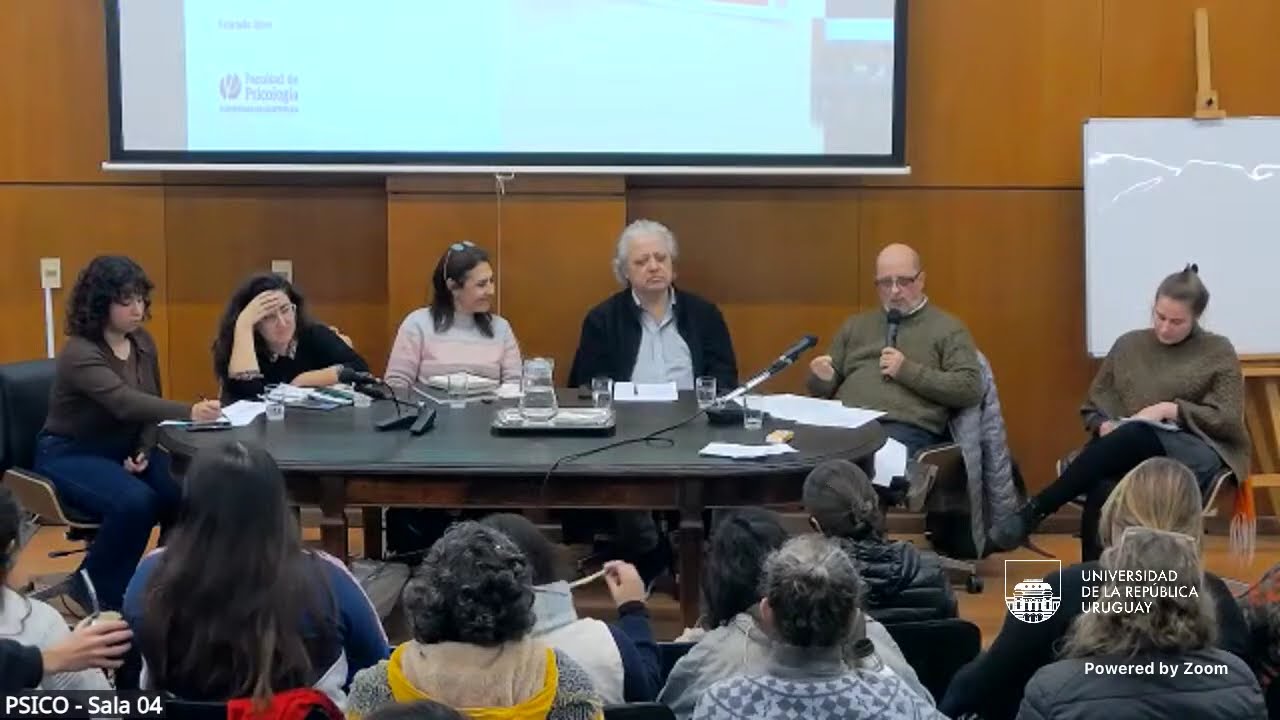
Conversatorio ¿Es momento de cambiar el Plan de Estudios?
Keywords
Summary
155 words
Critical Evaluation
Value of the Information & Strength of the Argument
The value of the information lies in its firsthand accounts from key actors in curriculum reforms, offering a rich historical narrative that contextualizes the current debate. The argumentation is solid, as speakers provide concrete examples and compare the two plans systematically. However, the discussion is largely anecdotal and lacks empirical data or formal research evidence, which limits its scientific rigor. The speakers acknowledge the complexities and trade-offs, presenting a balanced view rather than a one-sided argument.
Scientific Rigor, Source Quality, Title Accuracy
The scientific rigor is moderate: the speakers are credible experts, but they do not cite specific studies or documents during the discussion. The quality of sources is based on their institutional roles and direct involvement, which adds authority but not verifiability. The title accurately reflects the content, which is a conversational panel on curriculum change. No comments were provided for analysis.
152 words
Title / Content Match
The title accurately reflects the content, which is a discussion on whether to change the psychology curriculum, featuring historical experiences and current reflections.
Quality & Reliability
7/10
The video features multiple expert speakers with direct involvement in curriculum changes, providing a balanced historical perspective. However, it is a recorded panel discussion without formal citations or peer-reviewed references, limiting verifiability.
Key Moments
Markers derived by PSI from the transcript: the creator did not define chapters.
- Introduction and presentation of the panelists and the purpose of the conversation.
- Miguel de Barbure begins his talk, recounting the history of the 1988 plan and its context.
- Miguel compares the 1988 and 2013 plans, highlighting differences in focus and philosophy.
- Luis Leopold starts his presentation, emphasizing the diacronic nature of curriculum change.
- Luis discusses the second university reform and the influence of the 2011 degree ordinance.
- Luis shares an anecdote about international comparisons and the importance of postgraduate education.
- Valeria Cavali begins her talk, reflecting on her experience as a student representative during the 2013 plan change.
- Valeria discusses the process of building the 2013 plan and the role of student participation.
- Cecilia Varoni shares her perspective from the teaching support unit, focusing on implementation challenges.
- Open dialogue with the audience begins, with questions and reflections on the future of the curriculum.
Cited Sources
- Facultad de Psicología Universidad de la República — Official website of the faculty, mentioned as the organizing institution.
Concurring Sources
- Facultad de Psicología - Plan de Estudios 2013 — The official curriculum document, which aligns with the description of the 2013 plan.
Contribution & Novelties
The video provides a unique historical perspective on curriculum changes in psychology at the Universidad de la República, offering insights from multiple stakeholders. It highlights the evolution from a professionalist to an academic-oriented approach, and the tensions between autonomy and support. The discussion underscores the importance of institutional memory and the need for continuous reflection.
Pour aller plus loin :
- Ordenanza de Grado de la Universidad de la República — Official document regulating undergraduate studies, relevant to the discussion of the 2013 plan.
- Segunda Reforma Universitaria — Institutional page explaining the reform context.
- Plan de Estudios 2013 (PELP) — The current curriculum document, directly referenced in the discussion.
- Asociación de Universidades de Psicología Públicas Argentinas (AUAPSI) — Network mentioned by Luis Leopold, relevant for regional comparisons.
126 words
Radar Profile
The radar profile shows high scores in quantity of information and moderate scores in quality and technical level, indicating a rich but not deeply technical discussion. The reliability is moderate, reflecting the expert but non-cited nature of the content.