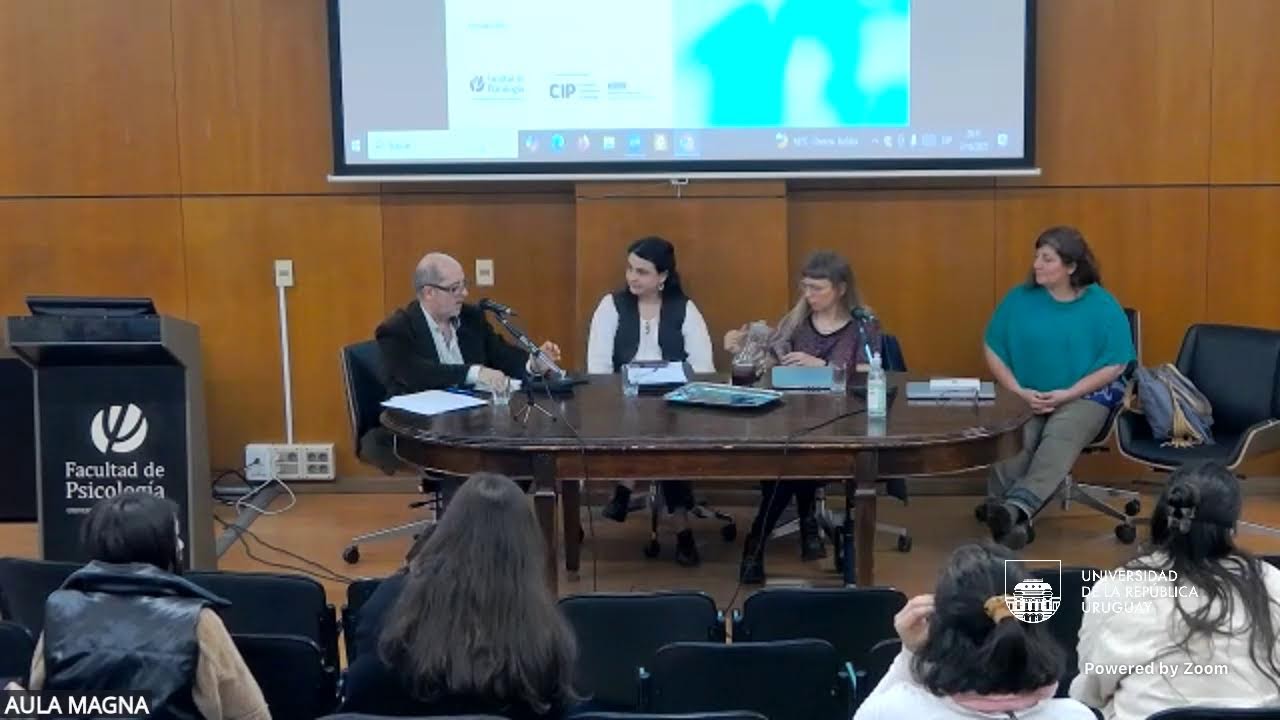
Violencia vicaria y femicida: fracturas en la filiación e impactos en las infancias
Keywords
Summary
227 words
Critical Evaluation
Value of the Information & Strength of the Argument
The value of the information lies in its multidisciplinary perspective, combining social work, legal, and psychological insights. The panelists provide concrete examples and case studies, such as the case of an 8-year-old boy forcibly removed from his mother, illustrating the real-world consequences of institutional failures. The argumentation is strong in its critique of the false parental alienation syndrome and the misuse of shared custody laws, but it is largely based on anecdotal evidence and advocacy rather than systematic research. The discussion is persuasive in highlighting the need for systemic change, but it lacks empirical data and rigorous sourcing to support some claims.
Scientific Rigor, Source Quality, Title Accuracy
The scientific rigor is moderate. The panelists reference legal frameworks, institutional pronouncements, and some statistics (e.g., prevalence of gender-based violence in Uruguay), but they do not provide detailed citations or peer-reviewed sources. The quality of sources is mixed: some are institutional (e.g., Ministry of Interior data), while others are based on personal experience and advocacy. The title accurately reflects the content, which is a panel discussion on vicarious and femicidal violence and its impact on children. The discussion is well-structured and addresses the topic comprehensively, but the lack of formal references and the reliance on opinion and case examples limit its scientific rigor.
220 words
Title / Content Match
The title accurately reflects the content, which focuses on vicarious and femicidal violence, its impact on filiation and children, with a multidisciplinary panel discussion.
Quality & Reliability
8/10
The panel consists of experts in social work, law, psychology, and academia, providing a multidisciplinary perspective. The content is grounded in legal frameworks, institutional pronouncements, and case examples, but lacks formal citations or peer-reviewed references. The discussion is largely opinion and advocacy-oriented, with some statistical references (e.g., prevalence rates) but without detailed sourcing.
Key Moments
Markers derived by PSI from the transcript: the creator did not define chapters.
- Introduction and reading of the Faculty Council's pronouncement on the filicide of Alfonsina and Francisco.
- Dean Enrique Irrazábal's opening remarks on the importance of addressing vicarious violence.
- Andrea Tuana defines vicarious violence and critiques institutional violence and false parental alienation syndrome.
- Andrea Tuana discusses the impact of shared custody laws and provides a case example of a child forcibly removed from his mother.
- Carolina Camilo provides a legal perspective, discussing the evolution of legal frameworks in Uruguay.
- Carolina Camilo highlights setbacks in legislation and the need for better judicial response to vicarious violence.
- Discussion on the impact of vicarious violence on children's mental health and the importance of interdisciplinary approaches.
- Panelists answer questions from the audience, discussing prevention strategies and institutional reforms.
- Further discussion on the role of psychologists and the need for specialized training.
- Closing remarks summarizing key points and calls to action.
Cited Sources
- Pronunciamiento del Consejo de Facultad de Psicología — Read at the beginning of the event, condemning the filicide of Alfonsina and Francisco.
- Ley de corresponsabilidad en la crianza (Uruguay) — Discussed as a potential tool for violence, criticized by panelists.
- Código de la Niñez y la Adolescencia (Uruguay) — Mentioned as a legal framework relevant to the protection of children.
- Ley de violencia basada en género (Uruguay) — Referenced as a legal advancement in addressing gender-based violence.
Concurring Sources
- Violencia vicaria: un concepto en construcción — Referenced by panelists as a developing concept, aligning with the discussion.
Dissenting Sources
- Movimientos de padres por la tenencia compartida — Panelists critique these movements as promoting false narratives of false accusations, which are discordant with their perspective.
Contribution & Novelties
The panel provides a timely and critical analysis of vicarious violence in Uruguay, highlighting the intersection of gender-based violence, legal frameworks, and institutional responses. It brings together diverse professional perspectives, offering a comprehensive view of the issue. The discussion challenges common misconceptions, such as the false parental alienation syndrome, and calls for systemic reforms. The event serves as a platform for advocacy and awareness-raising, contributing to the ongoing discourse on violence against women and children.
Pour aller plus loin :
- Violencia vicaria - Wikipedia — Overview of the concept and its evolution.
- Síndrome de alienación parental - Wikipedia — Critical examination of the syndrome and its scientific status.
- Convención sobre los Derechos del Niño - UNICEF — International legal framework for children’s rights.
- Ley N° 19.580 (Uruguay) - Violencia hacia las mujeres — Uruguayan law on gender-based violence.
138 words
Radar Profile
The radar profile shows high scores in quantity of information and global reliability, reflecting the comprehensive and expert nature of the discussion. The level of technicality is moderate, suitable for a general audience, while the quality of information is strong due to the panel's expertise, though lacking formal citations.
💬 No comments were provided for analysis.