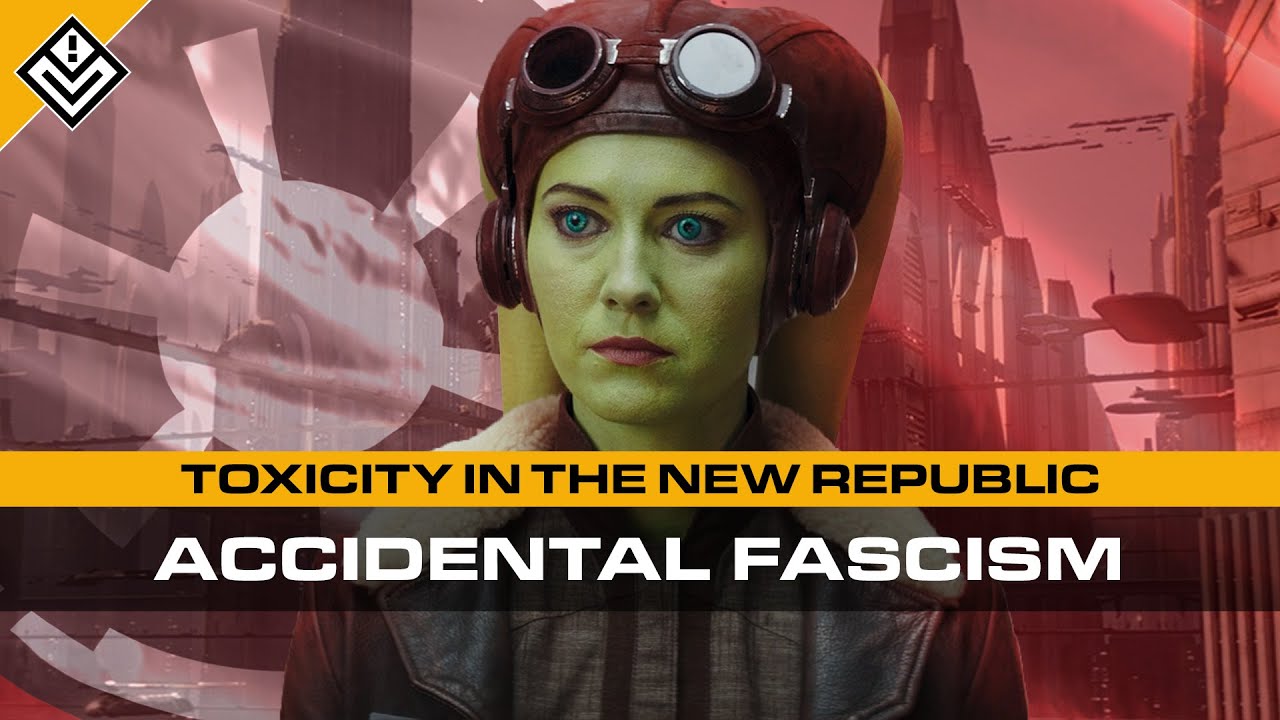
How Star Wars (Accidentally?) Made One of Its Heroes a Fascist
Keywords
Summary
132 words
Critical Evaluation
Value of the Information & Strength of the Argument
The video provides a valuable analysis of a fictional scenario to illustrate real-world principles of civil-military relations. It effectively argues that Hera’s actions, while perhaps intended as heroic, undermine democratic norms. The argumentation is logical and well-structured, moving from a specific scene to broader theoretical concepts. It acknowledges counterarguments, such as the possibility of Senator Xiono being a First Order agent, but correctly dismisses them as irrelevant to the principle of military subordination to civilian authority. The video also draws on historical examples, such as the quote from T.E. Lawrence, to support its points. However, it could be strengthened by citing specific academic or historical sources on civil-military relations.
Scientific Rigor, Source Quality, Title Accuracy
The video does not cite specific academic sources, but it references the Star Wars canon and real-world historical examples. The argument is based on well-established principles of democratic governance, though these are not explicitly sourced. The title accurately reflects the content, which is a critical analysis of a character’s behavior. The video’s rigor is moderate; it presents a clear thesis and supports it with reasoning, but it lacks formal citations. The analysis of the scene is detailed and considers multiple perspectives, which adds to its credibility.
210 words
Title / Content Match
The title accurately reflects the video's central thesis, which is a critical analysis of a Star Wars character's behavior as exhibiting fascist tendencies.
Quality & Reliability
7/10
The video provides a coherent and well-structured argument about democratic civil-military relations, using a fictional example to illustrate real-world principles. It references historical and theoretical concepts (e.g., civilian control, military professionalism) without citing specific academic sources, but the reasoning is sound and clearly presented.
Key Moments
Markers derived by PSI from the transcript: the creator did not define chapters.
- Introduction to the topic and the scene in question.
- Breakdown of the scene: Hera's request and the senators' response.
- Discussion of the importance of civilian control over the military in a democracy.
- Analysis of Hera's insult to Senator Xiono and its implications.
- Examination of Hera's disregard for orders and her defense.
- Conclusion: Hera's actions as a threat to democratic principles.
Cited Sources
- Templin Institute Website — Official website of the channel, providing additional context and resources.
- Templin Institute Ideas Submission — Platform for viewers to submit episode ideas, indicating community engagement.
- Templin Institute Subreddit — Community discussion forum for the channel's content.
- Templin Institute Twitch — Live streaming channel for additional content and discussions.
Concurring Sources
- T.E. Lawrence quote on rebels — A commenter quoted T.E. Lawrence: 'Rebels, especially successful rebels, were of necessity bad subjects and worse governors', which aligns with the video's argument about the challenges of transitioning from rebellion to governance.
Dissenting Sources
- Commenter counterpoint on parliamentary procedure — A commenter argued that Hera's actions were technically within her rights due to the Defense Council's procedures, suggesting the video may overstate the illegality of her actions.
Contribution & Novelties
The video offers a novel perspective on a popular culture narrative by applying political science concepts to analyze a character’s actions. It highlights the often-overlooked importance of institutional culture and civilian oversight in democratic societies, using a relatable example. The analysis encourages viewers to think critically about the portrayal of military leaders in media and the real-world implications of such portrayals.
Pour aller plus loin :
- Civilian control of the military — This concept is central to the video’s argument, explaining the principle that military forces should be subordinate to civilian authority.
- Military professionalism — The video discusses the importance of military leaders embodying professional standards, which is a key aspect of this concept.
- Fascism — The video uses the term ‘fascist’ to describe Hera’s behavior; this article provides a definition and characteristics of fascism for comparison.
137 words
Radar Profile
The radar profile shows high scores in information quality and reliability, indicating a well-reasoned and credible analysis. The quantity of information is moderate, and the technical level is accessible, making it suitable for a general audience. The overall balance suggests a strong, informative video with minor limitations in depth.
💬 The comments are predominantly positive, with many viewers agreeing with the video's analysis and adding their own critiques of the New Republic's portrayal. Some comments offer nuanced counterpoints, but the overall sentiment is supportive of the video's thesis.