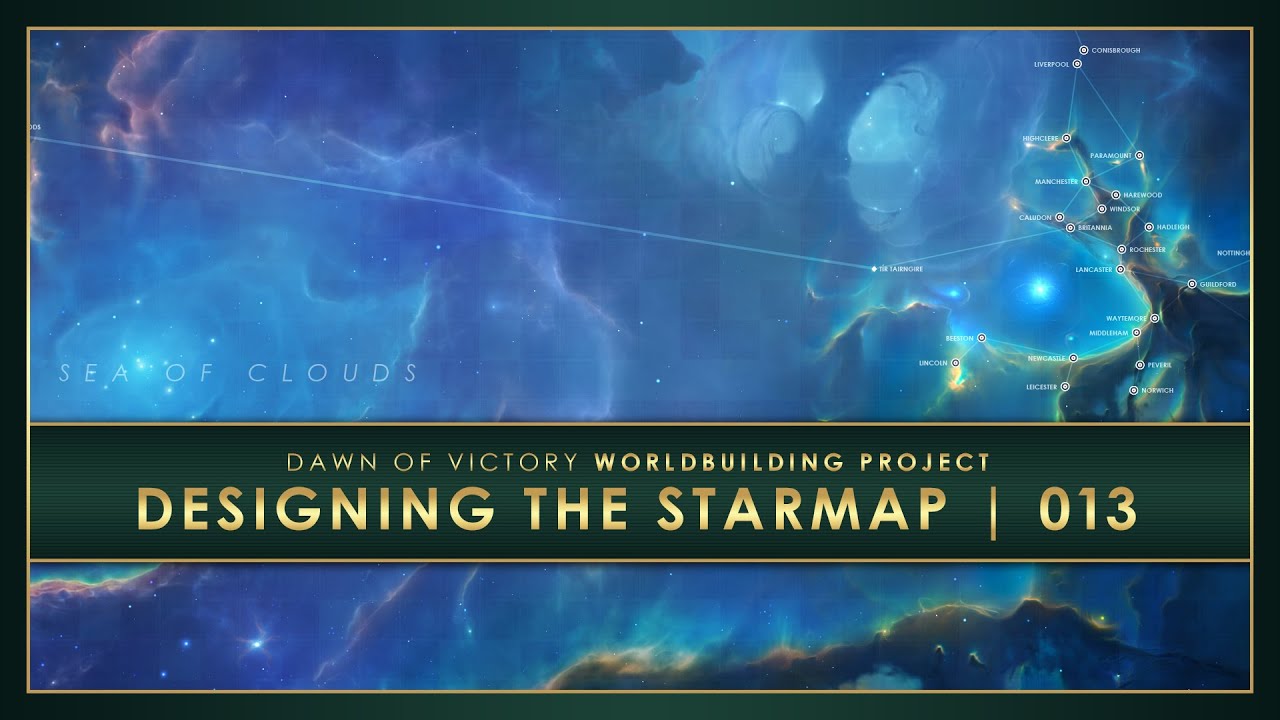
The British Are Coming! | Dawn of Victory Worldbuilding Session #14
Keywords
Summary
172 words
Critical Evaluation
Value of the Information & Strength of the Argument
The video’s value lies in its transparent demonstration of a worldbuilding process, showing how a creator balances thematic consistency, cultural sensitivity, and audience input. The host argues for naming systems based on historical and cultural relevance, such as using Grade I castles for England, and actively considers feedback from viewers to avoid stereotypes. The argumentation is informal but coherent, with the host explaining his reasoning for placement and naming choices. However, the value is limited to the creative domain; it does not provide factual or scientific information.
Scientific Rigor, Source Quality, Title Accuracy
The video does not cite formal sources, but the host mentions using a list of Grade I listed castles from an unnamed UK organization. The description provides links to the Templin Institute’s website, Patreon, and social media, which are not directly related to the content’s factual basis. The title accurately reflects the content, focusing on the British star systems. The host acknowledges the lack of deep research on certain topics, such as Irish naming conventions, indicating a moderate level of rigor appropriate for a creative project.
188 words
Title / Content Match
The title accurately reflects the content: the session focuses on developing the British star systems in the fictional setting, with the host literally saying 'The British are coming' as a thematic prompt.
Quality & Reliability
6/10
The video is a creative worldbuilding session, not a scientific or factual presentation. The host explicitly acknowledges the process is informal and based on 'ignorance mostly' regarding historical and cultural details. While the host demonstrates some research (e.g., Grade I listed castles), the content is speculative and not peer-reviewed. The reliability is moderate for its purpose, but low as a source of factual information.
Key Moments
Markers derived by PSI from the transcript: the creator did not define chapters.
- Introduction and housekeeping, including a teaser about upcoming Dawn of Victory projects.
- Discussion of the Native American cluster rework and the decision to move it to the frontier.
- Explanation of the naming convention for British systems: Grade I listed castles.
- Super Chat Q&A: UK's status as an imperial power in the setting.
- Discussion of Scottish, Welsh, and Irish naming themes, including viewer suggestions like 'Caledonia' and 'Hibernia'.
- Placement of Irish systems and consideration of the region's geopolitical context.
- Discussion of Canadian systems and potential naming conventions, such as national parks.
- Final adjustments to the map and wrap-up.
Cited Sources
- Templin Institute Website — Official website for the channel and project.
- Templin Institute Subreddit — Community forum for discussion and suggestions.
- Templin Institute Twitch — Live streaming platform for sessions.
- Submit Your Episode Idea — Platform for viewers to submit ideas for the project.
Concurring Sources
- Templin Institute Website — Official site for the project, providing context for the worldbuilding.
Contribution & Novelties
The video provides an original approach to worldbuilding by using real-world historical and cultural references to create a believable science fiction setting. The host’s method of naming star systems after Grade I listed castles is a creative way to infuse cultural heritage into the map. The session also demonstrates a collaborative process, incorporating audience feedback in real-time.
Pour aller plus loin :
- Worldbuilding (Wikipedia) — Provides an overview of the practice of constructing fictional worlds.
- Grade I listed buildings (Wikipedia) — Explains the UK’s classification system for historically significant buildings.
- Alternate history (Wikipedia) — Discusses the genre of fiction that explores ‘what if’ scenarios, relevant to the Dawn of Victory setting.
111 words
Radar Profile
The radar profile shows moderate scores across information quantity and quality, with a lower technical level due to the creative nature of the content. The reliability is moderate, reflecting the informal and speculative nature of the discussion.