Patterns of trauma and burn injuries and their management outcomes in the Gaza Strip
Keywords
Summary
176 words
Critical Evaluation
Value of the Information & Strength of the Argument
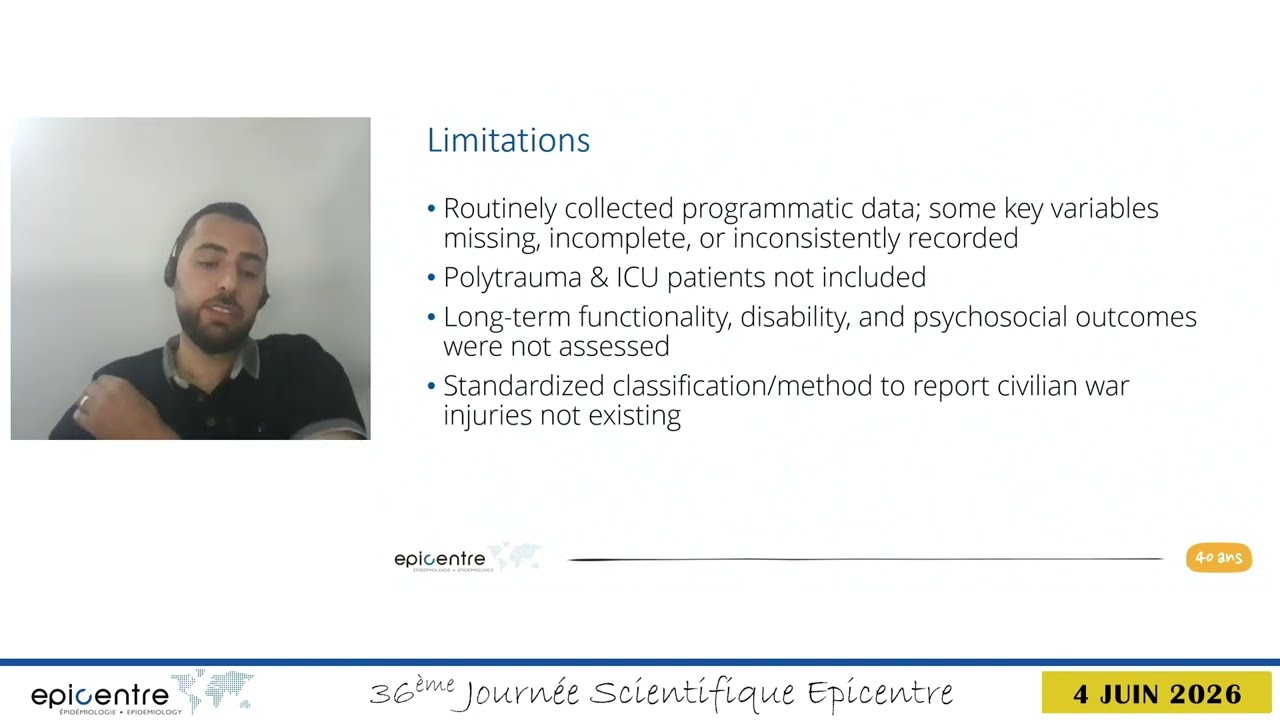
The value of this study lies in its provision of systematic data on injury patterns and outcomes in a conflict zone, which is often lacking. The argumentation is solid, based on a large cohort and clear methodology. The authors acknowledge limitations, such as the exclusion of ICU patients and short-term follow-up, which strengthens the credibility. The data are presented with clear visualizations, and the interpretation is cautious, avoiding overgeneralization. The study’s findings are important for humanitarian response planning.
Scientific Rigor, Source Quality, Title Accuracy
The study is based on routine programmatic data from MSF, which is a reliable source in humanitarian settings. The methodology is rigorous, with explicit inclusion criteria and statistical analysis. The title accurately reflects the content. The presentation does not cite external sources, but the data are original. The limitations are clearly stated, and the conclusions are appropriately cautious. The study is not peer-reviewed, but it is presented at a scientific forum, indicating some level of scrutiny.
169 words
Title / Content Match
The title accurately reflects the content, which focuses on trauma and burn injury patterns and management outcomes in the Gaza Strip.
Quality & Reliability
8/10
The study is a retrospective cohort analysis based on routine programmatic data from a single MSF trauma unit. The methodology is clearly described, with explicit inclusion criteria and limitations. The data are from a real humanitarian setting, and the analysis is transparent. However, the lack of external validation and the inherent limitations of routine data (e.g., short-term follow-up, exclusion of ICU patients) slightly reduce the score.
Key Moments
Markers derived by PSI from the transcript: the creator did not define chapters.
- Introduction and study objectives
- Context of conflict and health system disruption
- MSF response and establishment of trauma unit
- Admission criteria and study design
- Demographics and injury mechanisms
- Monthly admission trends and correlation with conflict events
- Clinical management and length of stay
- Amputation patterns and reconstructive outcomes
- Complications, outcomes, and limitations
- Conclusion and acknowledgements
Cited Sources
- Ministry of Health Gaza — Cited as source of fatality and injury statistics
Concurring Sources
- MSF report on Gaza — MSF's official reporting on the situation in Gaza, which may corroborate the findings.
Contribution & Novelties
This study provides unique data on trauma and burn injuries in Gaza during a period of severe health system disruption, filling a critical gap in the literature. It offers detailed epidemiological profiles and short-term outcomes from a functioning humanitarian surgical unit. The findings highlight the distinct patterns of trauma (adult males, conflict-related) and burns (children, domestic), and the high burden of amputations. This information is crucial for planning humanitarian surgical and rehabilitation services in conflict settings.
Pour aller plus loin :
- WHO Health Emergencies — For broader context on health responses in conflicts.
- MSF Research — For other MSF research studies.
- The Lancet — For peer-reviewed literature on conflict injuries.
110 words
Radar Profile
The radar profile shows high scores in quantity and quality of information, reflecting the study's robust dataset and clear presentation. The technical level is moderately high, suitable for a medical audience. The global reliability is strong due to the rigorous methodology and transparent limitations.