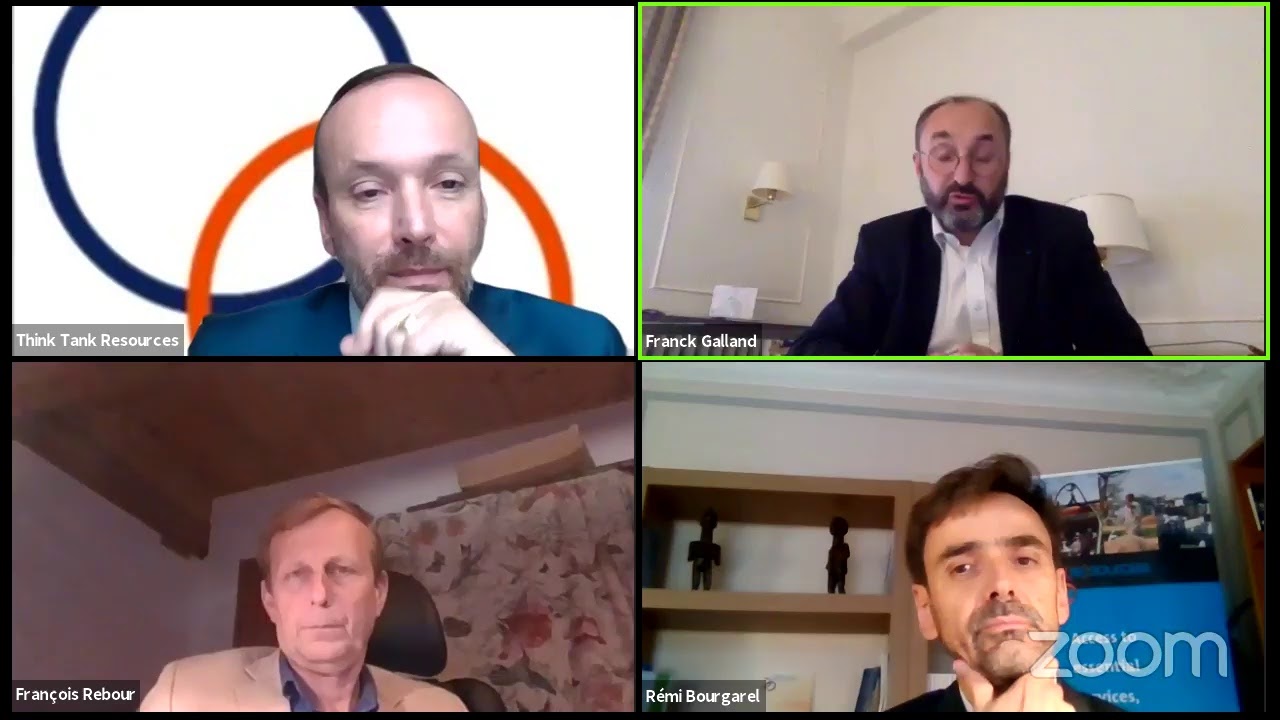
Stabilisation et reconstruction des zones en crise par les infrastructures essentielles: Sahel/PMO
Keywords
Summary
181 words
Critical Evaluation
Value of the Information & Strength of the Argument
The video provides valuable insights from experts with direct field experience, particularly in the Sahel and Middle East. The argumentation is solid, drawing on historical examples like Lyautey and Allenby, and contemporary military doctrine. The speakers effectively argue that infrastructure is a key tool for stabilization, but they acknowledge the complexity and the need for a multi-faceted approach. The discussion is well-structured, with each expert contributing a distinct perspective: military, economic, and operational. However, the arguments are largely based on personal experience and general observations rather than rigorous empirical evidence, which limits the strength of the claims.
Scientific Rigor, Source Quality, Title Accuracy
The video demonstrates a good level of scientific rigor, with references to military doctrines, historical cases, and reports. However, specific sources are not formally cited, and the discussion relies heavily on the speakers’ expertise. The title accurately reflects the content, and the presentation is coherent. The speakers are credible, with notable backgrounds in military and infrastructure management. The lack of formal citations and the reliance on anecdotal evidence slightly reduce the overall rigor. Comments are not provided, so no analysis of public reception is possible.
197 words
Title / Content Match
The title accurately reflects the content, which discusses stabilization and reconstruction through essential infrastructure in the Sahel and Middle East.
Quality & Reliability
7/10
The video features recognized experts (Franck Galland, Admiral François Rebour, Rémi Bourgarel) with field experience, and references historical examples and reports. However, it lacks formal citations and is based on personal expertise and anecdotal evidence.
Key Moments
Markers derived by PSI from the transcript: the creator did not define chapters.
- Introduction by Patrice Fonlladosa, presenting the think tank and the topic.
- Franck Galland introduces the water deficit in the Sahel and its security implications.
- Franck Galland cites historical examples of Lyautey and Allenby using infrastructure for stabilization.
- Admiral Rebour discusses military doctrine and the strategic triangle of stabilization.
- Admiral Rebour explains joint engineering capabilities and their role in operations.
- Rémi Bourgarel presents the economic perspective, linking infrastructure to development and security.
- Rémi Bourgarel gives examples from Niger, including water deficits and low electricity access.
- Discussion on the need for a comprehensive approach and civil-military coordination.
Cited Sources
- Global High-Level Panel on Water and Peace — Mentioned by Franck Galland as a panel he represents France in.
- US Senate report on water scarcity and extremism — Referenced by Franck Galland to support the link between water scarcity and extremism.
- Vincent Lemire's thesis 'La soif de Jérusalem' — Cited by Franck Galland to illustrate the British water infrastructure in Jerusalem.
Concurring Sources
- World Bank report on water scarcity in the Sahel — Not explicitly cited but aligns with the data presented on water scarcity.
Dissenting Sources
- Critiques of the link between climate change and conflict — Some scholars argue that the link between water scarcity and conflict is not deterministic, which contrasts with the video's emphasis.
Contribution & Novelties
The webinar offers a unique multi-perspective analysis of stabilization through infrastructure, combining military, economic, and operational viewpoints. It provides practical insights from experts with field experience in the Sahel and Middle East, and emphasizes the importance of essential services in conflict resolution. The discussion of historical examples adds depth to the argument.
Pour aller plus loin :
- Water and Peace — Overview of the link between water resources and conflict.
- Stabilization (warfare) — Concept of stabilization in military operations.
- Civil-military cooperation — Key aspect of the discussed approach.
88 words
Radar Profile
The radar profile shows high scores in quantity and quality of information, reflecting the depth of expertise and concrete examples. The technical level is moderate, suitable for a general audience. The reliability is good but not perfect due to the lack of formal citations.