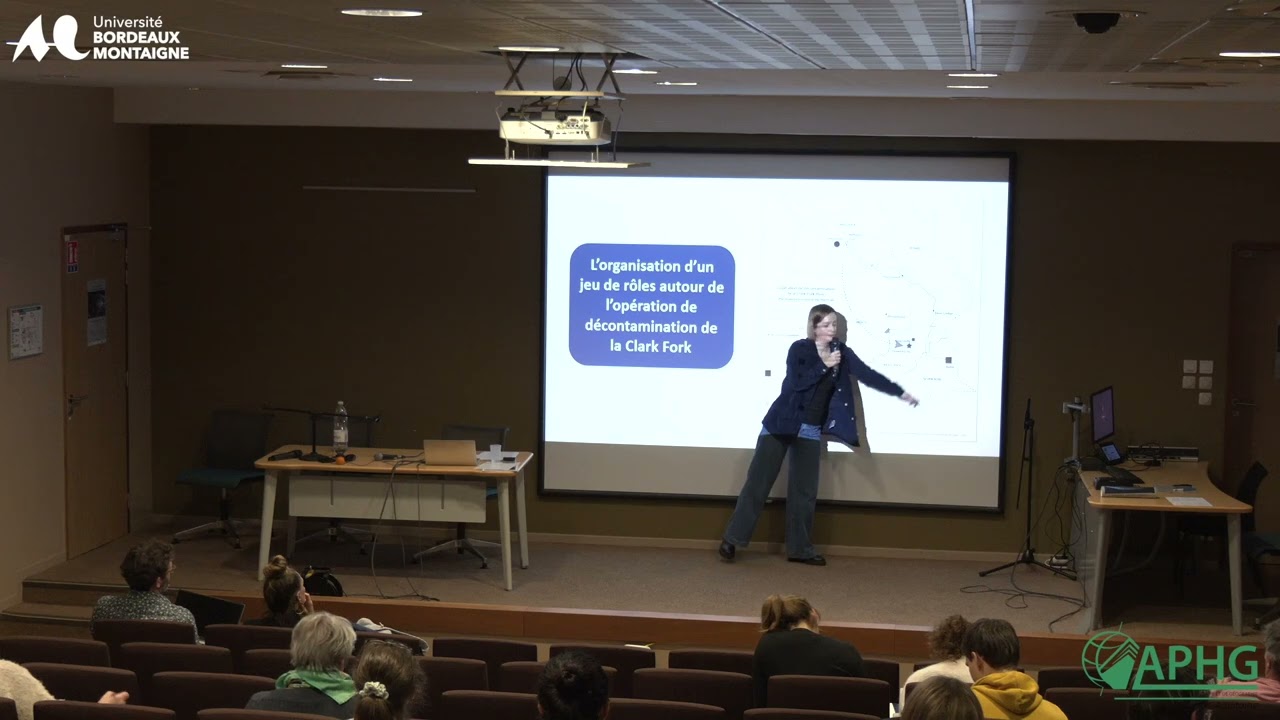
Enseigner les injustices environnementales aux États-Unis - Gabrielle Saumon
Keywords
Summary
128 words
Critical Evaluation
Value of the Information & Strength of the Argument
The presentation offers valuable insights into teaching environmental justice through concrete case studies and active learning methods. The argumentation is solid, drawing on the speaker’s own research and teaching experience. The use of a specific case (Milltown Dam) and the role-playing exercise effectively illustrate the concepts of environmental injustice, gentrification, and power imbalances. The speaker clearly explains the pedagogical goals and the expected outcomes, making a strong case for these methods.
80 words
Title / Content Match
The title accurately reflects the content, which focuses on teaching environmental injustices in the United States.
Quality & Reliability
8/10
The speaker is a geography professor with a PhD, presenting her own research and teaching methods. The content is well-structured, based on case studies, and includes specific examples. However, it is an expert opinion rather than a peer-reviewed study, and some claims lack detailed citations.
Key Moments
Markers derived by PSI from the transcript: the creator did not define chapters.
- Introduction and overview of two teaching methods: synthesis map and role-playing game.
- Explanation of the synthesis map focusing on Glacier National Park area.
- Discussion of the territorial system around Glacier National Park, highlighting the west-east divide.
- Introduction of the role-playing game based on the Clark Fork River contamination case.
- Detailed explanation of the Milltown Dam contamination and the three R's: remediation, restoration, redevelopment.
- Revelation of the disposal of contaminated sediments in Opportunity, Montana, and the resulting health issues.
- Description of the role-playing game setup, including stakeholder groups and objectives.
- Discussion of student engagement and the pedagogical benefits of the role-playing game.
- Conclusion and invitation for questions.
Cited Sources
- APHG conference page — Mentioned as the organizing body of the conference.
Concurring Sources
- EPA Superfund sites in Montana — The EPA is mentioned as the agency responsible for cleanup, and this source provides information on Superfund sites in Montana.
Contribution & Novelties
This presentation offers a practical and innovative approach to teaching environmental justice through a combination of traditional cartography and active role-playing. The use of a real case study (Milltown Dam) and the emphasis on power dynamics and representation provide a nuanced understanding of environmental injustices. The role-playing game encourages students to empathize with different stakeholders and critically analyze the complexities of environmental decision-making.
Pour aller plus loin :
- Environmental Justice — Overview of the concept and its history.
- Milltown Dam — Details on the dam and its contamination.
- Clark Fork River — Information on the river and its environmental issues.
100 words
Radar Profile
The radar profile shows high scores in quality of information and reliability, reflecting the speaker's expertise and the well-structured content. The quantity of information is moderate, and the technical level is appropriate for an academic audience. The overall balance indicates a solid educational resource.
💬 No comments were provided for analysis.