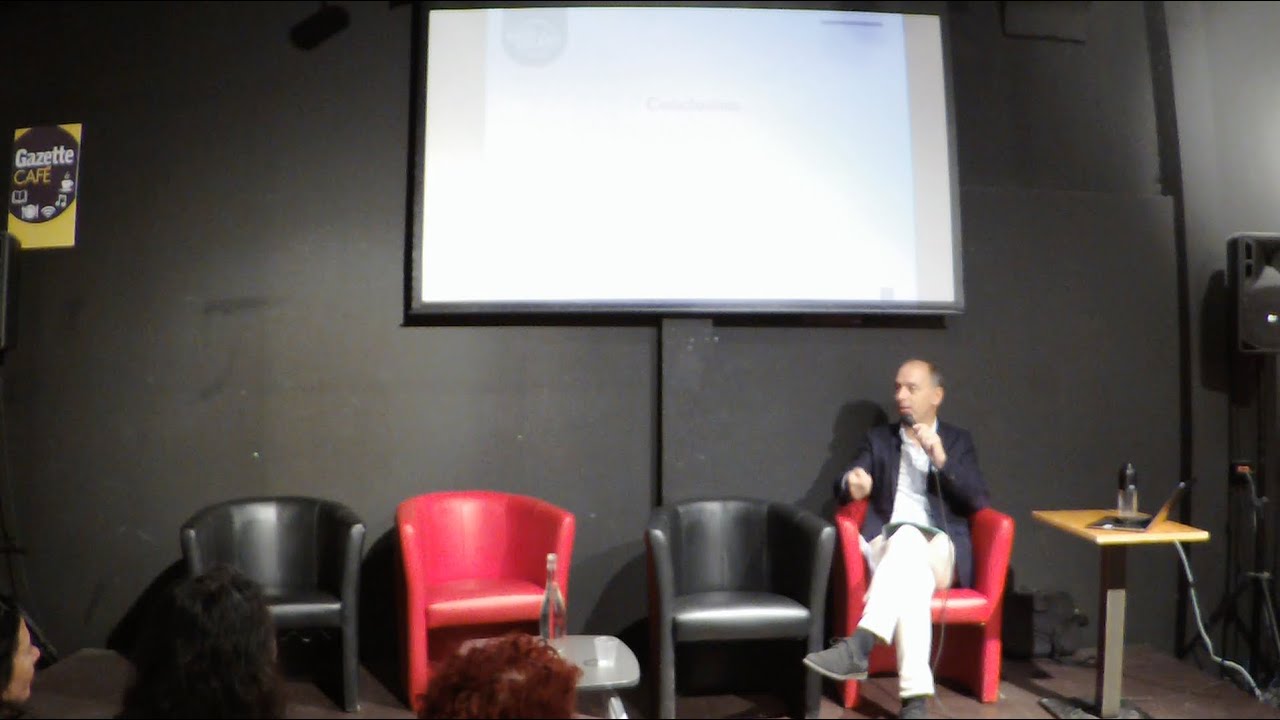
Quand la France est devenue un pays d’immigration - P.-Y. Kirschleger
Keywords
Summary
221 words
Critical Evaluation
Value of the Information & Strength of the Argument
The presentation offers valuable insights into the historical dynamics of immigration in France, supported by demographic data, census records, and case studies. The argumentation is solid, systematically comparing France’s situation with other European countries and explaining the economic and political drivers of migration. The speaker effectively uses specific examples, such as the British technical workers and the German community in Paris, to illustrate broader trends. The reasoning is clear and well-structured, making a compelling case for the uniqueness of France’s immigration experience in the 19th century.
Scientific Rigor, Source Quality, Title Accuracy
The scientific rigor is high, as the speaker is a qualified historian and references specific academic works and primary sources, such as the 1851 census and the address book of Germans in Paris. The sources cited are appropriate and credible, though the talk is not a peer-reviewed publication. The title accurately reflects the content, which focuses on the historical transformation of France into an immigration country. The presentation is well-researched and maintains a scholarly tone throughout.
177 words
Title / Content Match
The title accurately reflects the content, which focuses on how France became an immigration country in the 19th century.
Quality & Reliability
8/10
The speaker is a university lecturer (maître de conférences HDR) and deputy director of a research laboratory, providing a well-structured historical analysis based on demographic data, census records, and case studies. The presentation is scholarly, with references to specific historians and sources, though it is a conference talk rather than a peer-reviewed publication.
Key Moments
Markers derived by PSI from the transcript: the creator did not define chapters.
- Introduction: France's demographic decline in the 19th century compared to other European countries.
- Explanation of the causes: early fertility decline and high infant mortality, leading to a labor shortage.
- Discussion of British immigration: technical superiority and the establishment of industries like linen manufacturing in Dunkirk.
- German immigration: large community in Paris, political refugees, and the example of the Barth family's mobility.
- Swiss immigration: diverse social backgrounds, examples from Le Havre and Marseille.
- Montpellier case: German nannies and merchants, illustrating the presence of immigrants far from borders.
- Paris as a hub: German proletariat, address book of Germans, and neighborhood clustering.
- Champagne region: German control of wine houses, and the founding of Hermès by a German immigrant.
- Integration and social mobility: examples of immigrants becoming entrepreneurs and professionals.
- Conclusion: summary of the impact of immigration on France's development.
Cited Sources
- Pierre-Yves Kirschleger - CRISES laboratory — The speaker's academic profile and publications, mentioned in the video description.
Concurring Sources
- Immigration to France - Wikipedia — General historical overview of immigration to France, consistent with the talk's themes.
Contribution & Novelties
The talk provides a comprehensive overview of 19th-century immigration to France, synthesizing demographic data, case studies, and regional examples. It highlights the unique position of France as an immigration country in a continent of emigration, and emphasizes the economic and political drivers of migration. The presentation also illustrates the diversity of immigrant experiences and their contributions to French industry and society.
Pour aller plus loin :
- Immigration to France — Overview of immigration history in France.
- Industrial Revolution in France — Context for the labor demand.
- Demographic transition — Theoretical framework for demographic changes.
94 words
Radar Profile
The radar chart shows high scores in information quantity, quality, and reliability, with a slightly lower technical level, reflecting the accessible yet scholarly nature of the talk. The profile indicates a well-balanced presentation suitable for a general audience interested in history.
💬 No comments were provided for analysis.