Conference Maignan Version 08 R
Keywords
Summary
187 words
Critical Evaluation
Value of the Information & Strength of the Argument
The presentation offers valuable insights into the career of Albert Maignan, a successful but lesser-known artist of the Belle Époque. Stepanoff’s argument is well-structured, using specific artworks to illustrate broader themes such as the role of the artist in society, the importance of decorative commissions, and the tension between tradition and modernity. He effectively contextualizes Maignan’s work within the artistic movements of the time, particularly Impressionism, and highlights his unique contributions. The argumentation is persuasive, supported by visual examples and references to Maignan’s personal journals. However, the lecture is primarily descriptive rather than analytical, and some claims could benefit from more critical examination.
Scientific Rigor, Source Quality, Title Accuracy
The lecture demonstrates a high level of scientific rigor, as it is delivered by a museum director and curator with deep knowledge of the subject. Stepanoff references primary sources such as Maignan’s journals and specific artworks, and he provides historical context for each piece. The quality of sources is good, though no formal citations are given. The title ‘Conference Maignan Version 08 R’ is vague and does not accurately reflect the content, which is a detailed discussion of Albert Maignan’s art and its relation to the Belle Époque. This mismatch is minor but could affect viewer expectations.
215 words
Title / Content Match
The title is generic and does not reflect the specific content about Albert Maignan and the Belle Époque.
Quality & Reliability
8/10
Presentation by a museum director and curator, based on expertise and archival sources, but with no formal citations or peer review.
Key Moments
Markers derived by PSI from the transcript: the creator did not define chapters.
- Introduction by Pierre Stepanoff, director of the Musée de Picardie, setting the context of the lecture.
- Discussion of Henri Gervex's painting 'The Jury of the Salon' and Maignan's role as a jury member.
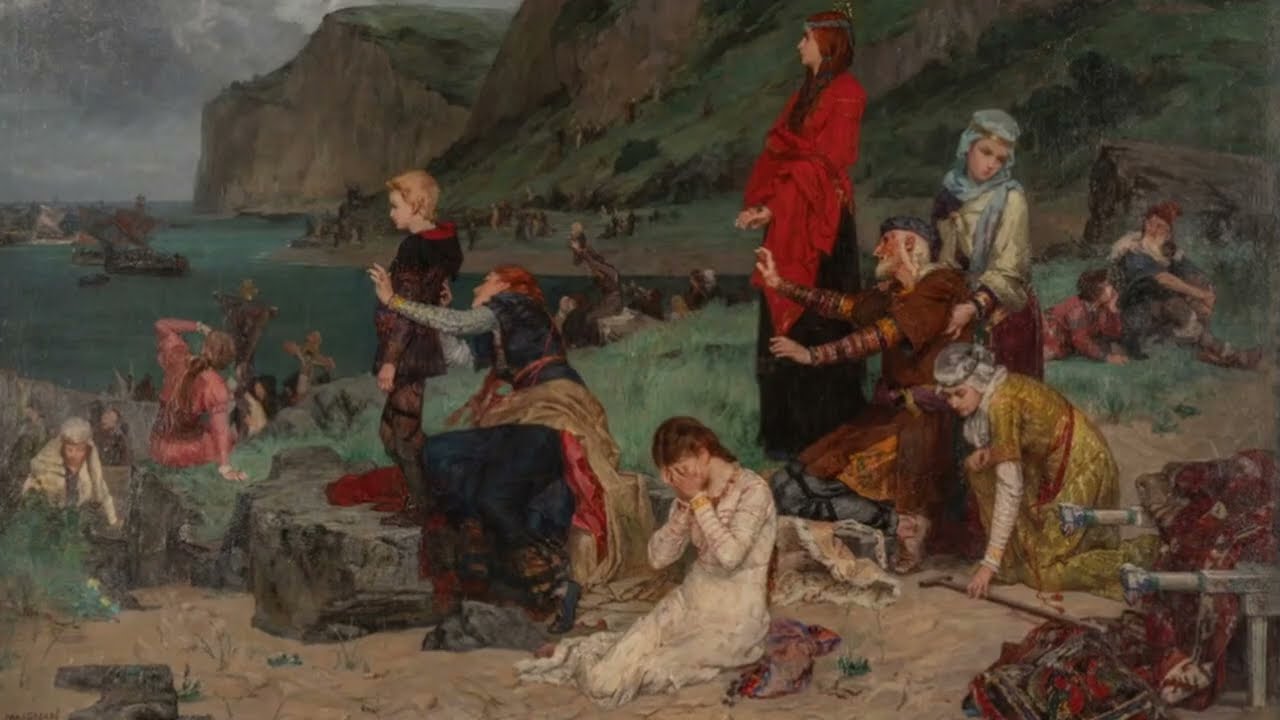
- Analysis of Maignan's early success with 'The Departure of the Norman Fleet' and his historical accuracy.
- Introduction to Maignan's modern subjects, influenced by Baudelaire, and his paintings of leisure scenes.
- Discussion of Maignan's decorative works, including the brasserie 'Le Train Bleu' and the Théâtre d'Orange.
- Explanation of the Bazar de la Charité fire and Maignan's dome for the church of Notre-Dame-de-la-Consolation.
- Presentation of 'La Journée finie' and Maignan's social realism.
- Conclusion and invitation to visit the exhibition.
Cited Sources
- Musée de Picardie — Mentioned as the museum directed by the speaker and venue of the exhibition.
- Musée d'Orsay — Referenced as the location of Maignan's 'Departure of the Norman Fleet' and Gervex's painting.
Concurring Sources
- Musée d'Orsay — Holds Maignan's major work, confirming its significance.
Contribution & Novelties
The lecture provides a fresh perspective on Albert Maignan, highlighting his role as a successful academic painter and his engagement with modern life. It offers detailed analysis of his decorative works, which are often overlooked. The speaker’s expertise adds depth to the discussion.
Pour aller plus loin :
- Albert Maignan (Wikipedia) — Overview of the artist’s life and works.
- Belle Époque (Wikipedia) — Historical context of the period.
- Baudelaire’s ‘The Painter of Modern Life’ (Wikipedia) — Theoretical basis for Maignan’s modern subjects.
82 words
Radar Profile
The radar profile shows high scores in quantity and quality of information, reflecting the speaker's expertise and the detailed content. The technical level is moderate, suitable for a general audience. Overall reliability is high due to the authoritative source.