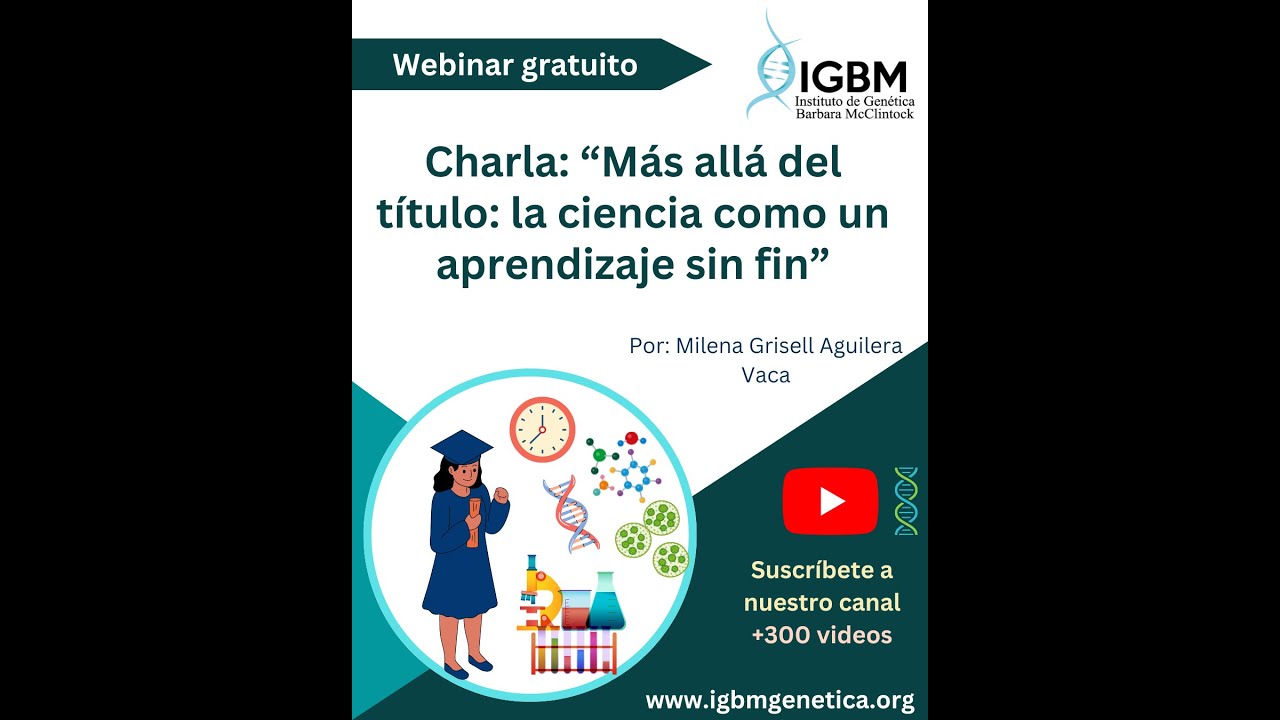
Mas allá del título la ciencia como un aprendizaje sin fin
Keywords
Summary
146 words
Critical Evaluation
Value of the Information & Strength of the Argument
The talk provides valuable insights into the realities of scientific careers in Latin America, highlighting systemic issues like underfunding and limited opportunities. The argumentation is based on personal anecdotes and general observations, which makes it relatable but not highly rigorous. The speaker effectively uses examples and statistics to support her points, though some claims lack specific sources. The discussion on alternative career paths and the importance of science communication adds practical value for aspiring scientists.
Scientific Rigor, Source Quality, Title Accuracy
The talk is an expert opinion rather than a research presentation, so scientific rigor is moderate. The speaker mentions statistics (e.g., R&D investment in Ecuador vs. South Korea) but does not provide detailed references. The title accurately reflects the content, which focuses on lifelong learning and the evolving nature of scientific careers. The description includes a link to a WhatsApp channel for further engagement, but no additional sources are cited. The talk is well-structured and coherent, but the lack of verifiable sources limits its scientific credibility.
176 words
Title / Content Match
The title accurately reflects the content, which discusses lifelong learning in science beyond formal education.
Quality & Reliability
6/10
The talk is an expert opinion based on personal experience and general observations, with some references to statistics (e.g., R&D investment in Ecuador vs. South Korea) but lacks detailed citations or verifiable data. The information is coherent and plausible but not rigorously sourced.
Key Moments
Markers derived by PSI from the transcript: the creator did not define chapters.
- Introduction and opening question about the value of a university degree.
- Milena introduces herself and the topic: science as endless learning.
- Discussion on the role of curiosity and examples of scientists like Einstein and Franklin.
- Challenges in scientific careers in Latin America, including funding and job scarcity.
- Statistics on R&D investment and retention of scientists in the region.
- Alternative career paths: science communication, entrepreneurship, and community projects.
- Practical advice on CV customization and networking.
- Host shares personal experience in molecular biology and job hunting.
- Discussion on university admission processes in different countries.
- Closing remarks on the collective nature of science and lifelong learning.
Cited Sources
- WhatsApp Channel of Instituto de Genética Barbara McClintock — Mentioned in the video description as a way to join the channel for free talks and resources.
Concurring Sources
- Science communication — Supports the idea that science communication is a valuable tool for sharing knowledge and engaging society.
Dissenting Sources
- No discordant sources found — No sources contradicting the main points were identified.
Contribution & Novelties
The talk offers a personal perspective on the challenges and opportunities in scientific careers in Latin America, emphasizing the importance of curiosity and adaptability beyond formal education. It provides practical advice for young scientists, such as tailoring CVs and building networks. The discussion on alternative career paths like science communication is particularly relevant in the current context.
Pour aller plus loin :
- Science communication — Overview of the field and its importance.
- Research and development in Latin America — Context on R&D investment and challenges.
- Lifelong learning — Concept and its relevance to professional development.
95 words
Radar Profile
The radar profile shows moderate scores across all dimensions, with slightly higher quality of information and lower technical level. This indicates a talk that is informative and accessible but not deeply technical or highly rigorous in sourcing.
💬 No comments were provided for analysis.