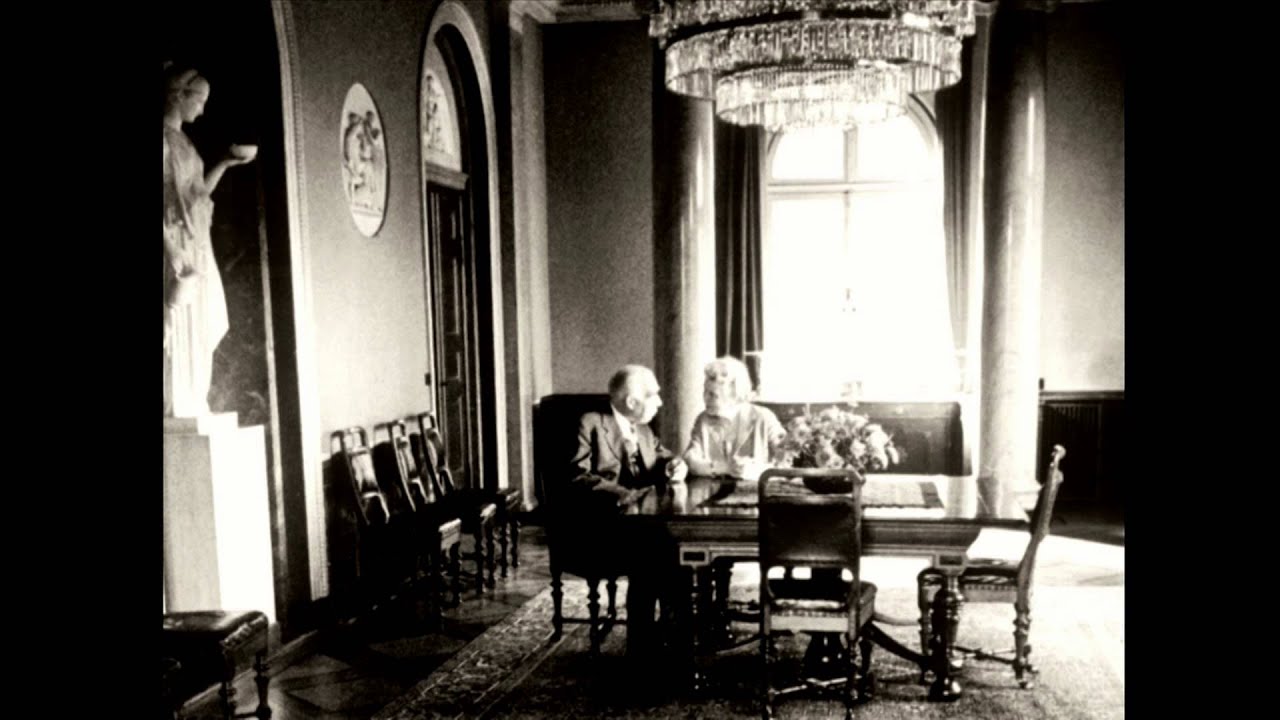
Vilhelm Bohr Public Lecture: Niels Bohr - Life Behind the Physics
Keywords
Summary
162 words
Critical Evaluation
Value of the Information & Strength of the Argument
The value of this lecture lies in its unique, first-hand perspective on Niels Bohr’s personal life, drawn from family archives and the speaker’s direct lineage. Vilhelm Bohr provides a rich narrative that humanizes a towering figure in physics, offering insights into his character, relationships, and the environment that fostered his creativity. The argumentation is not scientific but historical and biographical, relying on anecdotes, letters, and photographs. The speaker’s authority as a family member and chair of the Niels Bohr Archive lends credibility, though the account is inherently subjective. The lecture effectively argues that Bohr’s success was not solely due to his intellect but also to the supportive network of family and colleagues, and the unique collaborative atmosphere he cultivated at his institute.
Scientific Rigor, Source Quality, Title Accuracy
The lecture demonstrates rigor in its use of primary sources: family letters, photographs, and the resources of the Niels Bohr Archive. Vilhelm Bohr explicitly mentions the archive’s collection of 6,000 letters and the work of its staff. He also references Wikipedia for objective facts about his grandfather and brother, and mentions a paper written 150 years after Christian Bohr’s birth. The title is accurate, as the lecture focuses on the ’life behind the physics’ rather than the physics itself. The talk is well-structured, moving chronologically through Bohr’s life and highlighting key influences. The speaker’s personal connection adds authenticity, though it also means the account is not fully detached. The lecture does not cite external sources in a formal academic manner, but the provenance of the material is clear and credible.
267 words
Title / Content Match
The title accurately reflects the content: a personal and historical account of Niels Bohr's life, focusing on personal relationships and influences rather than his physics.
Quality & Reliability
8/10
The lecture is delivered by Niels Bohr's grandson, Vilhelm Bohr, who is a scientist and chair of the Niels Bohr Archive. It provides a personal and historical account, based on family archives and correspondence. The content is anecdotal and historical, not scientific research, but it is reliable within its scope, with clear provenance of sources (family letters, photographs, archive).
Key Moments
Markers derived by PSI from the transcript: the creator did not define chapters.
- Introduction of Vilhelm Bohr by Greg Dick, highlighting his background in DNA research and his role as chair of the Niels Bohr Archive.
- Vilhelm Bohr outlines the structure of his talk, focusing on the people who influenced Niels Bohr: his father, brother, wife, and others.
- Discussion of Niels Bohr's father, Christian Bohr, a physiologist known for the Bohr effect, and his role in fostering scientific discussions at home.
- Anecdotes about Niels Bohr's brother, Harald, a mathematician and Olympic footballer, and the close relationship between the brothers.
- Vilhelm Bohr shares personal photographs and stories, including Niels Bohr's pipe-smoking habit and his humility when corrected by the king.
- Discussion of the atmosphere at the Niels Bohr Institute, including the famous discussions and the playful culture among physicists like Dirac.
- Vilhelm Bohr talks about his grandmother, Margrethe Bohr, and her crucial role as Niels Bohr's confidante and partner.
- The lecture covers the tragic death of the Bohr's eldest son, Christian, and its impact on the family.
- Vilhelm Bohr discusses Niels Bohr's 1950 open letter to the United Nations and his advocacy for open communication to avoid a Cold War.
- Conclusion and Q&A session begins, with Vilhelm Bohr taking questions from the audience.
Cited Sources
- Perimeter Institute newsletter — Mentioned in the video description as a way to subscribe for updates on future events.
- Perimeter Institute donation page — Mentioned in the video description as a way to support the Perimeter Institute.
- Perimeter Institute public lecture series page — Mentioned in the video description as part of the public lecture series.
Concurring Sources
- Niels Bohr - Wikipedia — Provides a general overview of Bohr's life and achievements, consistent with the lecture's biographical details.
- Bohr–Einstein debates - Wikipedia — The lecture mentions the debates with Einstein, and this source provides detailed information on them.
Contribution & Novelties
The lecture provides a unique, personal glimpse into Niels Bohr’s life, drawing on family archives and the speaker’s direct lineage. It highlights the importance of family and social networks in scientific achievement, and the role of a supportive spouse. The talk also underscores the collaborative and informal atmosphere of the Bohr Institute, which was crucial for its success. It offers a humanizing perspective on a scientific icon, moving beyond the physics to the person.
Pour aller plus loin :
- Niels Bohr — Overview of Bohr’s life and scientific contributions.
- Bohr–Einstein debates — The famous debates on quantum mechanics.
- Copenhagen interpretation — The interpretation of quantum mechanics associated with Bohr.
- Niels Bohr Archive — Official website of the archive, with resources and information.
122 words
Radar Profile
The radar profile shows high scores in 'qualite_information' and 'fiabilite_globale', reflecting the speaker's authority and use of primary sources. The 'niveau_technique' is low, as the lecture is non-technical. The 'quantite_information' is moderate, as the talk is focused on personal history rather than comprehensive coverage.
💬 Sur les 0 commentaires analysés, aucune tendance n'est disponible.