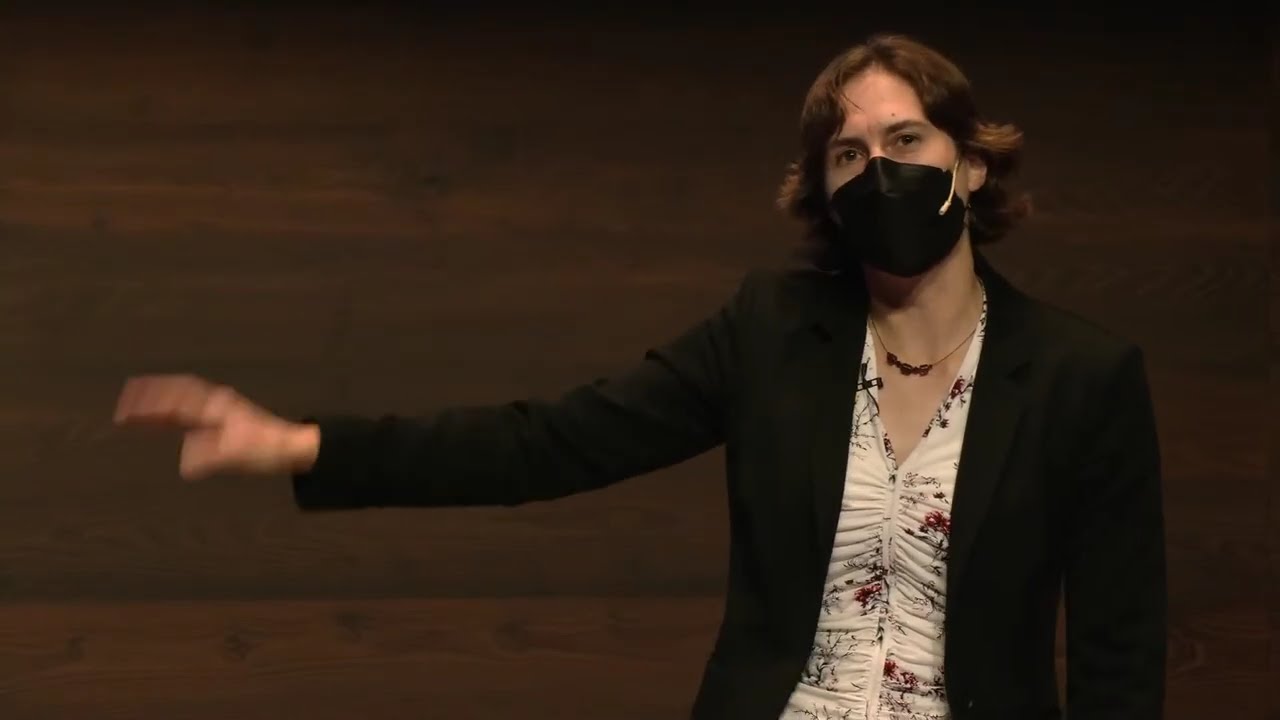
How the Universe Ends: Dr. Katie Mack Public Lecture
Keywords
Summary
174 words
Critical Evaluation
The lecture is an excellent example of science communication, presenting complex cosmological concepts in an engaging and accessible manner without oversimplifying. Dr. Mack’s expertise is evident in her clear explanations of the expansion of the universe, the cosmic microwave background, and the various end-of-universe scenarios. She carefully distinguishes between well-established science (like the Big Bang and cosmic expansion) and more speculative ideas (like vacuum decay and the multiverse), which is crucial for public understanding. The argumentation is solid, grounded in current astrophysical evidence, and she acknowledges uncertainties, such as the nature of dark energy. The sources cited are primarily her own book and general scientific knowledge, but she does not reference specific papers or external sources during the talk. However, the content aligns with the scientific consensus and her reputation adds credibility. The title accurately reflects the content, and the lecture is well-structured, progressing from the known to the speculative. The only minor critique is that some concepts, like vacuum decay, might be challenging for a lay audience, but she handles them with analogies and clear explanations. Overall, this is a high-quality, reliable, and engaging presentation.
186 words
Title / Content Match
The title accurately reflects the content: a public lecture on the possible end states of the universe, presented by Dr. Katie Mack.
Quality & Reliability
9/10
Lecture by a leading theoretical astrophysicist (Hawking Chair in Cosmology and Science Communication at Perimeter Institute), based on established cosmological theories and her book 'The End of Everything'. The content is accurate and well-explained, with clear distinction between established science and speculative scenarios. The talk is aimed at a general audience but maintains scientific rigor.
Key Moments
Markers derived by PSI from the transcript: the creator did not define chapters.
- Introduction by Perimeter Institute staff, land acknowledgement, and speaker introduction.
- Dr. Mack begins her talk with Robert Frost's poem and introduces the topic of the end of the universe.
- Explanation of the expansion of the universe and the Big Bang theory using the Hubble Ultra Deep Field image.
- Discussion of the cosmic microwave background and how it provides evidence for the Big Bang.
- Introduction to the four possible end scenarios: Big Crunch, Heat Death, Big Rip, and Vacuum Decay.
- Detailed explanation of the Big Crunch and why it is unlikely given current observations of dark energy.
- Explanation of Heat Death and the concept of entropy, emphasizing that it is the most likely scenario.
- Discussion of the Big Rip scenario and the role of dark energy in tearing apart the universe.
- Introduction to Vacuum Decay, the Higgs field, and the possibility of a false vacuum, ending with a Q&A session.
Cited Sources
- Perimeter Institute Newsletter Signup — Mentioned in the video description for staying updated.
- Perimeter Institute Donations — Mentioned in the video description for supporting science.
- Perimeter Institute LinkedIn — Mentioned in the video description for following the institute.
Concurring Sources
- The End of Everything (book) — Dr. Mack's book covers similar content in more depth.
- Heat death of the universe - Wikipedia — Supports the heat death scenario discussed.
- Vacuum decay - Wikipedia — Supports the vacuum decay scenario discussed.
Dissenting Sources
- Big Crunch - Wikipedia — The Big Crunch scenario is discussed but considered unlikely given current evidence for dark energy.
Contribution & Novelties
The lecture provides a comprehensive overview of the possible end states of the universe, synthesizing current cosmological knowledge in an accessible manner. It highlights the role of dark energy and quantum field theory in shaping these scenarios, and emphasizes the scientific uncertainty surrounding them. The talk is based on Dr. Mack’s book ‘The End of Everything’, which offers a deeper exploration.
Pour aller plus loin :
- The End of Everything (Astrophysically Speaking) - Wikipedia — Provides background on the book and its reception.
- Heat death of the universe - Wikipedia — Detailed explanation of the heat death scenario.
- Vacuum decay - Wikipedia — Overview of the vacuum decay concept and its implications.
- Big Rip - Wikipedia — Information on the Big Rip scenario.
- Cosmic microwave background - Wikipedia — Background on the CMB and its significance.
136 words
Radar Profile
The radar profile shows high scores in quantity and quality of information, reflecting the lecture's comprehensive and accurate content. The technical level is moderate, suitable for a general audience, while reliability is high due to the speaker's expertise and alignment with scientific consensus.