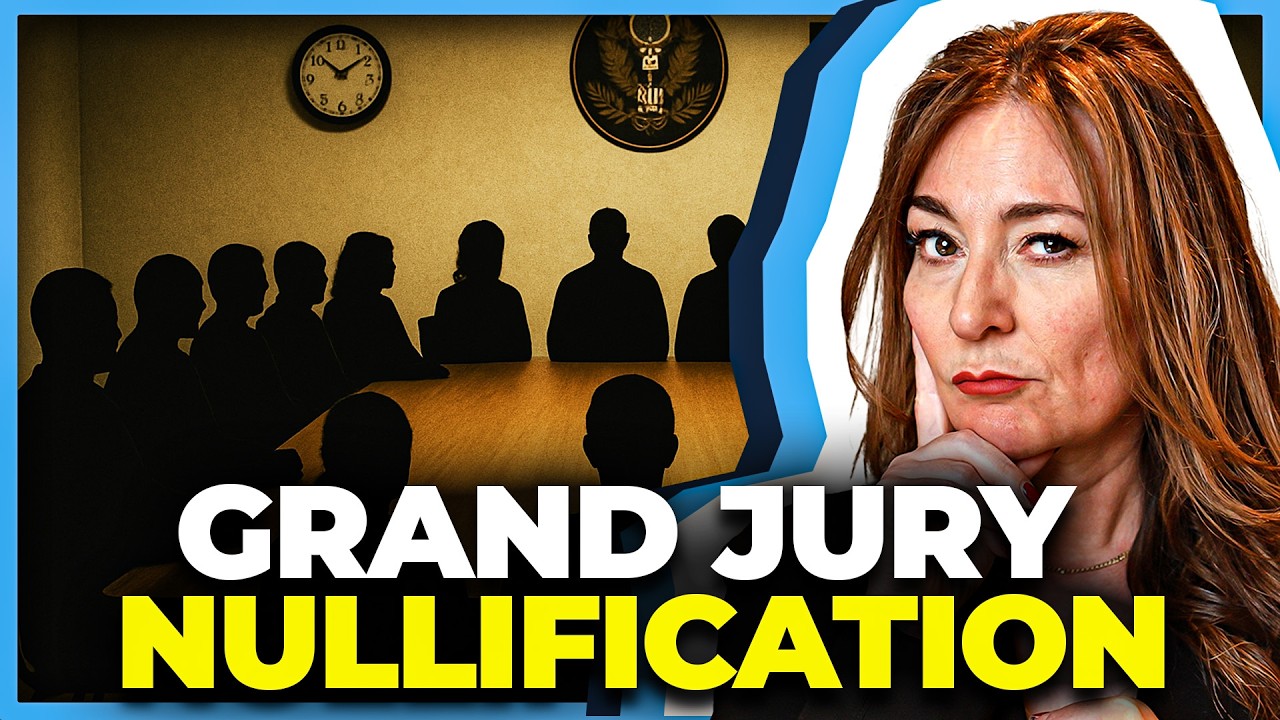
DC Juries Refuse to Indict Protestors
Keywords
Summary
145 words
Critical Evaluation
Value of the Information & Strength of the Argument
The video provides valuable insights into the functioning of grand juries and the impact of prosecutorial policies on the justice system. LegalEagle’s argumentation is solid, using specific case examples and legal principles to support his critique. He effectively demonstrates how the DOJ’s aggressive charging strategy has led to a series of embarrassing no bills, suggesting a disconnect between the administration’s narrative and the legal reality. The analysis is balanced, acknowledging that some cases may be justified while others are clearly overreaching.
Scientific Rigor, Source Quality, Title Accuracy
LegalEagle demonstrates rigor by referencing specific court documents, judicial statements, and legal statutes. He cites the Fifth Amendment, the Speedy Trial Act, and the Justice Manual, and mentions the Washington Post’s reporting. The title accurately reflects the content, focusing on the grand jury rejections. The video includes a clear disclaimer that it is not legal advice, and the analysis is grounded in legal expertise.
160 words
Title / Content Match
The title accurately reflects the content, which focuses on grand juries in DC refusing to indict individuals arrested during the administration's crackdown.
Quality & Reliability
8/10
The video is a well-structured legal analysis by a practicing attorney, referencing specific cases, legal standards, and judicial statements. It clearly distinguishes between legal facts and opinions, and includes a disclaimer that it is not legal advice. The information is consistent with publicly known legal procedures and events, though the interpretation is inherently subjective.
Key Moments
Markers derived by PSI from the transcript: the creator did not define chapters.
- Introduction to the topic: DOJ's failures in DC courts.
- Explanation of grand jury and indictment process.
- Discussion of the sandwich thrower case and grand jury no bill.
- Details on the case of Cydney Reed and multiple no bills.
- Analysis of other no bill cases, including threats to the president.
- Critique of the DOJ's handling of cases and judge's reaction.
- Discussion of jury nullification and the upcoming trial of Sydney Reed.
Cited Sources
- LegalEagle Law Guide — Referenced as a resource for law school guidance.
- LegalEagle Copyright Course — Mentioned as a course for copyright law.
- LegalEagle Team — Link for legal representation services.
- Incogni — Sponsor for data privacy service.
- Nebula — Platform for early ad-free videos.
- LegalEagle Podcast — Link to the podcast.
- LegalEagle Reddit — Community discussion.
- LegalEagle Twitter — Social media.
- LegalEagle Facebook — Social media.
- LegalEagle Instagram — Social media.
- LegalEagle TikTok — Social media.
- LegalEagle Patreon — Support channel.
- LegalEagle OnlyFans — Satirical link.
- Indochino — Sponsor for suits.
- dub.co — Link shortener service.
Concurring Sources
- Washington Post article on DC court backlog — Referenced in the video as reporting on the overwhelmed court system.
Dissenting Sources
- Fox News interview with Janine Piro — Piro's comments on grand juries not seeing crime in DC, which the video disputes.
Contribution & Novelties
The video provides a timely and detailed analysis of the grand jury no bills in DC, offering a legal perspective on the political controversy. It explains the mechanics of grand juries and the significance of no bills, which are rare, and connects them to broader issues of prosecutorial discretion and jury nullification. The video also highlights the practical consequences for defendants and the court system.
Pour aller plus loin :
- Grand jury in the United States — Overview of grand jury function and legal basis.
- Jury nullification — Concept of jurors acquitting despite evidence.
- Speedy Trial Act — Federal law ensuring timely trials.
- Fifth Amendment to the United States Constitution — Constitutional basis for grand jury requirement.
117 words
Radar Profile
The radar profile shows high scores in quantity and quality of information, with a moderate technical level and high reliability. This indicates a well-researched and informative video that is accessible to a general audience while maintaining legal accuracy.
💬 Très positif. Sur les 30 commentaires analysés, la grande majorité exprime un soutien enthousiaste aux décisions des grands jurys et une critique virulente de l'administration, avec des commentaires humoristiques et des appels à la résistance.