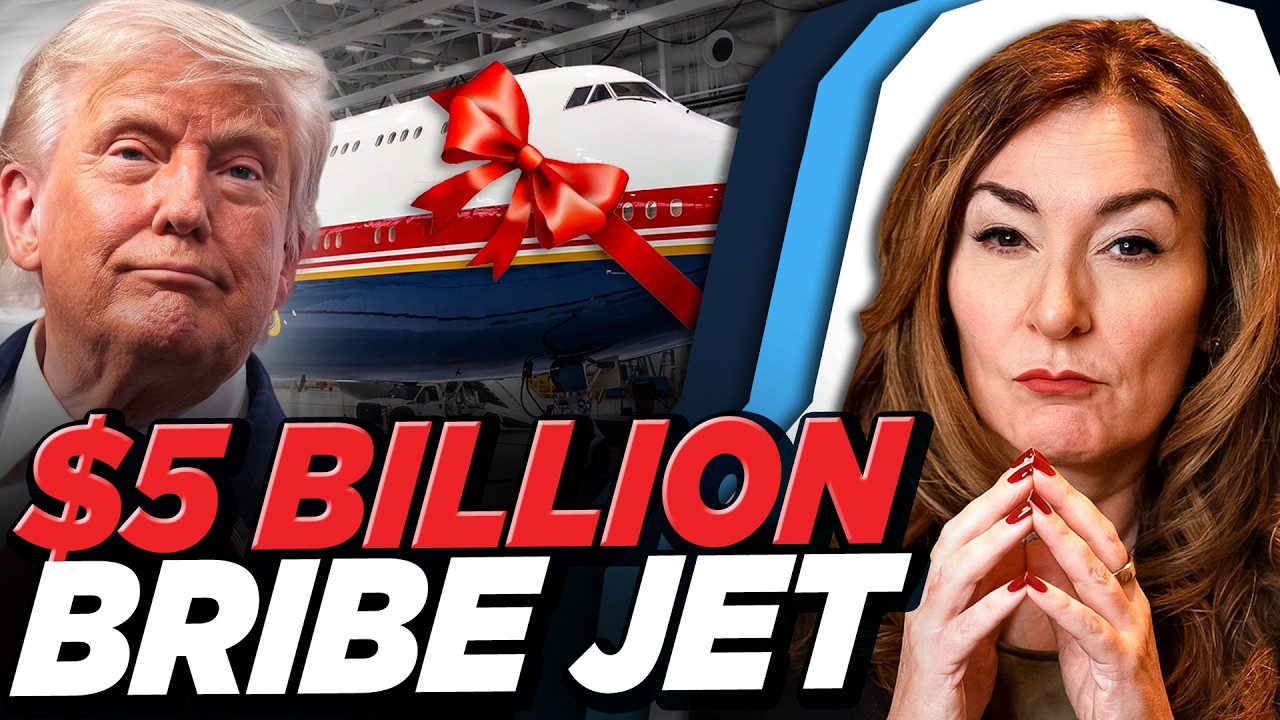
Trump Loses Bigly in Bribe-Jet Case
Keywords
Summary
162 words
Critical Evaluation
Value of the Information & Strength of the Argument
The video provides valuable legal analysis of a complex case, breaking down the relevant legal standards and applying them to the facts. The host’s expertise as a lawyer adds credibility, and the argumentation is logical and well-structured. The video effectively explains the significance of the case for press freedom and the separation of powers. However, the presentation is clearly opinionated, and the host does not present counterarguments in depth, which may limit its objectivity.
Scientific Rigor, Source Quality, Title Accuracy
The video cites specific legal cases and DOJ regulations, which are accurately referenced. The host relies on reporting from the New York Times and other outlets, which are credible but not independently verified. The title accurately reflects the content, and the video does not misrepresent the facts. The host’s legal analysis is rigorous, but the editorial tone may be seen as biased. The video includes a disclaimer that it is not legal advice, which is appropriate.
165 words
Title / Content Match
The title accurately reflects the content: the video discusses a legal defeat for Trump in a case involving a gifted jet and subpoenas against journalists.
Quality & Reliability
8/10
The video provides a detailed legal analysis of a current case, citing specific legal precedents (Branzburg v. Hayes, New York Times v. Gonzalez) and DOJ regulations. The host is a lawyer and former federal prosecutor, adding credibility. However, the content is presented from a clear editorial perspective, and some claims rely on unverified reports from the New York Times and other outlets.
Key Moments
Markers derived by PSI from the transcript: the creator did not define chapters.
- Introduction to the case: Trump's gifted Qatari jet and the legal controversy.
- Details of the plane's cost and the rushed timeline for the July 4th celebration.
- Explanation of the emoluments clause and the legal memo by Bondi and Warrington.
- Discussion of the security features omitted from the plane and the New York Times reporting.
- The FBI subpoenas journalists and the legal battle begins.
- Explanation of the legal standards for journalist subpoenas (Branzburg, Gonzalez).
- The Times' arguments against the subpoenas and the DOJ's response.
- The court hearing and the judge's order to quash the subpoenas.
- The judge demands internal DOJ communications, leading to a potential privilege fight.
- Conclusion: the First Amendment held, but the legal battle may continue.
Cited Sources
- Branzburg v. Hayes, 408 U.S. 665 (1972) — Supreme Court case cited for the lack of a First Amendment privilege for reporters before a grand jury.
- New York Times v. Gonzalez, 459 F.3d 160 (2d Cir. 2006) — Second Circuit case establishing the three-part test for media subpoenas.
- Freedom of the Press Foundation — Mentioned as filing a FOIA suit to obtain the DOJ memo on the plane deal.
- New York Times article on the plane — The article that triggered the subpoenas, reporting on the plane's security deficiencies.
- AP photo analysis — Photo analysis showing missing security hardware on the plane.
Concurring Sources
- New York Times article on the plane — The article that triggered the subpoenas, reporting on the plane's security deficiencies.
- AP photo analysis — Photo analysis showing missing security hardware on the plane.
Dissenting Sources
- DOJ statement — The DOJ may argue that the subpoenas were justified and that the judge's order is an overreach.
External References
Contribution & Novelties
The video provides a clear and accessible explanation of the legal issues surrounding journalist subpoenas and the emoluments clause, using a current case as a case study. It adds value by breaking down complex legal precedents and applying them to a real-world situation. The host’s insider perspective as a former federal prosecutor offers unique insights into DOJ practices.
Pour aller plus loin :
- Branzburg v. Hayes — The Supreme Court case that established the lack of a general reporter’s privilege.
- New York Times v. Gonzalez — The Second Circuit’s three-part test for media subpoenas.
- Emoluments Clause — Constitutional provision prohibiting gifts from foreign states without congressional consent.
- Freedom of the Press Foundation — Organization advocating for press freedom and transparency.
120 words
Radar Profile
The radar profile shows high scores in quantity and quality of information, reflecting the video's detailed legal analysis and use of credible sources. The technical level is also high, indicating a sophisticated audience. The overall reliability is strong, though the editorial tone may slightly reduce the perceived objectivity.
💬 Très négatif. Sur les 30 commentaires analysés, la grande majorité exprime une forte indignation et une critique sévère de l'administration Trump, avec des accusations de corruption et de violation de l'éthique.