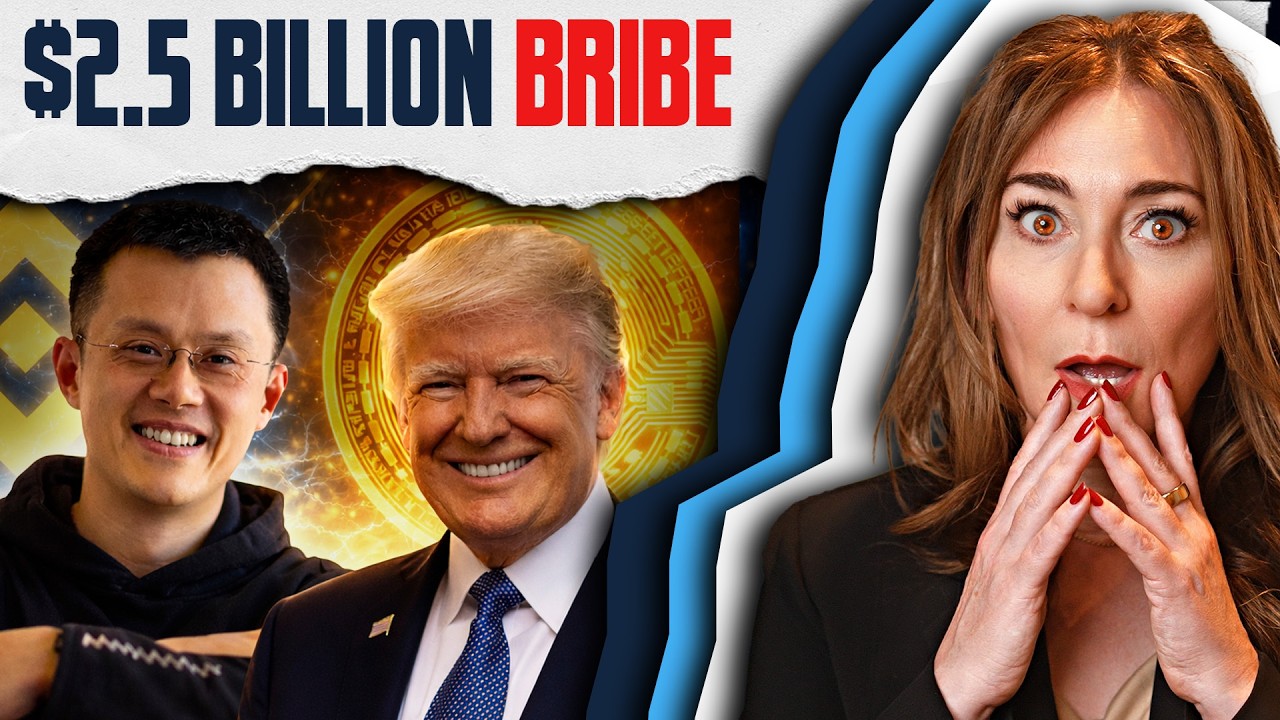
Largest Bribe in American History
Keywords
Summary
132 words
Critical Evaluation
Value of the Information & Strength of the Argument
The video provides valuable information by connecting disparate events into a coherent narrative of corruption. It offers a clear explanation of the legal framework, including the Emoluments Clause and bribery statutes, and uses specific examples to illustrate the points. The argumentation is solid, relying on journalistic sources and legal analysis, though it is clearly opinionated and critical of the Trump administration. The video effectively argues that the transactions constitute bribery and that the legal system is ill-equipped to address such corruption.
Scientific Rigor, Source Quality, Title Accuracy
The video demonstrates scientific rigor by citing specific sources such as the Wall Street Journal, New York Times, and court documents. It distinguishes between factual reporting and legal interpretation. The title accurately reflects the content, and the video provides a thorough analysis of the legal and ethical issues. The video also includes a disclaimer that it is not legal advice, which is appropriate. The adéquation between title and content is strong, as the video indeed discusses the largest bribe in American history.
178 words
Title / Content Match
The title accurately reflects the content, which focuses on the largest bribery scandal in American history involving the Trump family and foreign entities.
Quality & Reliability
8/10
The video provides a detailed and well-structured analysis of a complex corruption scandal, citing specific sources such as the Wall Street Journal and New York Times. The legal analysis is grounded in constitutional law and statutory interpretation, though the presentation is opinionated and relies on journalistic reports rather than primary legal documents.
Key Moments
Markers derived by PSI from the transcript: the creator did not define chapters.
- Introduction to the corruption scandal involving Trump, crypto, and UAE.
- Background on Changpeng Zhao and Binance's legal troubles.
- Introduction of Sheikh Tahnoon and his ties to AI and UAE.
- Launch of World Liberty Financial and the Trump family's crypto venture.
- Details of the $500 million payment from Sheikh Tahnoon to World Liberty Financial.
- The $2 billion USD1 stablecoin transaction and its implications.
- The pardon of Changpeng Zhao and the removal of export controls on AI chips.
- Analysis of the Emoluments Clause and its historical context.
- Discussion of the Supreme Court's ruling on bribery and its impact.
- Conclusion and call to action for viewers to stay informed.
Cited Sources
- Ground News — Sponsor of the video, used to compare news coverage.
- LegalEagle's Law Guide — Promoted in the description for those interested in law school.
- LegalEagle's Copyright Course — Promoted in the description for copyright help.
Concurring Sources
- Wall Street Journal — Reported on the financial transactions and pardon.
- New York Times — Reported on Binance's continued support for USD1.
Dissenting Sources
- White House Statements — The White House claimed the pardon corrected an injustice, which the video argues is misleading.
External References
Contribution & Novelties
The video provides a novel synthesis of recent events, connecting the dots between the Trump family’s crypto venture, the UAE’s AI ambitions, and the pardon of Binance’s founder. It offers a clear legal analysis of the Emoluments Clause and bribery statutes, making complex legal concepts accessible. The video also highlights the role of media framing in shaping public perception of corruption.
Pour aller plus loin :
- Emoluments Clause — Overview of the constitutional provision and its interpretation.
- Foreign Emoluments Clause — Specifics on the clause relevant to foreign gifts.
- McDonnell v. United States — Supreme Court case limiting bribery prosecutions.
100 words
Radar Profile
The radar profile shows high scores in quantity and quality of information, with a moderate technical level. The video is well-researched and provides a thorough analysis, but its opinionated nature may reduce its perceived objectivity.
💬 Très négatif. Sur les 30 commentaires analysés, la majorité exprime une forte désapprobation et un sentiment de corruption généralisée, avec des appels à l'action et des critiques envers le système judiciaire.