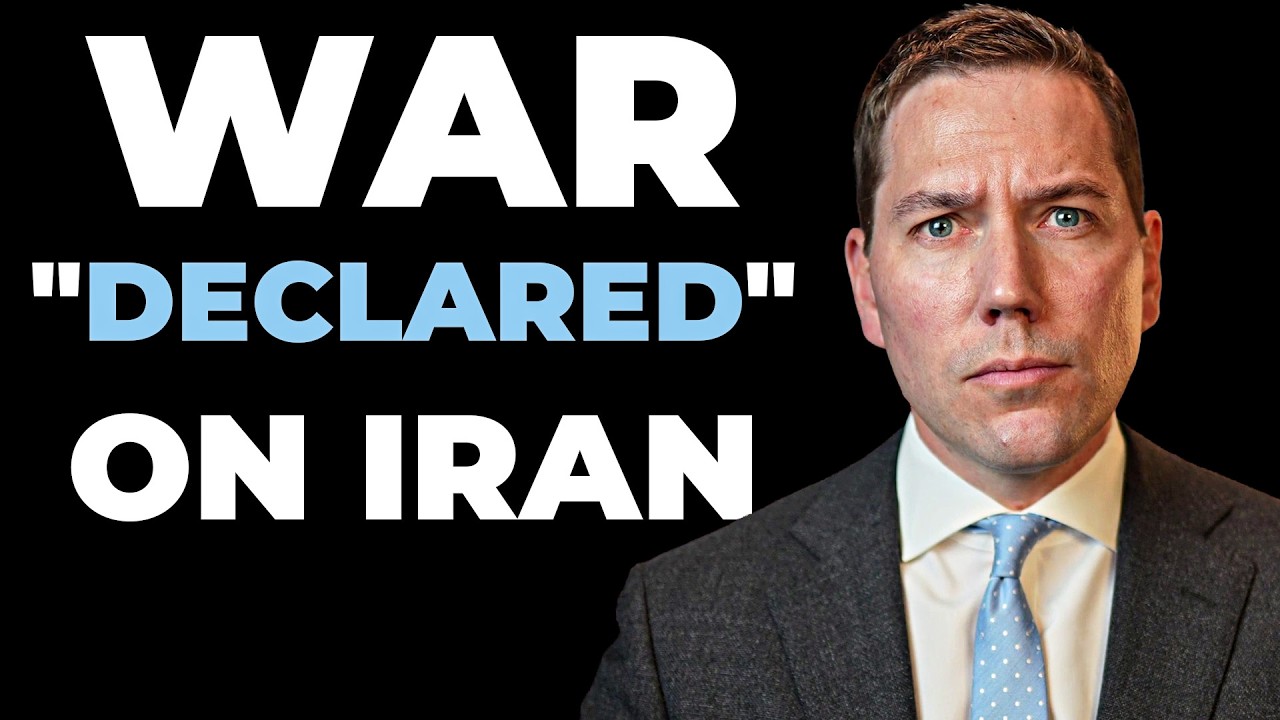
Trump's Most Illegal War Yet
Keywords
Summary
111 words
Critical Evaluation
Value of the Information & Strength of the Argument
The video provides a comprehensive and well-reasoned legal analysis. It clearly explains complex legal concepts and applies them to the specific facts of the Iran strikes. The argument is structured logically, moving from domestic law to international law, and uses historical analogies to strengthen the case. The host acknowledges counterarguments and addresses them, but ultimately presents a one-sided view that the action is illegal. The inclusion of the OLC memo from the Obama administration adds nuance, showing that even permissive interpretations do not justify the current action.
Scientific Rigor, Source Quality, Title Accuracy
The video demonstrates high rigor in its legal analysis, citing the US Constitution, the War Powers Resolution, and the UN Charter. It references historical events and legal precedents, but relies on media reports for facts about the strikes, which are not independently verified. The title accurately reflects the content, which argues that this is the most illegal war yet. The video does not provide a balanced view, but it is transparent about its perspective. The sources cited are primarily legal documents and historical examples, which are appropriate for the topic.
192 words
Title / Content Match
The title accurately reflects the content, which argues that the military action against Iran is illegal under both domestic and international law.
Quality & Reliability
8/10
The video provides a detailed legal analysis of the US strikes on Iran, citing constitutional provisions, the War Powers Resolution, and international law. The argument is well-structured and references historical precedents, but it is presented from a clear partisan perspective and relies on unverified news reports.
Key Moments
Markers derived by PSI from the transcript: the creator did not define chapters.
- Introduction to the conflict and the legal question of whether it is a war.
- Historical background of US-Iran relations, including the 1953 coup and the 1979 revolution.
- Explanation of the constitutional framework: Congress's power to declare war and the president's role as commander-in-chief.
- Discussion of the War Powers Resolution and its requirements.
- Analysis of the Obama administration's Libya intervention as a precedent.
- Examination of international law, including the UN Charter and the concept of self-defense.
- Conclusion: the war is illegal and politically unwise.
Cited Sources
- Incogni — Sponsor of the video, mentioned in the description and during the video.
- LegalEagle's Law School Guide — Mentioned in the description as a resource for law school.
- LegalEagle's Copyright Course — Mentioned in the description as a resource for copyright law.
Concurring Sources
- War Powers Resolution — The law that requires congressional authorization for military action, which the video argues was violated.
- UN Charter — The international law that prohibits the use of force except in self-defense or with Security Council authorization.
Dissenting Sources
- Trump Administration's Justification — The administration claims the strikes were an act of self-defense against an imminent nuclear threat, which the video argues is not supported by evidence.
External References
Contribution & Novelties
The video provides a clear and accessible legal analysis of a complex and timely issue. It synthesizes domestic and international law to argue that the US strikes on Iran are illegal. The use of historical precedents, such as the Libya intervention, adds depth to the argument. The video also highlights the political nature of legal interpretations, which is an important insight.
Pour aller plus loin :
- War Powers Resolution — The 1973 law that limits the president’s power to commit armed forces without congressional approval.
- UN Charter Article 51 — The provision on self-defense, which is central to the international law analysis.
- Office of Legal Counsel — The executive branch office that provides legal advice to the president, often criticized for being politically motivated.
124 words
Radar Profile
The radar profile shows high scores in information quantity and quality, indicating a well-researched and detailed analysis. The technical level is also high, reflecting the legal complexity. However, the reliability score is slightly lower, likely due to the partisan perspective and reliance on unverified news reports.
💬 The comments are predominantly negative towards the war and critical of the administration, with many expressing exhaustion and frustration. The tone is one of disillusionment and concern about the legality and consequences of the action.