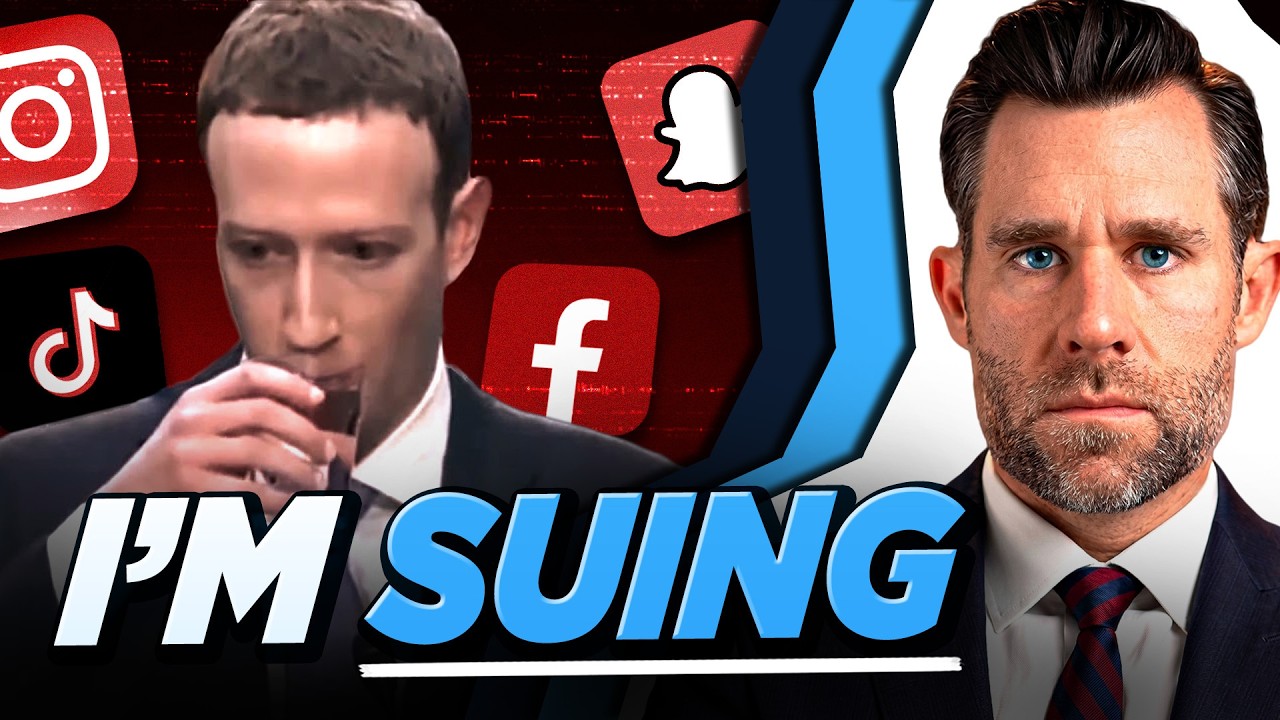
I'm Suing Meta, TikTok, Snap
Keywords
Summary
131 words
Critical Evaluation
Value of the Information & Strength of the Argument
The video provides valuable insights into the legal strategies and evidence in social media addiction lawsuits. It clearly explains complex legal concepts such as Section 230, product liability, and comparative fault, making them accessible to a general audience. The argumentation is persuasive, supported by specific case references and trial details. However, the creator’s active involvement in the litigation introduces a promotional bias, as he repeatedly encourages viewers to contact his law firm. This undermines the objectivity of the analysis, as the information is presented to advance a legal claim rather than purely to inform.
Scientific Rigor, Source Quality, Title Accuracy
The video demonstrates a strong understanding of legal precedents and accurately cites relevant cases such as Doe v. Internet Brands and Lee v. Amazon. The discussion of Section 230 is nuanced and correct. The title accurately reflects the content, as the creator announces his firm’s lawsuit against major platforms. However, the video lacks citations to external sources, relying primarily on the creator’s expertise and the trial proceedings. The promotional nature of the video, with repeated calls to action, detracts from its scientific rigor. The creator does not address potential counterarguments or criticisms of the lawsuits, such as concerns about age verification and privacy, which are raised in the comments.
218 words
Title / Content Match
The title accurately reflects the video's content, as the creator announces his law firm's involvement in suing major social media platforms.
Quality & Reliability
7/10
The video provides a detailed and accurate account of a recent jury verdict and its legal implications, referencing specific court cases and legal doctrines. However, it is presented from the perspective of a lawyer who is actively involved in related litigation, which introduces a potential conflict of interest and promotional bias.
Key Moments
Markers derived by PSI from the transcript: the creator did not define chapters.
- Introduction and announcement of lawsuit against social media platforms.
- Overview of the jury verdict and its significance.
- Explanation of Section 230 and its limitations.
- Discussion of the bellwether case and legal theories.
- Details of Kaylee's testimony and internal company documents.
- Mark Zuckerberg's testimony and cross-examination.
- Analysis of the verdict and comparative fault.
- Discussion of punitive damages and other cases.
- Call to action for viewers to seek legal help.
Cited Sources
- LegalEagle Law Firm - Case Evaluation — Link for viewers to contact the law firm if they believe they have been harmed.
- LegalEagle Law Firm - Legal Services — Link to the law firm's services.
- LegalEagle Copyright Course — Promotional link for a course on copyright law.
- LegalEagle Law School Guide — Promotional link for a guide to law school.
Concurring Sources
- Reuters: Meta, Google face trial over teen social media addiction — News article reporting on the trial and verdict.
- AP News: Jury finds Meta, Google liable in teen social media addiction case — News article covering the verdict.
Dissenting Sources
- Comment: Concerns about age verification and privacy — Several comments express concerns that the lawsuit may lead to more intrusive age verification measures, which could infringe on privacy.
- Comment: Allegations of abusive parents and Heritage Foundation backing — Some comments question the credibility of the plaintiff's case, citing allegations of parental abuse and external funding.
External References
Contribution & Novelties
The video provides a detailed and up-to-date analysis of a landmark jury verdict in social media addiction litigation, offering insights into the legal strategies and evidence that led to the outcome. It explains the legal theories of defective design and failure to warn in the context of social media platforms, and how Section 230 does not protect companies from liability for their own conduct. The video also highlights the significance of the verdict as a bellwether for thousands of similar cases, potentially leading to a major shift in how social media companies are held accountable for harms to minors.
Pour aller plus loin :
- Section 230 of the Communications Decency Act — Overview of the law and its interpretations.
- Product Liability — Legal doctrine relevant to the case.
- Bellwether Trial — Explanation of the concept used in mass litigation.
139 words
Radar Profile
The radar profile shows high scores in information quantity and technical level, reflecting the video's detailed legal analysis. The quality and reliability scores are moderate, indicating a generally accurate but potentially biased presentation due to the creator's involvement in the litigation.
💬 The comments are predominantly positive, with many viewers expressing support for the lawsuit and sharing personal experiences. However, there is a notable concern about the potential for increased age verification and privacy infringement, which tempers the overall enthusiasm.