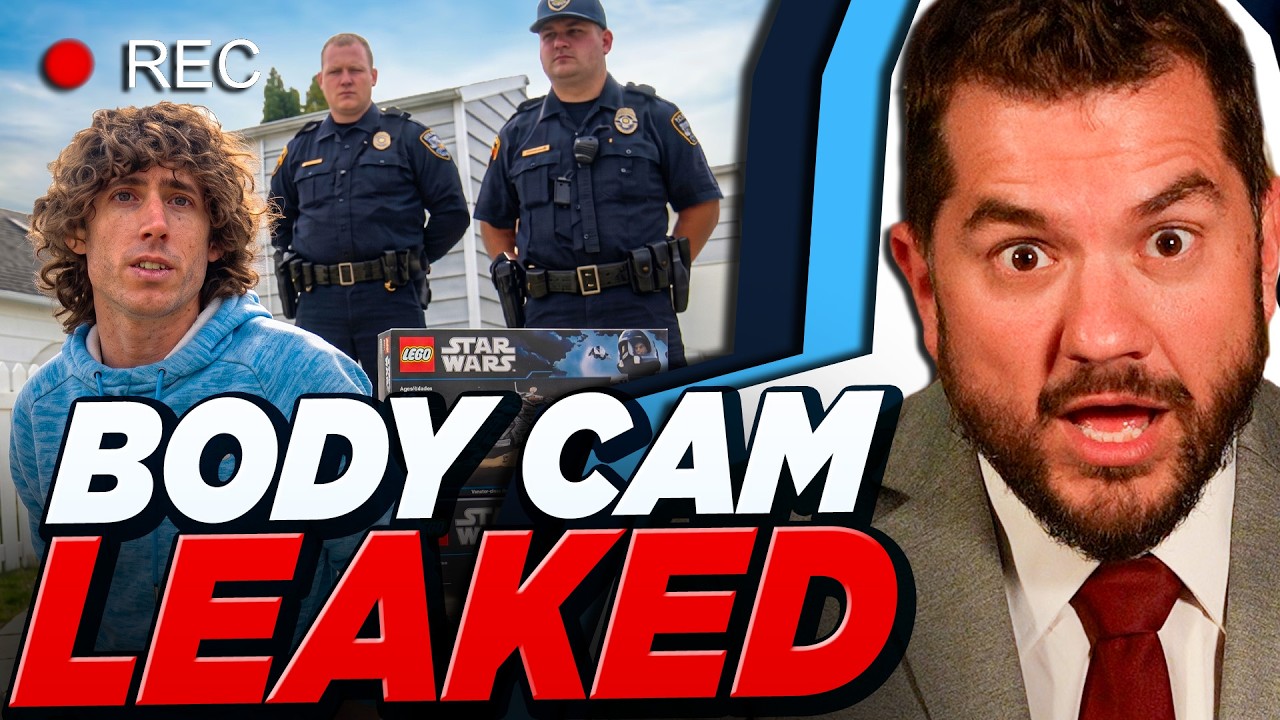
Police Violated Reckless Ben's Rights
Keywords
Summary
227 words
Critical Evaluation
Value of the Information & Strength of the Argument
The video provides valuable insights into police procedures and constitutional rights, with clear explanations of legal standards. LegalEagle’s argumentation is solid, as he uses specific legal principles and evidence from the footage to support his claims. He effectively demonstrates the illegality of the traffic stop and the questionable nature of the search and service of process. However, some arguments rely on his interpretation and may be contested, but overall, the reasoning is coherent and well-supported.
Scientific Rigor, Source Quality, Title Accuracy
The video demonstrates scientific rigor by referencing legal concepts and statutes, though it does not cite specific legal sources beyond general principles. The quality of sources is moderate, as it relies primarily on the bodycam footage and the presenter’s expertise. The title accurately reflects the content, focusing on police violations of rights. The video includes a sponsored segment for Incogni, which is clearly disclosed and does not affect the analysis.
160 words
Title / Content Match
The title accurately reflects the content, which focuses on alleged police misconduct and violations of rights during the arrest of Reckless Ben.
Quality & Reliability
8/10
The video is a legal analysis by a practicing attorney, providing detailed explanations of legal standards and citing specific legal concepts. The analysis is grounded in the bodycam footage and legal procedures, though it is inherently opinionated and relies on the presenter's interpretation.
Key Moments
Markers derived by PSI from the transcript: the creator did not define chapters.
- Illegal traffic stop: officer claims Ben didn't stop, but dashcam shows he did.
- Police trespass Ben from property, which is legal at owner's request.
- Police attempt to serve court papers but allow owner to refuse.
- Police conduct a two-hour search for drugs based on anonymous tip, finding nothing.
- Police warn Ben to 'walk a thin line,' implying threats.
Cited Sources
- LegalEagle Law Guide — Mentioned as a resource for law school guidance.
- LegalEagle Copyright Course — Mentioned as a course for copyright issues.
- LegalEagle Team — Mentioned for legal representation.
- Nebula — Mentioned for early ad-free videos.
- Incogni — Sponsor of the video, mentioned for data privacy services.
Concurring Sources
- Fourth Amendment — Supports the argument that the search and seizure were unlawful.
- Miranda v. Arizona — Relevant to the right to remain silent during police questioning.
Dissenting Sources
- American Fork Police Department Statement — The police department defended their officers' conduct, contradicting the video's claims of misconduct.
External References
Contribution & Novelties
The video provides a unique analysis of leaked bodycam footage, offering a legal perspective on police conduct. It highlights specific violations such as illegal stops, unlawful searches, and improper service of process, which are not commonly discussed in mainstream media. The analysis is valuable for understanding constitutional rights during police encounters.
Pour aller plus loin :
- Fourth Amendment to the United States Constitution — Relevant to unlawful searches and seizures.
- Terry stop — Relevant to the legality of the traffic stop and detention.
- Service of process — Relevant to the discussion of serving court documents.
95 words
Radar Profile
The radar profile shows high scores in quantity and quality of information, with a moderate level of technical detail. The fiabilite_globale is slightly lower, reflecting the opinionated nature of the analysis. Overall, the video is informative and well-structured, but viewers should consider the presenter's perspective.
💬 Très négatif. Sur les 30 commentaires analysés, la majorité exprime une forte indignation envers la police, accusant les officiers de corruption et de violations des droits, avec des appels à la responsabilité.