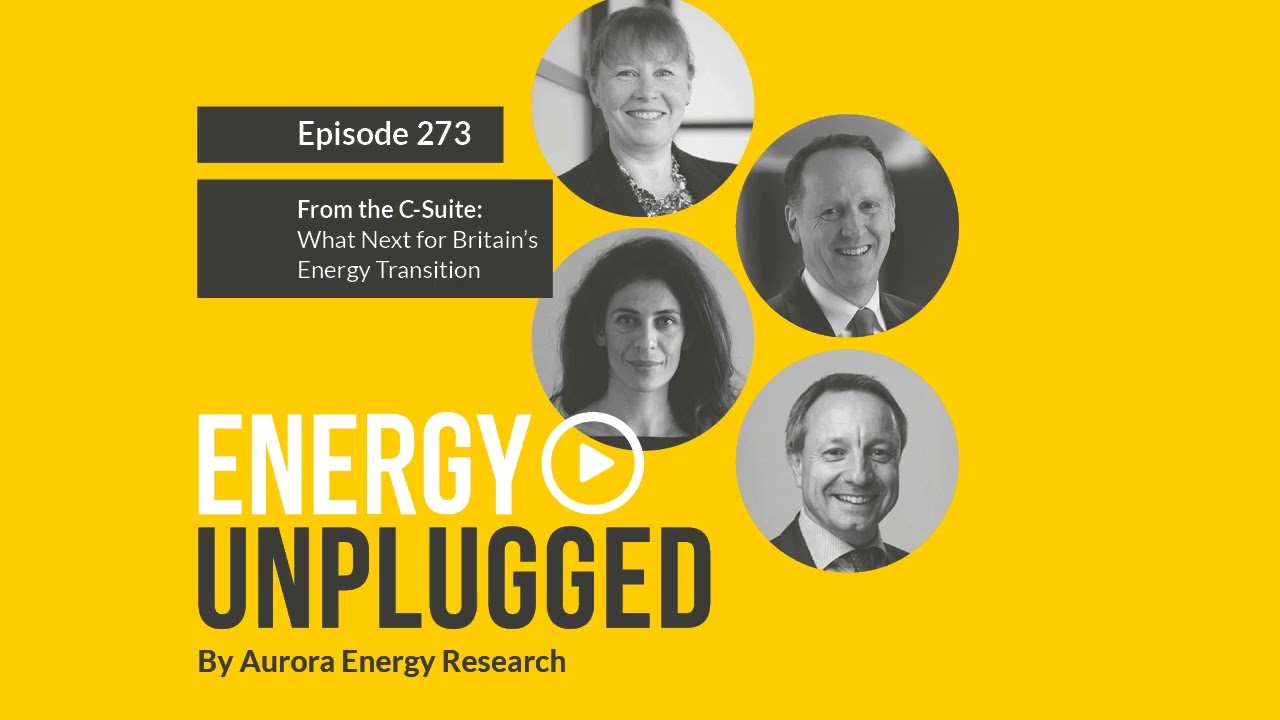
EP. 273 - From the C-Suite: What Next for Britain’s Energy Transition
Keywords
Summary
231 words
Critical Evaluation
Value of the Information & Strength of the Argument
The panel provides valuable insights from key stakeholders in the UK energy sector. The discussion is well-structured, with each panellist offering distinct perspectives: regulatory (Brearley), generation and supply (Anderson), and demand-side (Childs). The arguments are coherent and grounded in real-world examples, such as the data centre connection delay and the impact of policy changes on investor confidence. The panel effectively highlights the tension between the need for rapid grid expansion and the realities of planning, supply chain, and affordability. The moderation by Camilla Palladino keeps the discussion focused and draws out concrete examples. The value lies in the candid, high-level exchange of views, which is rare in public discourse. The argumentation is solid, though some points are asserted without deep data support, reflecting the nature of a panel discussion.
Scientific Rigor, Source Quality, Title Accuracy
The discussion demonstrates a high level of expertise, with panellists citing specific regulatory mechanisms (e.g., CFD auctions, ROCs indexation) and industry practices. The sources are primarily the panellists’ own professional experience and current policy frameworks, which are credible. The title accurately reflects the content, as it is a C-suite panel on the energy transition. The description provides context and links to the Aurora Spring Forum, which is a relevant event but not directly a source for the claims made. No external sources are cited in the video itself, but the panellists’ positions lend authority. The adéquation between title and content is strong, and the title does not overpromise. Overall, the rigour is high for a panel discussion, though it lacks formal citations.
266 words
Title / Content Match
The title accurately reflects the content: a C-suite panel discussion on the future of Britain's energy transition.
Quality & Reliability
8/10
The panel features senior leaders from Ofgem, ScottishPower, and Pure Data Centres Group, providing authoritative perspectives on UK energy policy and grid infrastructure. Their statements are grounded in direct professional experience and current regulatory frameworks, though the discussion is inherently opinion-based and forward-looking.
Key Moments
Markers derived by PSI from the transcript: the creator did not define chapters.
- Panel introduction and opening question on whether the energy transition is on track.
- Jonathan Brearley discusses the feasibility of the 2030 target and the importance of direction over obsession with the date.
- Keith Anderson agrees on the target's feasibility but stresses the need for action and investment.
- Dame Dawn Childs highlights bottlenecks: speed, regulation, supply chain, and workforce.
- Keith Anderson warns about policy instability and its impact on investor confidence, citing recent changes to CFD auctions.
- Dame Dawn Childs describes the lack of clarity in grid connections and the phenomenon of 'bragawatts' and zombie projects.
- Jonathan Brearley discusses the need for a stable regulatory platform and the importance of customer affordability.
- Keith Anderson argues that the UK needs a 21st-century grid to drive economic growth and calls for electrification.
- Dame Dawn Childs suggests using data centre standby generation for grid flexibility and building microgrids.
- Jonathan Brearley welcomes the conversation on flexibility and strategic planning for the future.
Cited Sources
- Aurora Spring Forum 2026 — Mentioned in the video description as a related event and registration opportunity.
Concurring Sources
- UK Clean Power 2030 — The government's plan aligns with the panel's discussion on the 2030 target and the need for grid investment.
- Ofgem — The regulator's role in network regulation and price controls is central to the discussion.
- NESO — The system operator's strategic planning is relevant to the future grid requirements discussed.
Dissenting Sources
- No discordant sources identified — The panel is largely in agreement on the main challenges and opportunities, with minor differences in emphasis.
Contribution & Novelties
This video provides a unique, high-level perspective on the UK energy transition, bringing together a regulator, a major energy supplier, and a data centre developer. It offers candid insights into the challenges of grid connections, policy stability, and the role of large energy users. The discussion on ‘bragawatts’ and zombie projects in the data centre queue is particularly novel, as it highlights the disconnect between announced demand and actual projects. The panel also explores innovative solutions like using standby generation for grid services and microgrids, which are not widely discussed in mainstream energy debates.
Pour aller plus loin :
- UK Clean Power 2030 — Official government plan for clean power by 2030, relevant to the target discussed.
- Ofgem — The regulator’s website, providing context on regulatory frameworks and price controls.
- National Energy System Operator (NESO) — The system operator’s strategic planning, relevant to the discussion on future grid needs.
- Data Centre Flexibility — National Grid’s page on flexibility, relevant to the idea of using data centres for grid services.
169 words
Radar Profile
The radar profile shows high scores in information quantity, quality, and reliability, reflecting the depth and authority of the discussion. The technical level is moderate, as the content is accessible to a general audience while still providing expert insights. The overall balance indicates a well-rounded and informative panel discussion.
💬 No comments were provided for analysis.