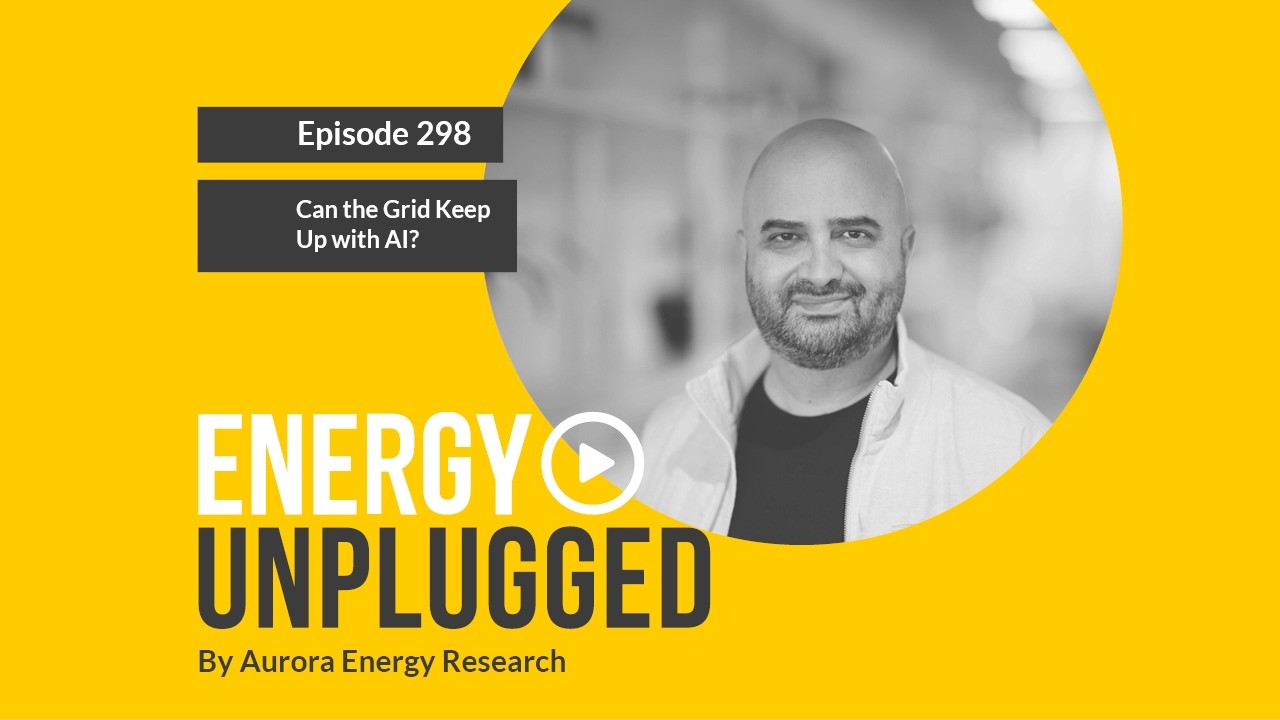
Can the Grid Keep Up with AI? EP. 298
Keywords
Summary
143 words
Critical Evaluation
Value of the Information & Strength of the Argument
The episode provides valuable insights into the practical challenges of grid interconnection for large loads, particularly data centers. It offers a nuanced perspective on the role of flexibility, distinguishing between capacity and energy constraints. The argumentation is coherent and grounded in the speaker’s extensive industry experience, though it relies on anecdotal evidence and rough estimates rather than rigorous data. The discussion of ‘speed to power’ and the potential revenue implications for data centers adds a compelling economic dimension, but the figures are presented as approximations without detailed justification.
Scientific Rigor, Source Quality, Title Accuracy
The scientific rigor is moderate; the content is based on expert opinion rather than peer-reviewed research. The speaker cites general industry knowledge and personal experience but does not reference specific studies or data. The title accurately reflects the content, focusing on the grid’s ability to support AI growth. The description mentions an event but no direct sources are cited in the episode. The discussion is consistent with current industry discourse on data center power demand and grid flexibility.
181 words
Title / Content Match
The title accurately reflects the episode's focus on the challenges of grid capacity for AI-driven data centers and potential solutions.
Quality & Reliability
7/10
The discussion is based on the expert opinion of Seyed Madaeni, who has a PhD in systems engineering and extensive industry experience. The content is plausible and aligns with known challenges in grid interconnection and data center power demand. However, it lacks specific citations or data sources, and some claims (e.g., revenue estimates) are presented without rigorous backing.
Key Moments
Markers derived by PSI from the transcript: the creator did not define chapters.
- Introduction to the episode and guest Seyed Madaeni.
- Discussion on why electricity is a bottleneck for AI and data centers.
- Explanation of the three system shocks affecting power markets.
- Analysis of interconnection challenges and the role of flexibility.
- Discussion on the value of speed to power for hyperscalers.
- Exploration of behind-the-meter assets and non-wires alternatives.
- Consideration of data centers becoming more like utilities.
Cited Sources
- Aurora Energy Transition Forum New York 2026 — Mentioned as a continuation of the conversation and a place to engage with industry leaders.
Concurring Sources
- Aurora Energy Research — The podcast is produced by Aurora Energy Research, a company specializing in energy market analysis.
Contribution & Novelties
The episode provides a clear and accessible explanation of the challenges facing US grids due to AI-driven data center growth, emphasizing the role of flexibility and software in mitigating bottlenecks. It offers a practical perspective from an industry insider on how large loads can become active grid participants.
Pour aller plus loin :
- Data center — Overview of data centers and their energy consumption.
- Demand response — Explanation of demand response mechanisms in power systems.
- Non-wires alternatives — Concept of using distributed resources to avoid infrastructure upgrades.
87 words
Radar Profile
The radar profile shows balanced scores across all dimensions, with slightly higher scores in information quantity and quality, reflecting the expert's depth of knowledge. The lower technical level indicates the content is accessible to a general audience, while the moderate reliability score suggests the need for additional sources to fully validate the claims.
💬 No comments were provided for analysis.