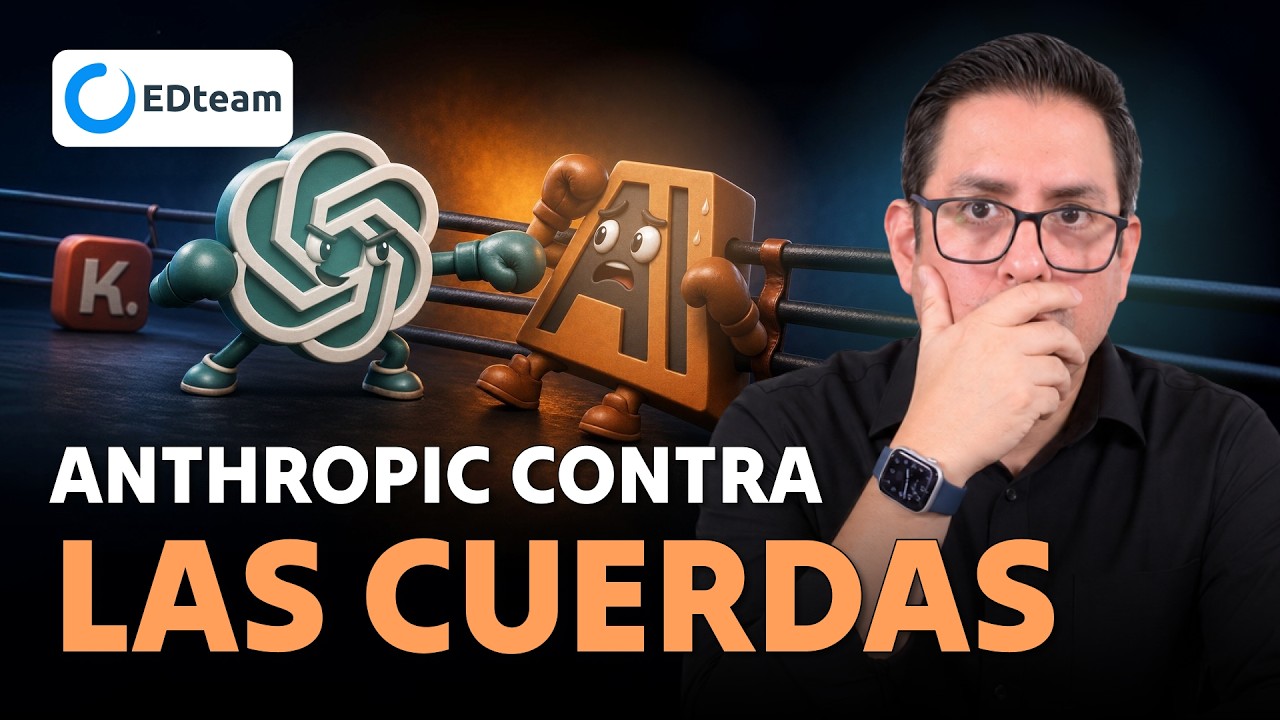
OpenAI obliga a Anthropic a subir sus límites ¿Vuelve la IA ilimitada?
Keywords
Summary
141 words
Critical Evaluation
The video offers a compelling narrative about the competitive strategies of OpenAI and Anthropic, focusing on usage limits as a key battleground. The presenter, Álvaro, demonstrates deep knowledge of the AI industry, referencing specific events, dates, and user numbers. The argument is coherent: OpenAI’s historical commitment to unlimited access, contrasted with Anthropic’s limit-based approach, and the recent shift where OpenAI’s aggressive limit increases are forcing Anthropic to follow suit. The use of concrete examples, such as Sam Altman’s tweet about resetting limits and Anthropic’s doubling of limits, strengthens the analysis. However, the video has notable weaknesses. The presenter’s bias towards OpenAI is evident, often portraying them as the ‘hero’ fighting for unlimited AI, while downplaying potential drawbacks. The reliance on anecdotal evidence and social media posts, without citing official documents or financial reports, reduces the scientific rigor. The discussion of ’lobotomization’ of models and the mention of ‘Fable’ and ‘Sol’ as model names suggests a speculative element, as these are not widely recognized in the public domain. The video also lacks a critical examination of the sustainability of such limit increases, given the high computational costs. The adéquation between title and content is good, as the video directly addresses the question of whether unlimited AI is returning. Overall, the video is informative and engaging for a general audience interested in AI industry trends, but it should be viewed as an opinion piece rather than a rigorous scientific analysis. The presenter’s expertise is evident, but the lack of verifiable sources and the clear bias prevent it from achieving a higher reliability score.
261 words
Title / Content Match
The title accurately reflects the content, which focuses on how OpenAI's aggressive limit increases are forcing Anthropic to respond, and whether unlimited AI is returning.
Quality & Reliability
7/10
The video provides a well-structured analysis of AI subscription limits, citing specific events and posts, but relies heavily on the presenter's interpretation and lacks direct citations to primary sources. The information is plausible and consistent with known industry trends, but the lack of verifiable references and the presenter's clear bias towards OpenAI reduce the overall reliability.
Chapters
Cited Sources
- EDteam - Openclaw course — Mentioned in the description as a new course, related to the open-source tool OpenClaw created by Peter Steinberger using Codex.
- EDteam - Power Apps course — Mentioned in the description as a new course, unrelated to the main topic but part of the channel's offerings.
- EDteam - Free courses — Link to free courses, mentioned in the description as a promotional offer.
- EDteam - All courses — Link to the full course catalog, mentioned in the description.
- EDteam - Student scholarships — Link to scholarship information, mentioned in the description and in the video's promotional segment.
- EDteam - LinkedIn — Social media link, mentioned in the description.
- EDteam - Instagram — Social media link, mentioned in the description.
- EDteam - Premium — Link to premium subscription, mentioned in the description.
- EDteam - Teachers — Link for potential instructors, mentioned in the description.
- EDteam - TikTok — Social media link, mentioned in the description.
Concurring Sources
- OpenAI official website — Provides official information on OpenAI's products and pricing, which aligns with the video's claims about their subscription plans.
- Anthropic official website — Provides official information on Claude's usage limits and pricing, supporting the video's description of Anthropic's approach.
Dissenting Sources
- No discordant sources found — The video's claims are not contradicted by any sources found in the description or transcription. However, the lack of direct citations makes it difficult to verify specific numbers and events.
Contribution & Novelties
The video provides a timely analysis of the competitive dynamics between OpenAI and Anthropic regarding usage limits, highlighting a shift in strategy that could impact users. It offers a unique perspective on how OpenAI’s aggressive limit increases are forcing Anthropic to respond, potentially leading to a return of unlimited AI. The video also touches on the role of new models and tools like Codex and Kimi K3 in this competition.
Pour aller plus loin :
- AI subscription models — Provides background on subscription-based software models.
- OpenAI — Official website for OpenAI, where one can find information about their products and pricing.
- Anthropic — Official website for Anthropic, offering details on Claude and its usage policies.
- Kimi K3 — Moonshot AI’s website, the company behind Kimi, for information on their models.
130 words
Radar Profile
The radar profile shows high scores in quantity of information and reliability, reflecting the video's rich content and plausible claims. The moderate score in technical level indicates that while the video is accessible, it still requires some familiarity with AI concepts. The overall balance suggests a well-rounded analysis suitable for a general audience interested in AI industry trends.
💬 Équilibré: Les commentaires montrent un mélange d'appréciation pour l'analyse et de critiques sur le parti pris de l'animateur, avec des discussions sur les préférences entre OpenAI et Anthropic. Sur les 30 commentaires analysés, plusieurs expriment un intérêt pour les alternatives chinoises comme Kimi, et certains partagent des expériences personnelles avec les limites d'utilisation.