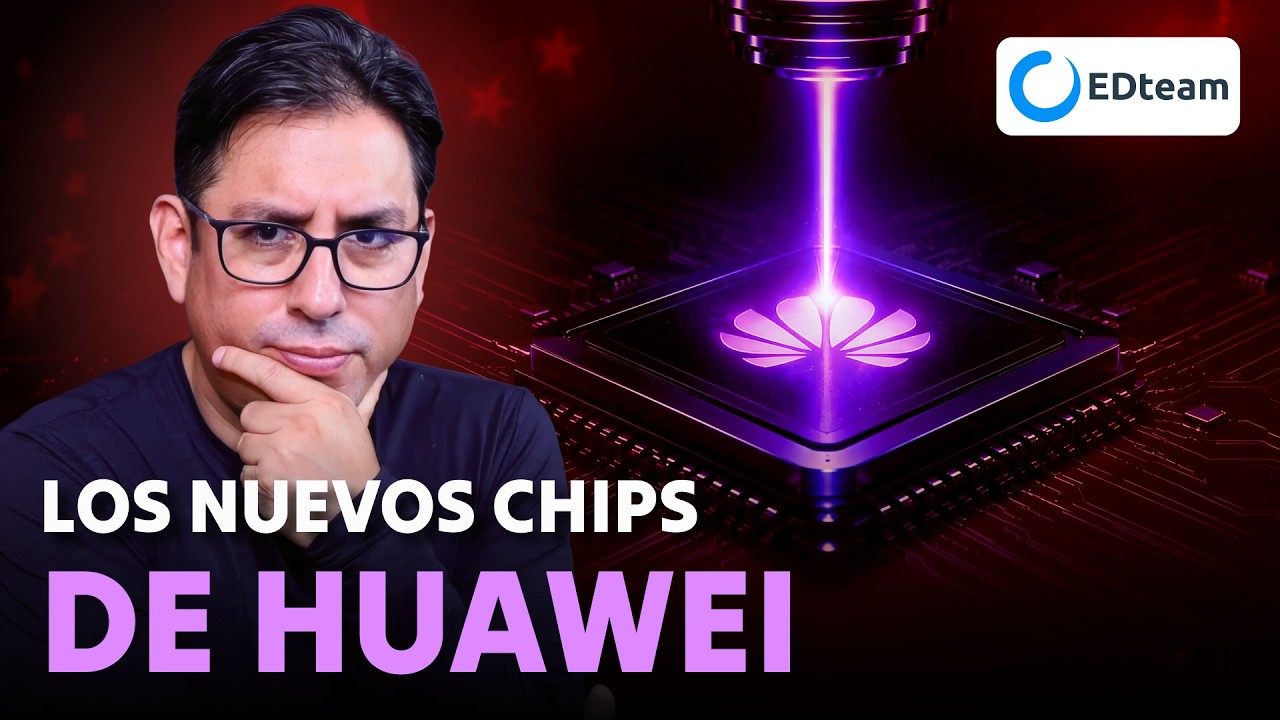
El plan de China para crear LOS CHIPS MAS AVANZADOS (y saltarse los bloqueos)
Keywords
Summary
131 words
Critical Evaluation
The video provides a valuable and accessible overview of a complex topic: China’s semiconductor strategy in the face of export controls. It successfully explains the basics of photolithography, the difference between DUV and EUV, and the concept of multipatterning. The introduction of the ‘Tau scaling law’ is intriguing and represents a potential paradigm shift, though the video lacks detailed technical depth and primary sources. The argumentation is coherent and well-structured, using analogies (chip as a city) to aid understanding. However, the scientific rigor is moderate: the presenter does not cite specific papers or official announcements, and the explanation of the Tau law remains high-level. The video’s strength lies in its clarity and ability to make a technical subject accessible, but it would benefit from more concrete data and references. The title accurately reflects the content, and the video does not overpromise. Overall, it is a good educational resource, but viewers seeking in-depth technical analysis may need to consult additional sources.
160 words
Title / Content Match
The title accurately reflects the content, which focuses on China's plan to develop advanced chips despite restrictions.
Quality & Reliability
7/10
The video provides a clear and well-structured explanation of semiconductor manufacturing and China's strategy to circumvent export controls. It correctly identifies key technologies (DUV, EUV, multipatterning) and introduces the 'Tau scaling law' as a novel concept. However, it lacks citations to primary sources and relies on simplified analogies, which limits its scientific rigor.
Chapters
Cited Sources
- Gemini Enterprise Agent Platform course — Mentioned in the description as a new course offering.
- Programming with AI using GitHub Copilot course — Mentioned in the description as a new course offering.
- EDteam free courses — Link to free courses, mentioned in the description.
- EDteam all courses — Link to all courses, mentioned in the description.
- EDteam scholarships — Link to scholarships, mentioned in the description.
- EDteam Instagram — Social media link in description.
- EDteam LinkedIn — Social media link in description.
- EDteam premium — Link to premium membership, mentioned in description.
- EDteam teachers — Link to become a teacher, mentioned in description.
- EDteam TikTok — Social media link in description.
Concurring Sources
- Moore's law — The video references Moore's law as the traditional scaling paradigm.
- Photolithography — The video explains photolithography as the process for printing chips.
Dissenting Sources
- No direct discordant sources found — The video does not present conflicting sources; it is a single narrative.
Contribution & Novelties
The video presents a novel perspective on China’s semiconductor strategy, focusing on the ‘Tau scaling law’ as a potential game-changer. It explains how China aims to bypass EUV restrictions by optimizing chip architecture and signal propagation time rather than just shrinking transistors. This approach could redefine performance metrics in the industry.
Pour aller plus loin :
- Moore’s law — Foundational concept for understanding the scaling of transistors.
- Photolithography — Key process in chip manufacturing.
- ASML — Company that produces EUV lithography machines.
- Semiconductor industry — Overview of the global semiconductor landscape.
91 words
Radar Profile
The radar profile shows high scores in quantity of information and fiabilité globale, indicating a well-structured and informative video. The niveau technique is moderate, reflecting the accessible explanation of complex topics. Overall, the video is strong in delivering a clear overview, with room for deeper technical detail.
💬 Très positif. Sur les 30 commentaires analysés, les spectateurs expriment une admiration unanime pour la clarté des explications et la qualité pédagogique, saluant la capacité du présentateur à rendre accessible un sujet complexe.