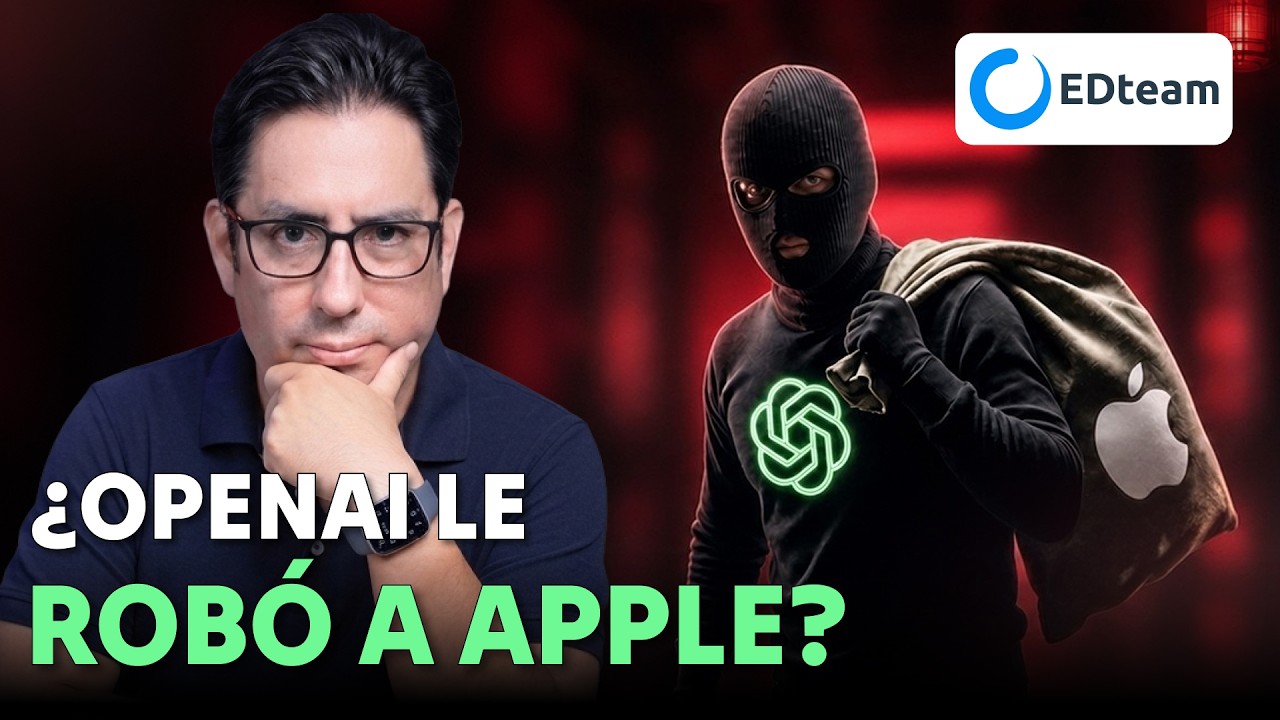
OpenAI DE NUEVO en problemas: Apple los demanda por robo de información
Keywords
Summary
146 words
Critical Evaluation
The video presents a highly speculative and opinionated analysis of a legal dispute between Apple and OpenAI. The host, from EDteam, a tech education platform, offers his personal interpretation of events, but the content lacks journalistic rigor and factual grounding. The central claim—that Apple has filed a lawsuit against OpenAI—is presented as fact, yet no official sources, court documents, or credible news reports are cited. The host relies on anecdotal evidence, such as the departure of 400 Apple employees to OpenAI, and makes sweeping generalizations about Apple’s decline and OpenAI’s ambitions. The argumentation is emotionally charged, with phrases like ‘Apple se ha convertido en una empresa aburrida’ (Apple has become a boring company) and ’el peor fracaso de la inteligencia artificial’ (the worst failure of artificial intelligence) regarding Apple Intelligence. These subjective judgments undermine the video’s credibility as an objective analysis. The host also engages in speculation about internal Apple dynamics, such as the CEO change and the motivations behind the lawsuit, without providing any evidence. The video’s structure includes promotional segments for EDteam’s courses, which may influence the content’s objectivity. The title and content are somewhat aligned, but the video’s focus on the lawsuit is diluted by extensive commentary on Apple’s perceived lack of innovation. Overall, the video offers little substantive information and is more of an opinion piece than a factual report. The lack of verifiable sources and the reliance on conjecture make it unreliable for viewers seeking accurate information about the legal dispute.
246 words
Title / Content Match
The title accurately reflects the video's focus on Apple's lawsuit against OpenAI, though the content includes additional speculation about internal Apple issues.
Quality & Reliability
5/10
The video presents a speculative analysis of a legal dispute between Apple and OpenAI, relying on unverified claims and personal opinions. The host provides no direct sources or evidence for the alleged lawsuit, and the narrative is heavily biased against Apple. The information is presented as fact but lacks journalistic rigor.
Chapters
Cited Sources
- EDteam - AI Agents Course — Promoted in the video as a new course offering.
- EDteam - Openclaw Course — Promoted in the video as a new course offering.
- EDteam - Free Courses — Mentioned in the video description as free courses.
- EDteam - All Courses — Link to all EDteam courses mentioned in the description.
- EDteam - Student Scholarships — Mentioned in the description for student scholarships.
- EDteam - Instagram — Social media link in the description.
- EDteam - LinkedIn — Social media link in the description.
- EDteam - Premium — Link to premium membership in the description.
- EDteam - Teachers — Link for potential instructors in the description.
- EDteam - TikTok — Social media link in the description.
Concurring Sources
- Apple Trade Secrets Policy — Provides official information on Apple's stance on trade secrets, which may support the video's claims about the lawsuit.
Dissenting Sources
- OpenAI Newsroom
Contribution & Novelties
The video provides a speculative analysis of a potential legal dispute between Apple and OpenAI, focusing on alleged trade secret theft. It offers a perspective on the competitive dynamics in the AI industry, but lacks substantive evidence. The host’s commentary on Apple’s internal issues and OpenAI’s hardware ambitions is largely conjectural.
Pour aller plus loin :
- Apple’s trade secrets policy — Official Apple page on trade secrets, relevant to understanding the legal context.
- OpenAI’s official website — For information on OpenAI’s projects and corporate structure.
- Silicon Valley non-compete agreements — Wikipedia article on non-compete clauses, relevant to the discussion of employee mobility.
102 words
Radar Profile
The radar profile shows moderate scores in information quantity and technical level, but low scores in information quality and reliability, indicating a content that is speculative and lacks credible sourcing.